

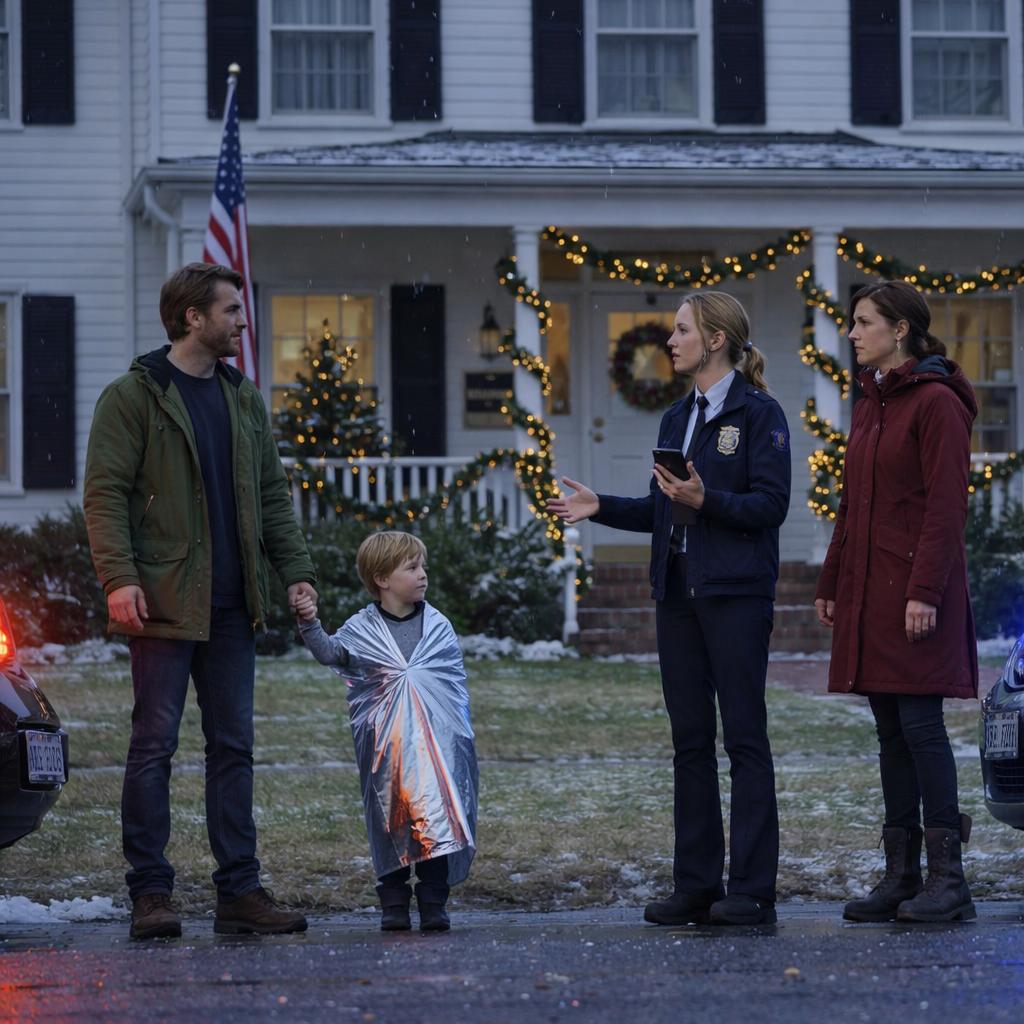
“Traffic,” William lied, because it was easier than saying, I sat in the driveway for five minutes trying to decide if I should turn around.
Owen’s eyes were wide. Tears leaked down his face silently now. He reached for William with one shaking hand.
William stepped forward instinctively.
Marsha moved in front of him, blocking the reach like it was nothing. “Owen needs to learn independence,” she said. Her tone had that bright firmness she used when she wanted to sound reasonable to other people. “Tell Daddy goodbye.”
Owen’s bottom lip trembled. His voice came out tiny. “Bye, Daddy.”
William crouched down anyway. He ignored Marsha’s sigh of annoyance. He opened his arms, and Owen launched into him like he’d been holding his breath for an hour.
William wrapped him tight. Owen’s small body shook against him.
“I love you,” William whispered into his hair. He could smell Owen’s shampoo, the cheap fruity kind. “I’ll pick you up Sunday evening, okay? Just two days.”
Owen clung harder. “Promise?” he whispered, voice muffled against William’s neck.
“I promise.” William felt the words lodge in his throat like he was swallowing a stone. He kissed the top of Owen’s head. “I promise.”
When he pulled back, he saw it.
Not hope. Not relief.
Fear.
Deep, primal fear that widened Owen’s pupils until his eyes looked almost black. His breathing was fast, shallow, like his body was already preparing to survive something.
William’s stomach turned.
Sue spoke, impatient. “He’s fine,” she said, as if she were talking about a dog that barked too much. “Go home. Marsha and I have plans to discuss while Owen settles in.”
Plans.
Something about the word bothered William. It felt too smooth, too intentional. Sue’s eyes stayed fixed on Owen, and there was nothing soft in them. No grandmotherly warmth. No delight at seeing her grandson. Only assessment.
William stood slowly. His knees felt stiff.
Marsha touched his elbow, guiding him back toward the car like he was a piece of furniture being moved. “I’ll stay for a bit,” she said. “Make sure he’s okay. You head home. I’ll get a ride back later.”
William’s instincts screamed.
He wanted to scoop Owen up, put him back in the car, drive away and never look back. He wanted to take his son somewhere bright and loud and safe. He wanted to apologize for every time he’d hesitated.
But he was tired. Tired in the way that made your brain start bargaining. Just a weekend. Maybe he was overreacting. Maybe Owen was just being dramatic. Maybe Marsha was right and he was too protective.
His whole career was built on understanding trauma in children. His weekends were spent reading studies on fear responses, interviewing families, teaching students how to spot what adults ignored.
And still he stood there and let himself be guided backward.
“All right,” William said, and hated himself the moment the word left his mouth.
He got back into the car. The driver’s seat felt suddenly too big.
He started the engine.
In the rearview mirror, he saw Sue take Owen’s hand. Not gently. Firmly, like a leash. Owen looked back once, eyes locked on William, the kind of look that begged without words.
Then Sue tugged him inside and the door closed.
William drove away with his throat burning.
The ride back to West Hartford took forty minutes. It felt like four hours.
Every red light was a pause where his mind flooded with Owen’s voice.
Please don’t leave me there.
At home, the house felt wrong the moment he stepped inside. Too quiet. Too clean. The air held the faint smell of laundry detergent and the lemon cleaner Marsha liked, but without Owen’s noise it felt sterile, like a staged home in a real estate listing.
William tried to grade papers. He sat at the kitchen table, opened a stack of exams, and stared at the first page without reading a word. The letters blurred.
He made coffee, poured it into a mug, then watched it cool untouched.
He walked into Owen’s room. The bed was made, the stuffed animals lined up with the careful order Owen insisted on. A little dinosaur sat crooked near the pillow. William straightened it automatically, then froze with his hand still on the toy, as if that small gesture could summon Owen back.
At six, he checked his phone. No messages.
At six-thirty, he checked again. Nothing.
At six forty-seven, his phone buzzed.
Staying for dinner. Mom wants to talk. I’ll Uber home.
William stared at the text until the screen dimmed.
He typed back: How’s Owen?
Three dots appeared, disappeared.
Then nothing.
Ten minutes later: Fine. Stop hovering.
The words made his chest go cold.
Stop hovering.
As if caring were a flaw.
William set his phone down and tried to watch television, tried to let noise fill the space. But every commercial with a child’s laugh hit him like a bruise. He muted the sound and sat in the flickering light, feeling the house tighten around him.
At eight-thirty, the phone rang.
Unknown number.
William’s heart jumped as he answered, already half standing. “Hello?”
A woman’s voice came through, breathless and shaken. “Is this William Edwards?”
“Yes,” he said. His mouth went dry. “Who is this?”
“This is Genevieve Fuller,” the woman said. “I live next door to Sue Melton.”
The world tilted slightly.
“Your son,” Genevieve continued, and her voice cracked as if she couldn’t fit the words into her mouth. “Your son just ran to my house. Mr. Edwards, he’s covered in blood.”
William didn’t understand at first. His brain refused it, like the words were in a language he didn’t speak.
“What?” he managed.