

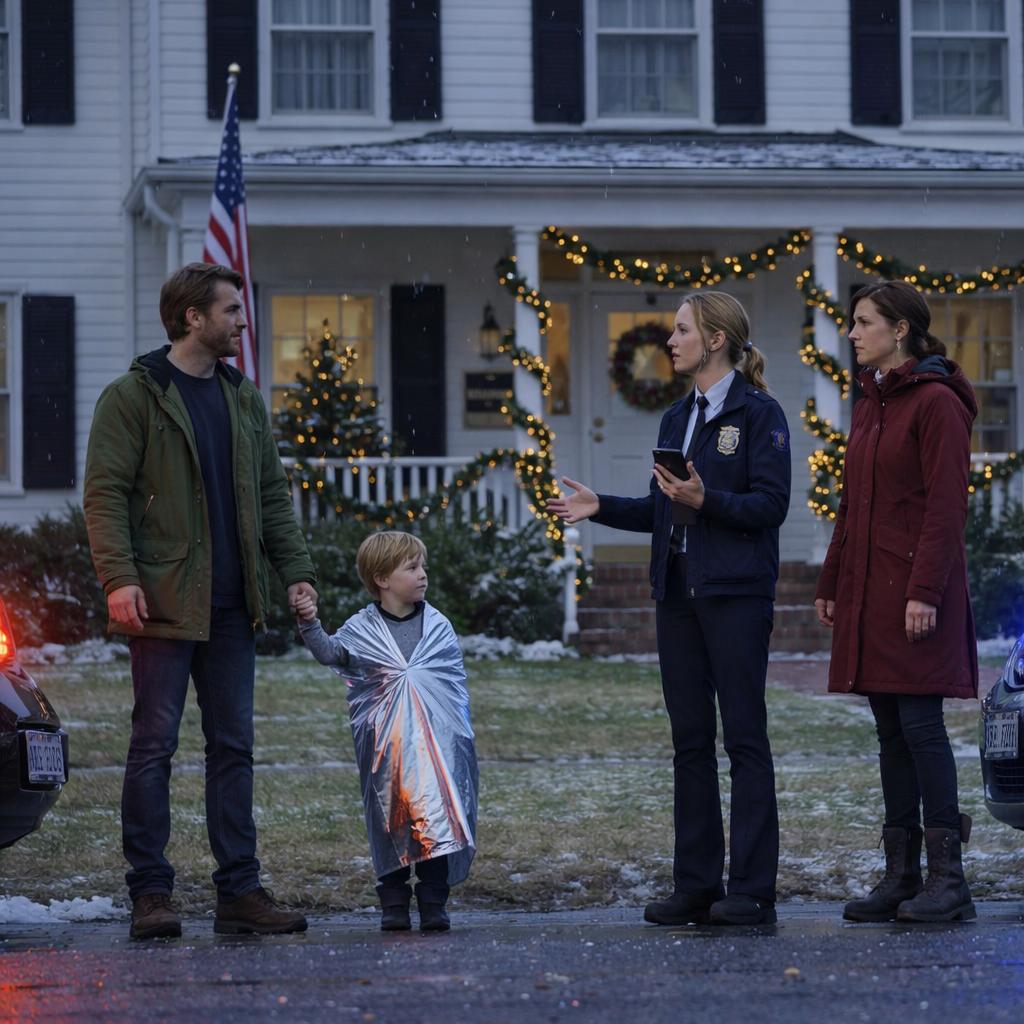
A judge granted the emergency order before noon. Sole temporary custody to William Edwards. No contact permitted between Owen and Marsha or Sue Melton pending investigation.
William read the paperwork twice, his hands steady but his chest tight. Words like exclusive custody and immediate protection felt clinical, but they meant safety. They meant Owen would not be taken from him again.
Two days later, Owen was discharged.
William carried him out of the hospital himself, the boy wrapped in a jacket far too big for him, his head tucked into William’s shoulder like a newborn. The parking lot smelled like rain. The air felt clean in a way it had not in months.
At home, William tucked Owen into his own bed. Not Owen’s room. His bed. He wanted him close.
For the first week, Owen barely spoke.
He followed William from room to room, silent and watchful, as if still expecting someone to grab him away. He startled at sudden noises. He slept in short bursts, waking with gasps, fingers digging into William’s arm.
William stayed with him every night. Sometimes on the bed. Sometimes on the floor. He did not leave, even to shower, without explaining where he was going and when he would be back.
Slowly, Owen began to talk.
Not all at once. In pieces. In fragments that slipped out while they were coloring or eating cereal or sitting on the couch with cartoons murmuring in the background.
The shed had not been the beginning.
Before that, there had been standing in the corner for hours.
Being made to kneel.
Being slapped for crying.
Being told he was bad.
Being told Daddy would be angry if he knew.
Marsha had watched. Sometimes she had joined in. Sometimes she had nodded approvingly while Sue explained how pain built character.
William listened without interrupting. Without correcting. Without telling Owen how he should feel. He let his son lead the pace, even when every word felt like a knife.
Dr. Dicki began therapy sessions twice a week. He moved slowly, carefully, never pushing Owen beyond what he could tolerate. Progress came in small victories. Owen sleeping a little longer. Owen asking questions. Owen laughing again, once, unexpectedly, at a ridiculous cartoon character slipping on a banana peel.
Each laugh felt like a miracle.
Meanwhile, the investigation grew larger.
Detective Stark called weekly. Then daily.
They had found more evidence at Sue Melton’s house. Not just the shed. Not just the calendar. A locked cabinet in the basement. Photographs. Old notebooks. Names.
Other children.
Some grown now. Some still minors. Children who had been in Sue’s care over decades. Informal babysitting. Daycare arrangements that slipped under regulatory radar. Families who needed help. Who trusted her reputation as a retired military nurse.
The pattern was unmistakable.
Control. Isolation. Fear disguised as discipline.
And Marsha had known.
William’s lawyer, Wendell Kaine, was blunt when he reviewed the findings. “This is bigger than your family,” he said. “This is systemic abuse.”
“I know,” William replied.
The custody hearing came first.
Marsha arrived in court carefully composed, her hair pulled back, her outfit modest and neutral. She looked like a woman wronged, not one exposed. Her attorney painted William as obsessive, unstable, a man projecting his own foster care trauma onto his child.
William did not react.
When Wendell presented the evidence, the courtroom went silent.
The shed photos.
The calendar.
The medical findings.
The recorded interviews.
When Owen’s voice played, describing the dark, the rules, the fear, Judge Higgins closed her eyes.
The ruling was swift.
Full custody to William Edwards. No visitation. No exceptions.
Marsha cried then, loudly, dramatically. It did not move anyone.
William did not look at her.
The criminal trial followed months later.
Sue Melton arrived with scars still visible, her face altered, her posture stiff. Marsha sat beside her, eyes downcast, hands folded, playing remorse like a costume.
It did not hold.
Witness after witness testified. Former neighbors. Old acquaintances. Adults who had once been children in Sue’s care. Their stories echoed Owen’s with chilling consistency.
The jury did not deliberate long.
Guilty on all counts.
Sue Melton received twenty-five years. Marsha received fifteen.
When the verdict was read, William felt no triumph. Only a quiet finality. The danger had been contained. The threat removed.
That was enough.
Life after the trial was not simple.
Healing never was.
Owen struggled. Nightmares returned sometimes. Loud voices still made him flinch. But he also grew. He learned to trust again. He learned that love did not come with conditions or pain.
William returned to teaching with a different focus. He developed training programs for educators and pediatricians. He spoke about warning signs. About believing children. About listening even when the truth was uncomfortable.
Owen’s case became a study, anonymized but powerful. Legislators took notice. Policies changed.
And at home, slowly, quietly, joy returned.
Spaghetti dinners.
Terrible jokes.
Drawing superheroes with capes too big for their bodies.
One night, years later, Owen asked, “Dad, why did you come back for me?”
William did not hesitate.
“Because I love you,” he said. “And because I should have listened sooner.”
Owen leaned into him, small but steady. “You listened when it mattered.”
William held him and knew, finally, that forgiveness had found its place.
The past would never disappear. But it no longer owned them.
They had survived.
And together, they had built something stronger than fear.