

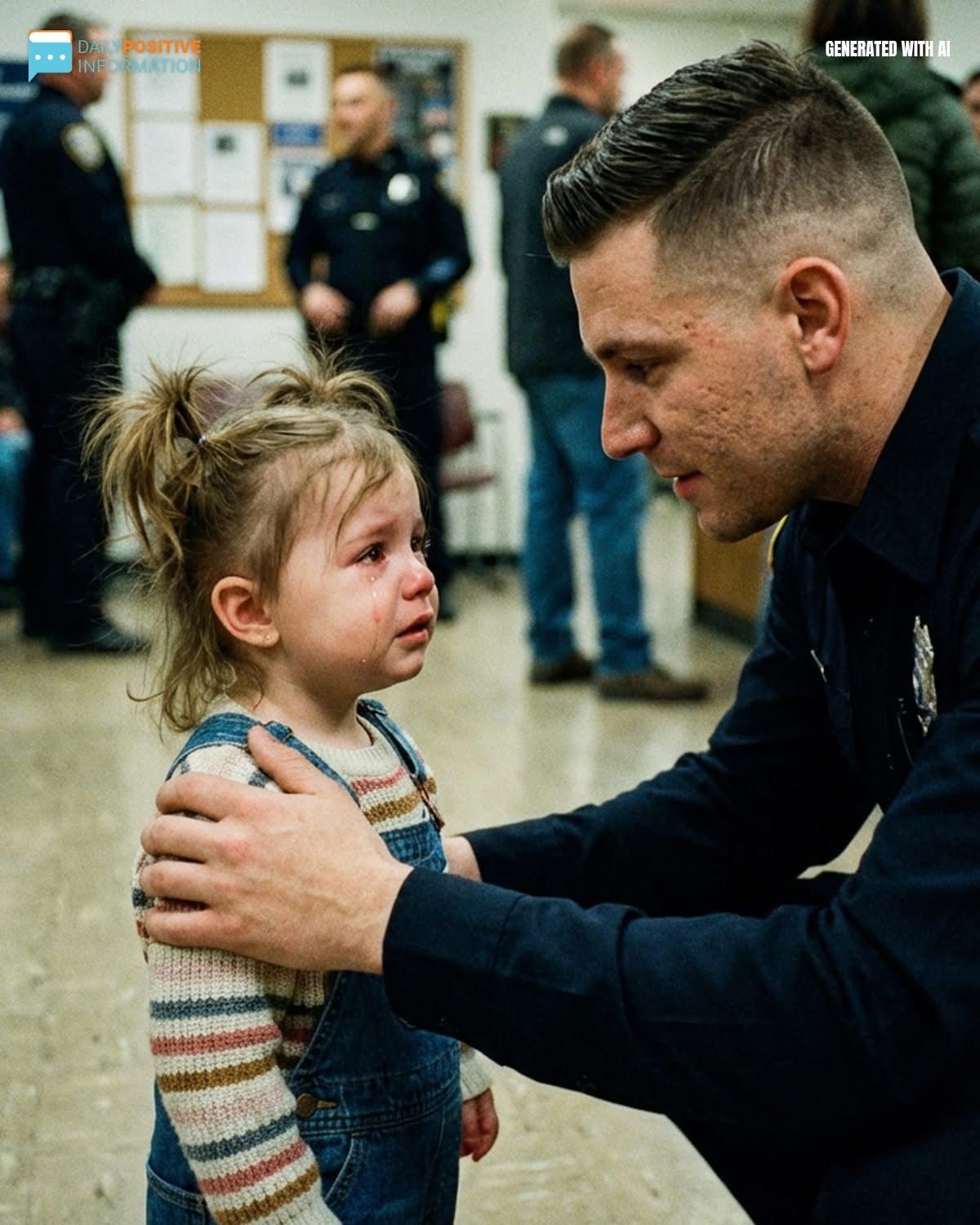
The other officers in the station had overheard the entire exchange—it was hard not to in the relatively small, open-plan precinct—and throughout the rest of that day and into the evening shift, the story spread rapidly through every department. Officers who typically dealt with theft, assault, property damage, and other serious matters found themselves smiling and chuckling at the memory of the tiniest “criminal” who’d ever walked voluntarily through their doors to turn herself in.
One veteran detective in his early sixties who’d been with the force for over thirty-five years said during the evening shift change, sharing coffee in the break room, “I’ve personally questioned people who’d committed serious property crimes and showed significantly less genuine remorse than that little girl did over accidentally breaking her brother’s toy. If everyone in society had even a fraction of her conscience and moral awareness, we’d honestly be out of a job entirely.“
Another officer who’d been standing near the reception area during the whole incident added thoughtfully, “She was genuinely, absolutely terrified that she’d done something unforgivable. The guilt was literally consuming her to the point where she couldn’t function normally. That’s the kind of deep empathy and moral awareness that we desperately need more of in this world.“
A younger officer who’d only been on the force for about two years said, “It kind of restores your faith in humanity, doesn’t it? Here we deal with people all day who’ve done genuinely terrible things and show zero remorse, and then this tiny kid comes in crying her heart out over an accident. It’s a good reminder that most people start out fundamentally good. It’s life that changes some of them.“
Another officer added, “And can we talk about how that toy had belonged to her grandfather who passed away? That’s why she felt so awful—she didn’t just break a toy, in her mind she’d destroyed an irreplaceable connection to someone her brother loved. That level of understanding and empathy from a two-year-old is remarkable.“
The lesson that changed how everyone viewed their work
The story of the little girl’s tearful confession became something of a legend at that particular police station over the following weeks and months. New officers were told about it during their first week on the job, usually by older, more experienced officers who needed to remind them that police work isn’t exclusively about catching criminals and solving cases—it’s fundamentally about serving the community in whatever way that community needs at any given moment, even if that means reassuring a toddler that she’s not going to prison for a childhood accident.
Sergeant Rodriguez himself thought about that memorable afternoon many, many times over the following months and years whenever he had difficult days. Whenever he dealt with actual criminals who showed absolutely no remorse whatsoever for genuinely terrible actions they’d committed, whenever he had to process someone who’d harmed others without caring, whenever he felt discouraged about human nature—he’d remember the little girl who couldn’t sleep or eat for three days because she’d accidentally broken her brother’s treasured toy and was consumed with guilt.
He shared the story with his own children at the dinner table that very evening, gathering them around to tell them about his unusual day. His teenage daughter, who’d been going through a somewhat cynical phase of thinking the world was full of terrible people and that nobody cared about anyone anymore, listened to the story with tears forming in her eyes.
“Dad, that’s actually really beautiful,” she said, her voice thick with emotion. “That little girl cared so much about her brother’s feelings and about doing the right thing. Most adults don’t even care that much about the consequences of their actions.“
“Exactly right,” he replied, pointing at her for emphasis. “That’s precisely the kind of person I hope you all grow up to be. Someone who cares deeply about whether they’ve hurt someone else, who wants to make things right when they make mistakes, who takes responsibility even when it’s hard or scary or embarrassing.“
His wife reached across their dining table and squeezed his hand affectionately. “You handled that situation perfectly today. That little girl will probably remember your kindness and patience for the rest of her life. You showed her that authority figures can be gentle and understanding, and that mistakes don’t define us.“
His youngest child, who was eight, asked thoughtfully, “Dad, do you think she’ll become a police officer when she grows up? Since you were so nice to her?“
“Maybe,” Rodriguez smiled. “Or maybe she’ll become a teacher, or a counselor, or work with children—someone who helps people. Or maybe she’ll just grow up to be a really good person who treats others kindly and takes responsibility for her actions. That would be more than enough.“
His teenage son, who’d been quiet during the conversation, finally spoke up. “I remember when I was little and I accidentally broke Mom’s favorite vase. I hid in my closet for hours because I thought you’d be so angry. But you just hugged me and said accidents happen. I think about that a lot.“
Rodriguez felt his throat tighten. “That’s exactly the point, son. How we respond to people when they make mistakes—that’s what shapes who they become.“