

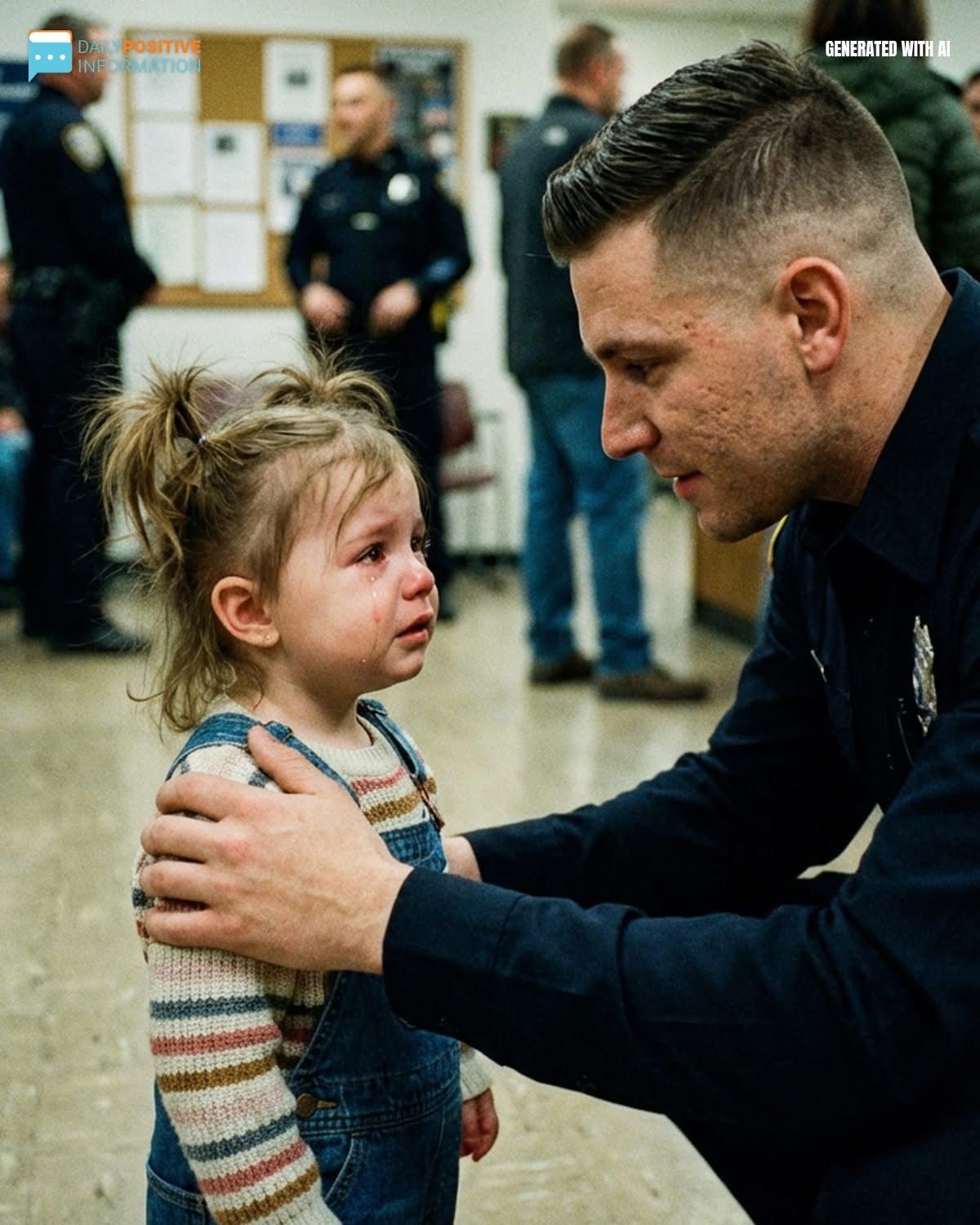
And perhaps that little girl would remember. Perhaps twenty years from now, when she was a young woman in her twenties, she would tell people about the time when she was very small and absolutely convinced she’d committed a terrible crime that would send her to prison, and how a patient, kind police officer took her seriously instead of laughing at her, listened to her tearful confession with respect and dignity, and gently helped her understand that accidents happen and that forgiveness—both from others and from ourselves—is real and possible.
Perhaps that single moment would influence her entire trajectory in life. Perhaps she’d become someone who worked in a helping profession herself—a teacher who was patient with her students’ mistakes, a counselor who helped children work through difficult emotions, a therapist who specialized in childhood guilt and anxiety, a social worker who advocated for kids, or even a police officer who remembered to treat everyone with dignity and compassion regardless of how small their problems might seem.
Or perhaps she’d simply grow up to be a genuinely kind, empathetic person who takes responsibility for her actions, who says sorry when she makes mistakes, who understands that moral behavior isn’t about being perfect or never doing anything wrong—it’s about how you respond and what you do when you inevitably do make mistakes, as all humans do.
Perhaps her brother—the one whose special toy was broken—would grow up knowing that his sister cared about him so deeply that she couldn’t rest until she’d somehow made amends. Perhaps he’d remember how she’d offered him her most precious possession, her beloved stuffed bunny that she never let anyone else touch. Perhaps that memory would create a bond between them that lasted their entire lives, a foundation of knowing that they cared deeply about each other even when accidents happened.
Perhaps their parents would tell the story at family gatherings for years to come, laughing affectionately about the time their daughter insisted on turning herself in to the police for accidentally breaking a toy during playtime. Perhaps it would become one of those defining family stories that gets passed down through generations, a story about conscience and caring and taking responsibility.
Perhaps the story would even spread beyond that one family and that one police station. Perhaps Barbara would tell her grandchildren about it. Perhaps the other officers would share it with their own families, their own children, using it as an example of the kind of conscience and empathy the world needs more of.
The profound truth about guilt, forgiveness, and growing up
The little girl who walked into that police station on that Tuesday afternoon believing with absolute certainty that she was a criminal who deserved punishment walked out knowing several crucial things:
She learned that she was forgiven—by her brother, by her parents, and now by an authority figure who represented justice itself in her young mind.
She learned that her brother’s sadness and her own guilt were both valid feelings, but that neither had to last forever.
She learned that making amends doesn’t always mean fixing what’s broken—sometimes it means offering something else of value, like sharing something precious or showing extra kindness.
She learned that confession is good for the soul, that taking responsibility matters deeply, that authority figures can be kind and understanding, and that mistakes—even ones that feel enormous—can be forgiven.
Most importantly, she learned that she wasn’t defined by her worst moment. That breaking something precious didn’t make her a bad person. That having a conscience that troubled her so deeply was actually a sign of her good heart, not evidence of her badness.
And Sergeant Rodriguez? He was reminded of something he’d known when he first became an officer decades ago but had sometimes forgotten during difficult years filled with genuinely bad people doing genuinely terrible things: that sometimes the most important police work has nothing whatsoever to do with solving crimes or making arrests or filling out paperwork.
Sometimes it’s about taking five minutes out of a busy day to comfort a child who needs reassurance.
Sometimes it’s about showing up with patience and kindness when someone needs you, even if their problem seems trivial compared to everything else on your desk.
Sometimes it’s about being gentle when you could just as easily be dismissive, about taking seriously what others might laugh at, about seeing the human heart behind the situation instead of just the surface absurdity.
In a profession that deals with so much darkness, pain, dishonesty, and human cruelty on a daily basis, that small moment of pure innocence and profound conscience was exactly the kind of light that everyone in that precinct needed to be reminded of—the light that shows why they’d chosen this career in the first place.
Because at the end of the day, police officers don’t just enforce laws and solve crimes. They protect communities, yes, but they also protect hearts—even hearts as small and tender as that little girl’s—from breaking under the weight of guilt, fear, shame, and misunderstanding.
They remind us all that justice isn’t just about punishment. It’s also about mercy, understanding, proportion, and helping people—especially young people just learning about right and wrong—find their way toward becoming their best selves.
And sometimes, just sometimes, that means telling a two-year-old who’s drowning in guilt over a broken toy that she’s not going to jail, that she’s forgiven, and that she has a good and loving heart.
That message, delivered with kindness by someone in uniform, might just change the trajectory of an entire life.
This heartwarming story raises important questions about childhood moral development, the weight of guilt that even very young children can carry, and the profound impact that patient, understanding adults can have on developing consciences. Have you ever witnessed a young child showing unexpected empathy or taking responsibility in a way that surprised you? How do we teach children about right and wrong, about mistakes and forgiveness, without crushing their sensitive, developing hearts under impossible standards? What would you have done if you were the parents in this situation, watching your child suffer under guilt for days? Share your thoughts with us on our Facebook page and join the conversation about childhood development, empathy, conscience formation, the importance of self-forgiveness, and the patient, kind adults who help guide young hearts through difficult emotions and moral confusion. If this story touched your heart or made you smile, please share it with friends and family who might need a gentle reminder that goodness, conscience, deep caring, and moral awareness exist even in the smallest and youngest among us.