

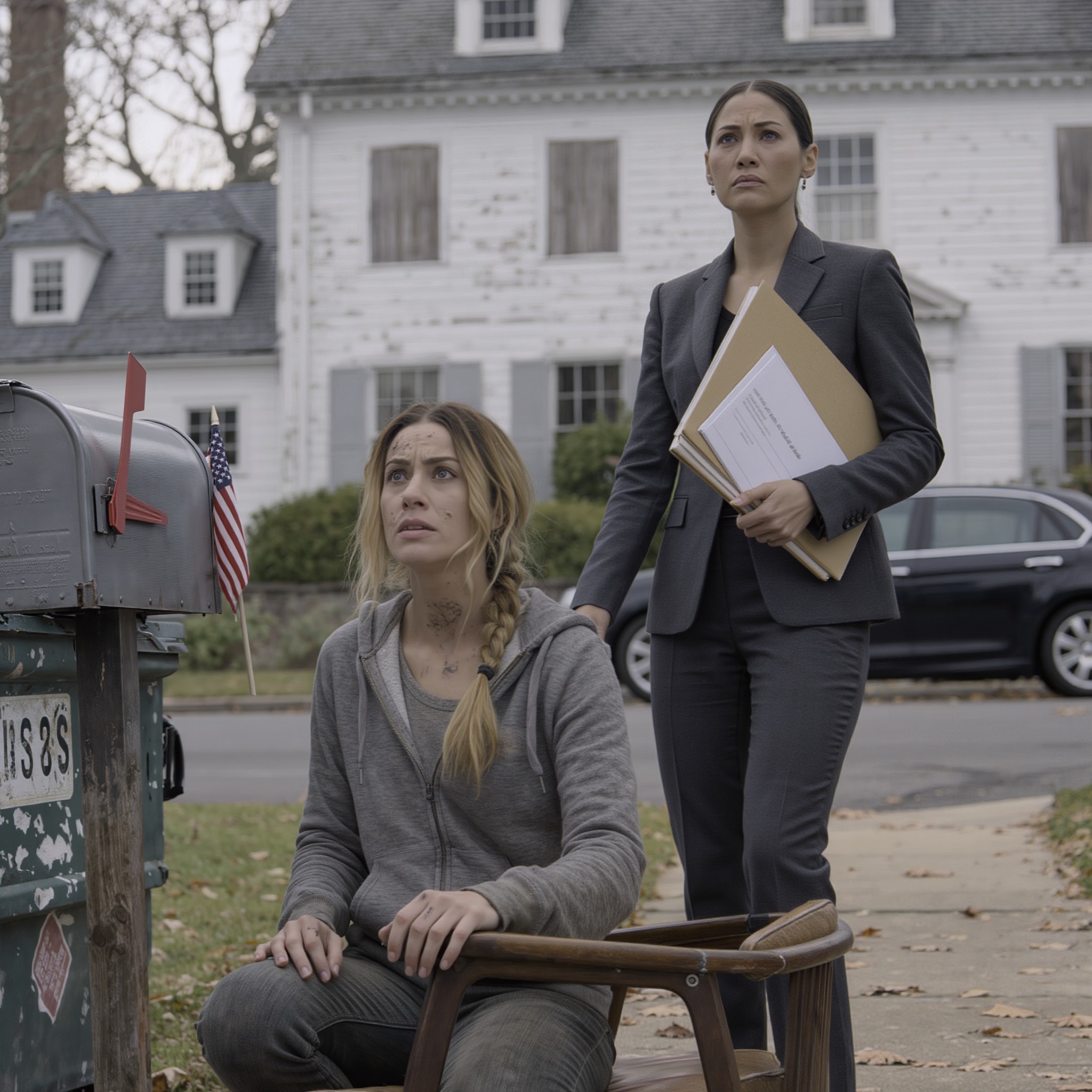
Yeah. Nothing says architectural genius like evaluating trash for resale value at 7 a.m.
I climbed out of the dumpster, wiping my hands on my filthy jeans, trying to stand like I still belonged in the world. “That’s me,” I said. “If you’re here to repossess something, this chair leg is literally all I own.”
She smiled, like I’d made her day easier. “My name is Victoria Chen. I’m an attorney representing the estate of Theodore Hartfield.”
My heart stopped so hard it felt like my ribs moved with it.
Uncle Theodore.
The man who’d taken me in after my parents died. The man who’d taught me to see buildings as living things. The man who’d inspired my love for architecture—and then cut me off ten years ago when I chose marriage over my career.
“Your great-uncle passed away six weeks ago,” Victoria continued, voice steady. “He left you his entire estate.”
The dumpster, the cold air, the foreclosed mansion behind me—everything blurred at the edges. “Uncle Theodore…” I managed, and my throat tightened around the name. “That can’t be right. He disowned me.”
Victoria’s expression softened just slightly, the way professionals look when they’ve delivered hard news before. “Mr. Hartfield never removed you from his will. You were always his sole beneficiary.”
I stood there with garbage on my jeans and dirt under my nails, trying to understand how the universe could be this absurd.
“Where are you watching from today?” Victoria asked suddenly, like she was reading from a script she’d been handed. “Drop your location in the comments below, and hit that like and subscribe button if you’ve ever felt like you hit rock bottom only to have life throw you the most unexpected curveball. You’ll definitely want to stick around for what happened next.”
If it had been anyone else, I might’ve laughed. Instead, I just stared at her, because my life already felt like it had been edited into a strange new genre.
Three months ago, I’d been middle class. I had a home, a marriage, and an architecture degree I’d never used. My husband, Richard, made it clear that working was “unnecessary.”
“I make enough for both of us,” he’d say, like it was romantic instead of controlling.
When I discovered his affair with his secretary, everything crumbled. The divorce was brutal. Richard had expensive lawyers. I had legal aid and hope. He got the house, the cars, the savings. I got a suitcase and the sick understanding that our prenup was ironclad.
His parting words still burned like bleach. “Good luck finding someone who will want damaged goods.”
So I’d survived by dumpster diving for furniture, restoring pieces in a storage unit, and selling them online. It wasn’t glamorous, but it was mine. It was the first thing I’d done in years that didn’t require asking permission.
Victoria gestured toward a black Mercedes parked at the curb like it had wandered into the wrong neighborhood. “Perhaps we could talk somewhere more comfortable.”
I looked down at myself—filthy jeans, scraped knuckles, hair tied up like I’d given up. “I’m not exactly Mercedes-ready.”
“You’re the sole heir to a fifty-million-dollar estate,” she said, as if she were telling me the time. “The car can handle dust.”
Fifty million.
The number didn’t compute. It slid off my brain like rain off glass.
Still, I followed her in a daze.
As we drove, Victoria handed me a folder thick enough to feel like it had weight beyond paper. “Your uncle left you his Manhattan residence, his Ferrari collection, multiple investment properties, and controlling shares of Hartfield Architecture. The firm is worth approximately forty-seven million dollars.”
I stared at the photographs inside—images of a mansion I’d seen in Architectural Digest, the Hartfield estate, Uncle Theodore’s masterpiece: a five-story brownstone that somehow blended Victorian elegance with modern innovation like it had always been meant to exist that way.
“There has to be a mistake,” I whispered. “He cut me off ten years ago.”
Victoria met my eyes. “Mr. Hartfield never stopped watching. He never stopped hoping. And there is one condition.”
My stomach tightened. “What condition?”
“You must take over as CEO of Hartfield Architecture within thirty days and maintain the position for at least one year,” she said. “If you refuse or fail, everything goes to the American Institute of Architects.”
I let out a short, bitter laugh. “I haven’t worked a single day as an architect. I graduated at twenty-one, married at twenty-two. My husband thought my education was a cute hobby.”
“Mr. Hartfield hoped you’d eventually return to architecture,” Victoria said quietly. “This is his way of giving you that chance.”
The car stopped in front of a boutique hotel that looked like it smelled expensive. “You’ll stay here tonight,” Victoria said. “Tomorrow we fly to New York to meet with the firm’s board. You have twenty-nine days to decide.”
I looked down at the folder in my lap, at the life I’d abandoned for a man who threw me away like trash. The life Uncle Theodore had wanted me to build. The life that had never stopped waiting for me, even when I stopped waiting for myself.
“I’ll do it,” I said, surprising even me. “When do we leave?”
Victoria’s smile widened—small, but real. “Eight a.m. Pack light. Everything you need will be waiting.”
I glanced at the garbage bag in the trunk containing my worldly possessions. “Trust me,” I muttered, “packing light won’t be a problem.”
The hotel room was nicer than anywhere I’d lived in months. In the bathroom, I scrubbed dumpster grime from under my nails and caught my reflection in the mirror.
Hollow cheeks. Exhausted eyes. Hair desperately needing attention.
This was what Richard had reduced me to.
I thought back to when I was twenty-one, final year of architecture school. Richard had been thirty-two—successful, charming, the kind of man who could sell you your own doubt like it was safety. He’d walked into my gallery showing, where my sustainable community center design had won first place.
Uncle Theodore had been so proud he’d practically glowed. “You’re going to change the world,” he’d said. “Next year you’ll join my firm. We’ll make history together.”
Richard overheard. He introduced himself. Complimented my work. Asked me to dinner. Within six months we were engaged. Within eight, married.
Uncle Theodore refused to come.
“You’re making a mistake,” he told me on the phone.
I’d been furious—young, in love, convinced stubbornness was strength. “You’re just jealous because I’m choosing my own path.”
“No,” he’d said, and the sadness in his voice still haunted me. “I’m heartbroken because you’re throwing away everything you worked for. But you’re an adult. It’s your life to waste.”
We hadn’t spoken again. Not when I sent Christmas cards. Not when I called on his eightieth birthday. Not when I needed him most.
Richard had been controlling from the beginning. It started small—suggesting I didn’t need to apply for jobs. “Take time to settle into married life.” Then discouraging the licensing exam. “Why stress yourself?” When I tried freelancing from home, designing additions for neighbors, Richard would schedule last-minute trips, making it impossible to meet deadlines.
Eventually, I stopped trying.