

I had thirty seconds to decide: panic, postpone, admit defeat—or do what Theodore would have done.
“Actually,” I said, closing the laptop with a smile that felt almost peaceful, “let’s do this differently. Mr. Anderson, you said you wanted a building that tells a story. Let me tell you that story.”
I moved to the whiteboard and began sketching. My hand moved with a confidence built over ten years of hidden work. I drew the silhouette, explained how the shape was inspired by landscape, how every angle had purpose.
“Traditional architecture treats buildings as static objects,” I said, drawing details with quick precision. “But your headquarters will be dynamic—alive.”
I drew arrows showing airflow, water collection, seasonal sun angles. “In summer, the smart glass darkens automatically. In winter, it opens to maximize passive solar heating.”
Anderson leaned forward, eyes bright.
Jacob handed me colored markers. I added depth and shadow, bringing the building to life in real time. Forty-five minutes later, the whiteboard was covered in a comprehensive, raw, honest representation of my vision.
Anderson stood, staring at it like he’d been waiting his whole life to see someone speak his language.
“This,” he said, “is exactly what I wanted. Someone who understands buildings as living systems. When can you start?”
After they left—having agreed to terms immediately—I finally breathed.
Jacob was grinning. “That was extraordinary.”
“Someone corrupted my files,” I said quietly. “This was sabotage.”
“I know,” Jacob said, voice flat. “Carmichael borrowed your laptop yesterday. Said he wanted to review timelines.”
“It doesn’t matter,” I said. “He wanted me to fail. Instead, I showed everyone I don’t need fancy presentations. The work speaks for itself.”
That evening, I called an emergency board meeting with Victoria as legal counsel.
“I want to address what happened this morning,” I said. “My files were deliberately corrupted to undermine my credibility.”
Carmichael shifted. “That’s a serious accusation.”
“It is,” I said, “which is why I had IT trace the modifications. They originated from your computer yesterday at 6:47 p.m.”
Silence stretched, thick and humiliating.
Carmichael’s face reddened. “I was reviewing files. If something was accidentally modified—”
“There was nothing accidental about corrupting every backup,” Jacob said coldly.
“I was testing her,” Carmichael snapped. “Theodore left this company to an untested amateur.”
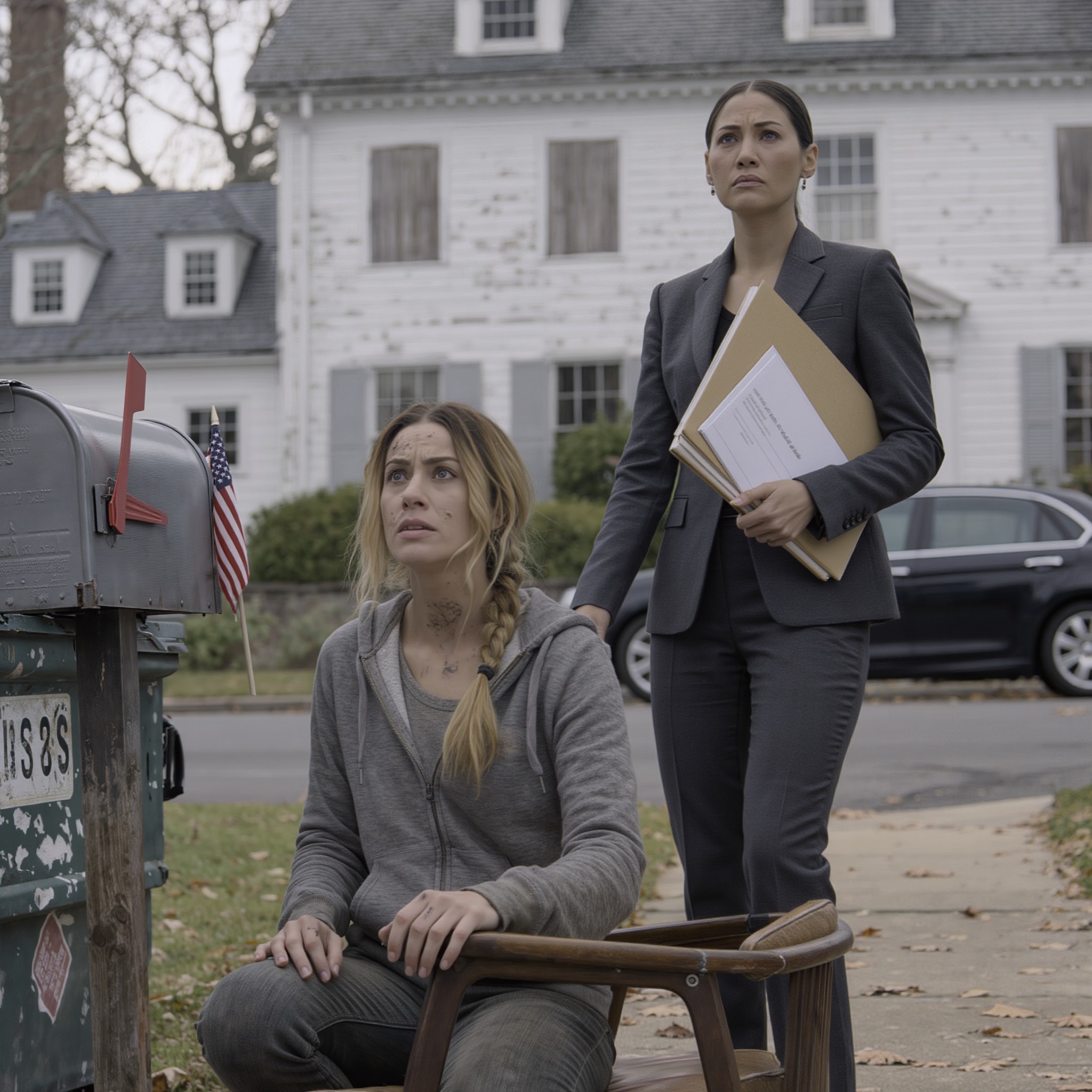
I laughed—one sharp sound. “You wanted to see if I’d crumble, Mr. Carmichael? I spent three months living out of a storage unit. I dumpster-dived for furniture to sell for food. You corrupting files doesn’t even register.”
I leaned forward. “But sabotaging company interests to serve your ego makes you a liability. Here’s what’s happening: you’ll resign immediately. In exchange, the company will buy out your stake at fair market value and you’ll sign a non-disparagement agreement. Or I file formal complaints, involve lawyers, and destroy your reputation. Your choice. You have until end of business tomorrow.”
After the meeting, Jacob found me at the window.
“You handled that perfectly,” he said.
“Did I?” I asked, and felt the adrenaline still shaking my bones.
“You gave him a way out that preserves dignity while removing the threat,” Jacob said. “That’s leadership.”
“Theodore used to say,” Jacob added, “‘The mark of a good leader isn’t celebrating success. It’s handling people who try to tear you down.’”
I turned to him. “Jacob… why are you really helping me? You could’ve taken over this company.”
He was quiet for a moment. “Theodore asked me to.”
“Yes,” I said. “But that’s not the whole truth.”
Jacob exhaled. “It started as obligation. But Sophia… I stopped doing this for Theodore weeks ago. Now I’m doing it because every day I see you becoming more yourself. That’s not obligation. That’s admiration.”
He stepped closer, voice lower. “And if I’m completely honest… it’s more than admiration.”
Something in his tone made my heart skip in a way that wasn’t about work.
But Jacob lifted a hand gently. “I’m not going to complicate things. You just got out of a terrible marriage. You’re rebuilding. I just wanted you to know I see you—the real you—and she’s remarkable.”
Then he left before I could respond.
Carmichael resigned the next morning. The company bought out his shares and redistributed them among remaining board members and key employees. The biggest obstacle to my leadership was gone, but something in my gut told me the real challenges were just beginning.
Two weeks later, Margaret found a leatherbound journal behind Theodore’s architecture books.
“Ms. Hartfield,” she said quietly, “you should read this. Your uncle kept a diary. Many entries are about you.”
The journal covered fifteen years—from when I first lived with him to weeks before his death. The entries about my marriage stopped me cold.
March 15th, ten years ago: Sophia married Richard Foster today. I refused to attend. Margaret says I’m being stubborn and cruel. Maybe. But I can’t watch someone I raised walk into a cage with her eyes open. I told her he was controlling. She chose him anyway. All I can do now is wait and hope she finds her way back.
December 8th, nine years ago: Heard through mutual acquaintances Sophia isn’t working. Richard won’t let her. My brilliant girl is wasting away in suburban silence. I want to call. Margaret won’t let me. She says Sophia has to realize this herself. I hate that she’s right.
July 22nd, eight years ago: Started building the studio on the fifth floor today. Margaret thinks I’m foolish preparing a space for someone who might never come home, but I need to believe she will. The studio is my act of faith.
April 8th, five years ago: Saw Sophia at a charity gala. Richard had his hand on her back the whole night steering her. She looked thin, tired, her smile brittle. I wanted to say something, but she avoided my eyes. I don’t think she’s even aware anymore… the diminishing of herself.
January 30th, three years ago: Heard Richard’s having an affair. Everyone knows except Sophia. Part of me wants to tell her, but Margaret says she needs to discover it herself. Needs to be angry enough to leave.
November 11th, two years ago: Reviewed my will today. Everything still goes to Sophia, contingent on running the firm for at least a year. Jacob thinks I’m manipulative. Maybe. But this company was always meant for her since she was fifteen and I found her sketching my buildings. She has the gift. She just needs to remember.
September 4th, one year ago: Doctor says I have maybe six months. I’ve made peace with dying. What I can’t make peace with is Sophia spending her life in that prison of a marriage. All I can do is leave her the tools to rebuild when she’s ready.
December 20th, six months ago: Sophia filed for divorce. Thank God. This is her chance. The divorce will be brutal, but she’s stronger than she knows.
March 8th, eight weeks ago: I’m dying faster than expected. Pain is considerable, but I’m content. Victoria has instructions to find Sophia after I’m gone. The rest is up to her. She’ll either take the challenge or find her own path. Either way, she’ll be free. That’s all I ever wanted.
Love always, Theodore.
I sat in his study with tears streaming, grief and gratitude twisting together until I couldn’t separate them.
“He loved you very much,” Margaret said softly. “Everything he did came from that love.”
“I wasted so much time,” I whispered.
“No,” Margaret said. “You learned what you needed to learn. Theodore understood that. He thought if he pushed too hard, you’d pull away, so he waited… and prepared this place for you.”
That night, I called Jacob.
“Can you come to the estate?” I asked. “I need to talk.”
He arrived within an hour. I handed him the journal. He read in silence, then looked at me carefully when he finished.
“How are you feeling?” he asked.
“Like Theodore understood me better than I understood myself,” I said.
Jacob stepped closer. “For what it’s worth… he was right. The Sophia who walked into that board meeting couldn’t have existed without everything you went through.”
“He told you about me?” I asked.
“A year before he died,” Jacob admitted. “He told me his brilliant niece was wasting her life, and when she finally escaped, she’d need someone who wouldn’t try to control her. He made me promise I’d support you.”
“Is that why you’ve been so kind?” I asked. “Obligation?”
“It started that way,” Jacob said. “But Sophia, I stopped doing this for Theodore weeks ago. Now I’m doing it because every day I see you becoming more yourself. That’s admiration.”
He took my hand carefully. “And if I’m completely honest… it’s more than admiration.”
I stared at our hands. My heart hammered like it was trying to build something out of fear.
“What if I want to be ready?” I asked, voice barely above a whisper.
Jacob smiled, gentle and steady. “Then we’ll figure it out together at whatever pace you need. No pressure, no expectations—just two architects building something new.”
We stood on Theodore’s rooftop overlooking the city. And for the first time in a decade, I felt something expand inside me that wasn’t anxiety.
Hope.
The Hartfield Fellowship launched three months after I took over. Over three hundred applications for twelve spots. Jacob and I spent weeks reviewing portfolios, arguing in the best way.
“This one,” I said, tapping a folder. “Emma Rodriguez. She’s designing homeless shelters that incorporate community gardens. She sees architecture as social change.”
Jacob studied it. “She’s young. Only twenty-two. No experience.”
“Neither did I when Theodore believed in me,” I said. “That’s the point.”
The fellows arrived in September, nervous and bright-eyed. I gathered them in the studio.
“Your presence isn’t charity,” I told them. “It’s investment. Theodore Hartfield believed great architecture comes from diverse perspectives. You’ll work on real projects alongside our architects. Your ideas will be heard, challenged, sometimes implemented. Welcome to Hartfield Architecture.”
Emma approached afterward, hands shaking. “Ms. Hartfield… thank you. My family didn’t understand why I wanted to study architecture.”
I smiled. “Let me guess. They said it was a nice hobby, but not a real career.”
Emma’s eyes widened. “Exactly.”
“Because people who don’t understand passion will always try to diminish it,” I said. “My ex-husband spent ten years telling me my degree was a cute waste of time. Don’t let anyone make you small for dreaming big.”
By November, Emma’s community shelter design attracted attention from a nonprofit building in Brooklyn. They wanted Hartfield to lead—with Emma as primary designer under supervision.
“This is too much responsibility,” Emma whispered to me, panicked.
“You’re an architect,” I told her. “Act like one.”