

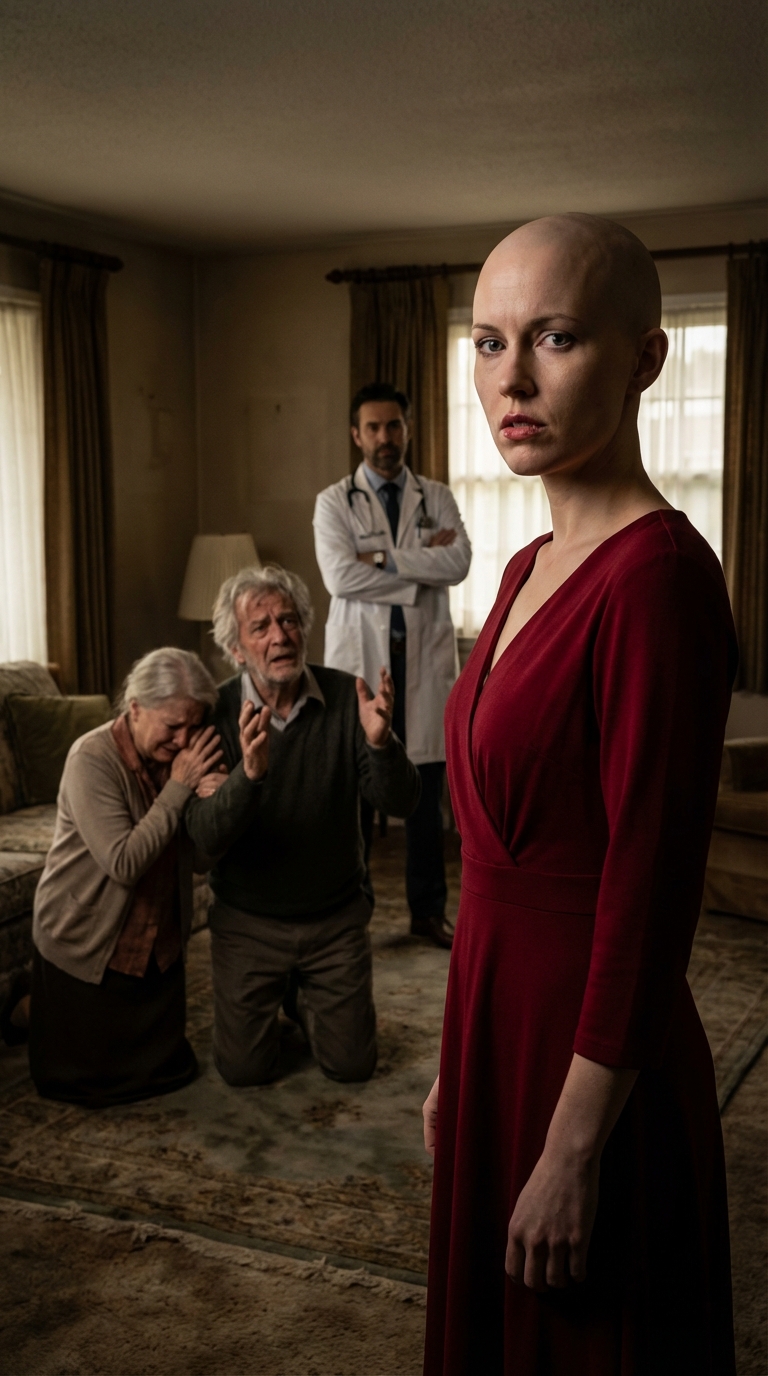
The Ledger of Neglect
I am Camille Atwood. I am thirty years old. And last week, my father called me crying.
It was a sound I had never heard before. In three decades, Richard Atwood had been a monolith—a man of granite principles and dry eyes, the kind of father who shook hands rather than hugged and believed emotions were a zoning violation in the architecture of a successful life.
But there he was, weeping into the receiver, his voice cracking into jagged shards of desperation.
Two years ago, the roles were reversed. I was the one crying. I had just received a Stage Three cancer diagnosis. I was twenty-eight, terrified, and standing in a hospital hallway that smelled of antiseptic and bad news. I called him for comfort. I called him because, despite everything, he was my dad.
And he gave me one sentence that I will never forget. A sentence that carved a canyon between us that no amount of time could bridge.
Six months of chemotherapy. Thirty-six trips to the hospital. Not a single visit from my family. They were too busy planning my brother’s wedding.
Now, the tables have turned. My father needs me. He is begging for my help. And my answer consisted of exactly four words.
Before I tell you what I did when the man who abandoned me demanded I save him, please take a moment to like and subscribe—but only if you genuinely connect with this story. Drop a comment letting me know where you are watching from and what time it is there.
Now, let me take you back to the day the ledger was opened.
The diagnosis
Two years ago, I was a Senior Graphic Designer at a mid-sized agency in Boston. It was the kind of place that prided itself on “industrial chic”—exposed brick walls, too many succulents dying a slow death on floating shelves, and an espresso machine that cost more than my first car.
I loved my job. I was good at it. I had clawed my way up from an unpaid intern fetching almond milk lattes to a Senior Designer in five years. I did it with no help, no nepotism, and certainly no handouts from the Bank of Dad.
My apartment was a one-bedroom walk-up in Somerville. It wasn’t a penthouse, but it was mine. I had a monstera plant on the windowsill that I had miraculously kept alive for three years, a stack of unread novels on the nightstand, and a routine that kept me grounded. Coffee at 6:30 A.M., gym three times a week, dinner with my best friend, Harper, on Thursdays.
That Wednesday started like any other. I was deep in the trenches of a campaign for a fintech startup, wrestling with a deadline that made my left eye twitch. My laptop was open, Slack notifications were pinging like a heart monitor, and I was in the flow.
Then my phone buzzed. A number I didn’t recognize.
I almost sent it to voicemail. But a cold premonition, a shiver that had nothing to do with the office air conditioning, made me pick up.
“Ms. Atwood? This is Dr. Patterson’s office. We have your biopsy results.”
I remember the exact temperature of my coffee—lukewarm and bitter. I remember the way the afternoon light sliced through the glass partition of the conference room, illuminating dust motes dancing in the air.
“The results are back,” the nurse continued, her voice professional but laced with a heaviness I recognized instantly. “Dr. Patterson would like you to come in tomorrow morning. Can you be here at 8:00 A.M.?”
They don’t call you in at 8:00 A.M. to tell you everything is fine.
The next morning, Dr. Patterson didn’t waste time with pleasantries.
“Stage Three breast cancer,” she said. Her voice was gentle, but the words hit me like a physical blow. “The tumor is aggressive, Camille. We need to start treatment immediately.”