

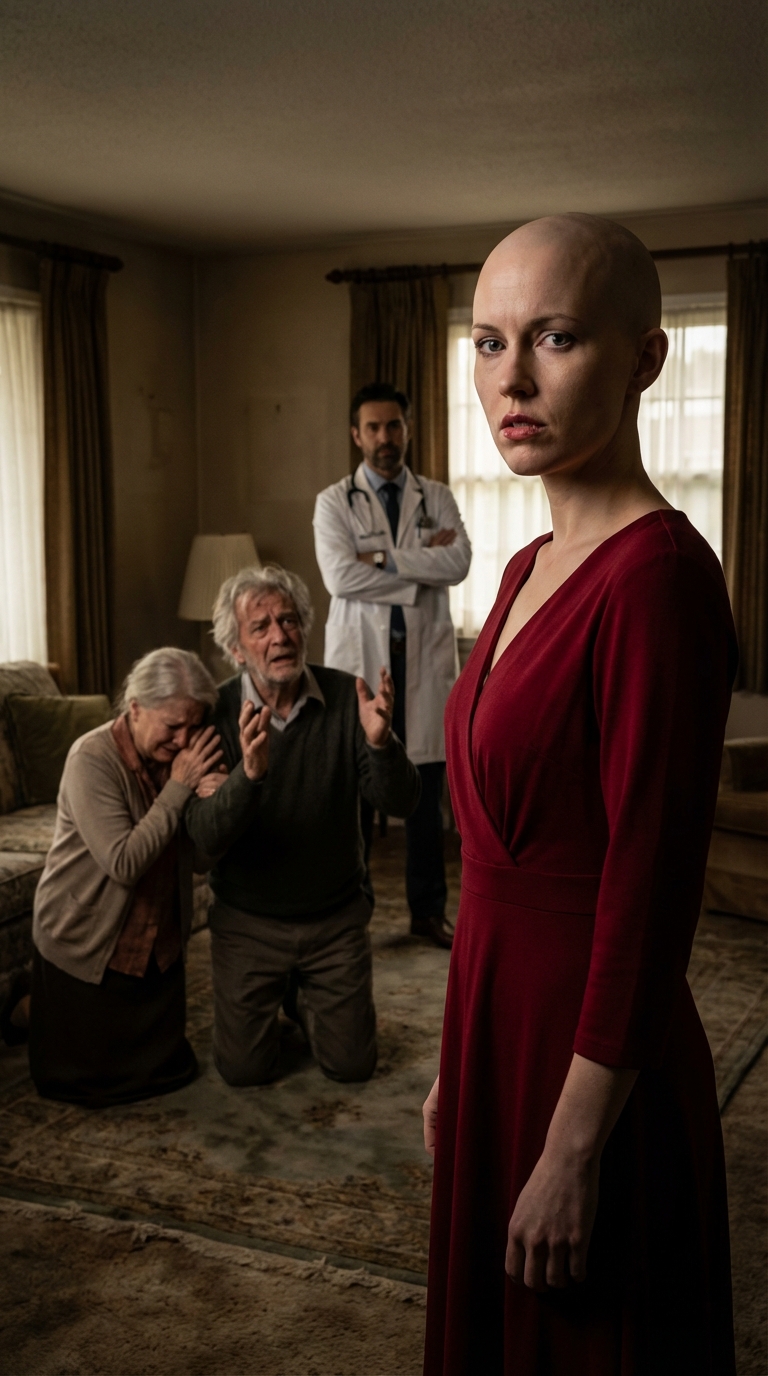
“We have discussed it as a family,” he said. “And we believe the best arrangement is for someone to move back home to help with my care.”
His eyes landed on me.
“Camille, you’re the obvious choice.”
I froze.
“You work from home,” he continued. “You don’t have a husband. You don’t have children. Your room is ready. It’s time you came back and contributed to this family.”
“Contributed?” I repeated softly.
“I have the baby coming,” Derek added quickly, not meeting my eyes. “And work is crazy. I can’t be in two places at once.”
“You have a responsibility to this family,” Mom added softly.
The entitlement was suffocating. They didn’t want me. They wanted a nurse. They wanted a servant.
“Before I answer,” I said, my voice steady, “I have a question.”
Dad frowned. “What?”
“When was the last time you asked if I was still in remission?”
Silence.
“Do you even know if I’m healthy? Or did you just assume I was available because I survived?”
“Camille, that’s not fair,” Mom started.
“Fair?” I laughed. It was a cold, sharp sound. “Let me tell you what isn’t fair.”
I reached into my purse. My hand brushed the cool glass of my phone.
“You say I have a responsibility to this family. But two years ago, when I was fighting for my life, where was this family?”
“We didn’t know it was that bad,” Derek muttered.
“You knew,” I said. “I told you.”
I pulled out my phone. I unlocked the folder.
“Dad,” I said, looking him in the eye. “I called you the day of my diagnosis. I was crying. I told you I had Stage Three cancer.”
“I… I don’t recall,” he stammered.
“I do.” I slid the phone across the mahogany table. “Here is the call log. And here is the text message where I asked for help with bills, and you told me you spent all your money on Derek’s wedding.”
I swiped the screen.
“Here are the texts where Mom ignored my chemo updates to ask about flowers.”
I swiped again.
“And here,” I pointed to the PDF, “is the hospital visitor log. Thirty-six sessions. Zero visitors. None. None. None.“
The room was silent. The only sound was the ticking of the grandfather clock.
Mom picked up the phone. Her hands shook as she read the evidence of her own neglect. She started to cry, but I felt nothing.
“I spent six months dying,” I said. “And you were planning a party. You didn’t visit once. Not once.”
“We made a mistake,” Dad rasped. “But that is the past. I need help now. I am your father.”
“And I was your daughter,” I said.
“Camille, please,” he said, tears finally spilling over. “I’m scared. I can’t do this alone.”
He looked small. He looked frail. For a second, the old instinct to please him flared up. But then I looked at the visitor log on the screen. None.
I stood up.
“Dad,” I said. “Two years ago, I told you I was scared. And you said, ‘We can’t deal with this right now.’“
I leaned in close.