

The Art of the Quiet War: How I Saved My Home from My Own Parents
The pounding started before my brain had fully registered the day. It wasn’t the polite, rhythmic knock of a neighbor returning a borrowed cup of sugar, nor the hurried rap of a delivery driver. This was the sound of authority. Deep, metallic, and demanding. It sounded like a battering ram against the wood, a noise that declared I no longer had the right to sleep in my own sanctuary.
I sat bolt upright in bed, my heart hammering against my ribs like a trapped bird. For a split second, the disorientation of sleep held me. Then, the pale gray light of 6:00 a.m. leaking through the blinds brought the room into focus. My throat felt thick, lined with cotton. I pulled on a sweatshirt, my movements instinctive, and stepped into the hallway. I walked softly, a habit form childhood, as if the floorboards themselves might betray my existence to whatever monster waited on the other side of the door.
“Sheriff’s office! Open the door!”
The voice was male, booming, and devoid of patience. My hands went ice cold. But I didn’t run. I didn’t scream. I moved with the deliberate, heavy calm of someone who learned long ago that panic makes you sloppy. And in my family, sloppy was the first step toward destruction.
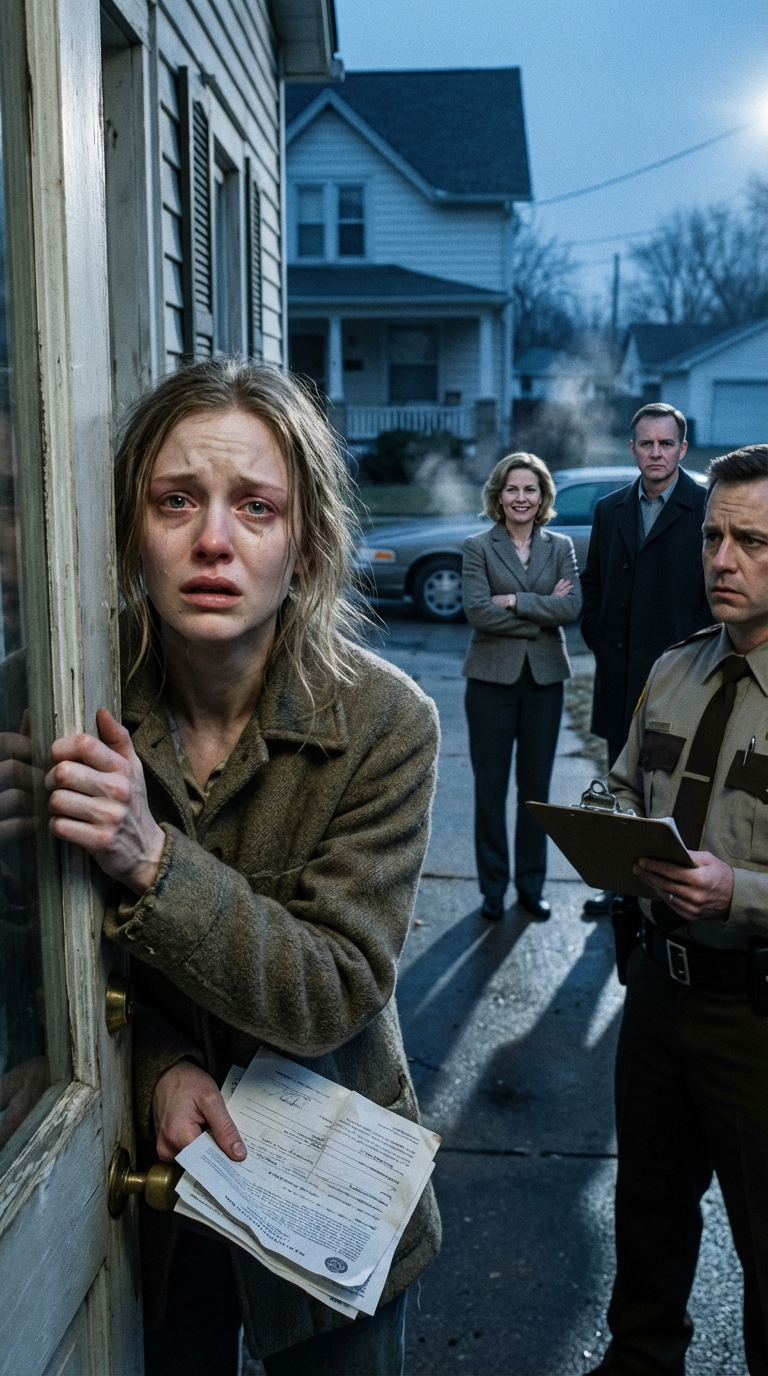
I flipped the porch light on and peered through the peephole. A deputy sheriff stood on my welcome mat. He wore a tan uniform with a heavy black vest, his hand resting on a clipboard of paperwork. His patrol car sat at the curb, lights off, a silent shark in the morning mist.
Then, my gaze shifted past him, across the street.
Standing near the neighbor’s mailbox, half-shrouded in shadow, were two figures I knew better than my own reflection. My parents. My mother stood with her arms folded across her chest, a posture of righteous judgment. My father had his hands buried deep in his coat pockets. They weren’t looking at the deputy with surprise. They were watching with satisfaction. They were spectators at an execution they had ordered.
I opened the door, leaving the chain lock engaged. The metal rattled, a thin line of defense.
“Ma’am,” the deputy said. His voice was calm but firm, the tone of a man who just wanted to get his shift over with. “Are you Tessa Ward?”
“Yes,” I replied.
He glanced down at the clipboard. “I’m Deputy Romero with the County Sheriff’s Office. I’m here regarding a writ of possession. It’s an eviction order.”
The word hit me physically, a shove to the chest. Eviction.
“This is my house,” I said. My voice was steady, a miracle of willpower. “There has to be a mistake.”
Deputy Romero didn’t blink. He had heard that sentence a thousand times. “Ma’am, I’m not here to debate ownership. I’m here to execute a court order.”
I stared at the paperwork in his hand. My name was printed there in stark black letters, looking for all the world like a delinquent tenant who had stiffed the landlord. Not the woman who paid the property taxes, who had replaced the roof shingles with her own savings, who had planted the oak tree in the backyard with her grandfather when she was fifteen.
“You should have done what the family asked!”
My mother’s voice cut through the morning air from across the street. It wasn’t a scream; it was a projection, loud enough for the neighbors to hear but pitched to sound like a plea.
“Pack, Tessa! This is happening today,” my father added, his voice flat and final, like a verdict delivered from a high bench.
Deputy Romero’s eyes flicked toward them, then back to me. A flicker of something—discomfort, perhaps—crossed his face. He lowered his voice. “Do you have somewhere you can go?”
It wasn’t a kind question. It was procedural. But it twisted my stomach into a knot.
“I’m not going anywhere,” I said, my voice hardening. “Not until you show me what this is.”