

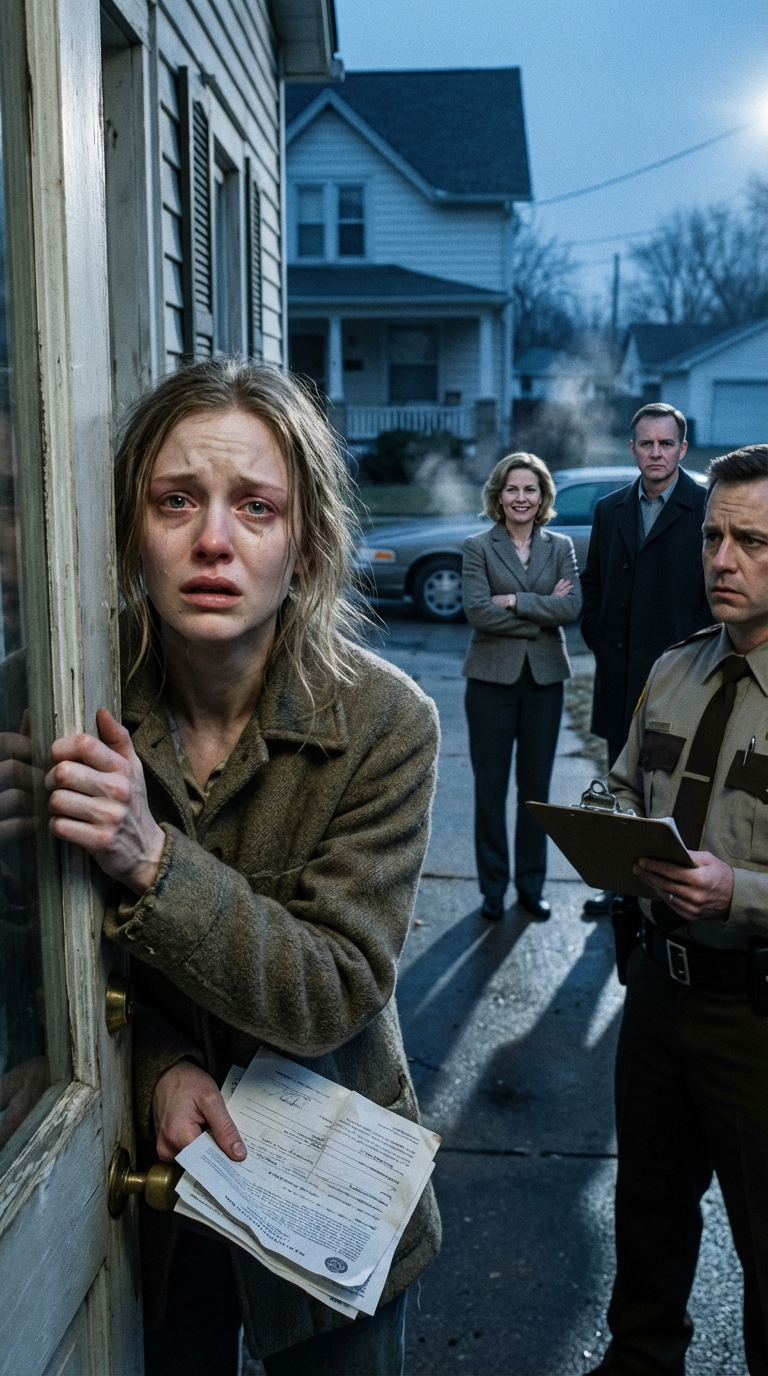
Department 14 was colder the next morning. My parents were there again, but the confidence was gone. They looked like cornered animals. Sitting behind them was a woman I didn’t know—Carla Mendes. She looked terrified, clutching a worn black book to her chest.
Judge Halprin didn’t waste time.
“Ms. Mendes, please step forward.”
Carla approached the witness stand. She was sworn in.
“You notarized the deed in question?” Judge Halprin asked.
“Yes, Your Honor,” Carla squeaked.
“Please produce your journal.”
Carla handed the book to the bailiff, who handed it to the judge. The room was silent. I could hear the hum of the air conditioning.
Judge Halprin flipped through the pages. She stopped.
“Ms. Mendes,” the Judge said, her voice dangerously calm. “This entry for the 13th… it lists a driver’s license number for Tessa Ward ending in 931.”
Judge Halprin looked at me. “Ms. Ward, what are the last three digits of your license?”
“617,” I said clearly.
The Judge looked back at the notary. “The license number doesn’t match. And the signature in your book…” She turned the book so Carla could see it. “This is a scribble. It does not match the defendant’s signature on her court filings.”
Mr. Pike stood up, sweating now. “Your Honor, clerical errors happen—”
“Sit down!” Judge Halprin snapped. She held up the paper I had submitted. “I have here badge access logs from the defendant’s employer. They place her inside a secure facility ten miles away at the exact time you claim this notarization took place.”
She leaned over the bench, staring down at Carla. “Ms. Mendes, I am going to ask you once. Did you witness Tessa Ward sign this deed?”
Carla looked at my parents. My mother shook her head slightly, a desperate, microscopic motion. My father stared at the floor.
Carla burst into tears.
“No,” she sobbed. “I didn’t. They brought it to me signed! Diane said it was fine! She said it was a family matter!”
The courtroom erupted in whispers.
“Quiet!” Judge Halprin banged her gavel. She looked at my parents with a disgust that was palpable.
“Mark and Diane Ward, stand up.”
They stood. My mother tried to arrange her face into something pitiable, but the mask had slipped.
“This court is vacating the default judgment,” Judge Halprin announced. “The writ of possession is dissolved. The unlawful detainer is dismissed with prejudice.”
My father opened his mouth.
“I am not finished,” the Judge cut him off. “I am referring this matter to the District Attorney’s office for investigation into real estate fraud, forgery, and conspiracy. Ms. Mendes, your notary commission is being referred for revocation.”
“Your Honor—” my mother wailed.
“And,” Judge Halprin continued, her eyes locking onto mine, “Ms. Ward, you are granted a restraining order against the plaintiffs. If they step foot on your property, they will be arrested.”
She slammed the gavel down. “Get out of my courtroom.”
I walked out past my parents. They didn’t look at me. My mother was weeping into her hands, but I knew it wasn’t remorse; it was the shock of consequences. My father looked at me with pure hatred, the look of a man who believes he is the victim because his victim fought back.
My phone buzzed again. Another text from the unknown number.
Forget it.
I blocked the number.
I spent the next week fortifying my life. I changed the locks. I installed cameras. I recorded the court order against the title of my house so no one could ever try to sell it out from under me again.
The investigation took months. The “family” shattered. Cousins took sides. Aunts called to call me ungrateful. I blocked them all. I didn’t need them. I had my house. I had the oak tree my grandfather and I planted. I had the truth.
One evening, weeks later, I stood on my porch. The street was quiet. No patrol cars. No watching eyes. Just the wind in the leaves.
My parents had tried to use the law as a weapon, assuming I would be too scared or too ignorant to fight back. They thought family meant compliance. They forgot that my grandfather raised me, too. And he taught me that the only thing that stops a bully is a record they can’t erase.
I didn’t feel triumphant. I felt heavy. But as I locked my door—my door, to my house—I felt something else.
I felt safe.