

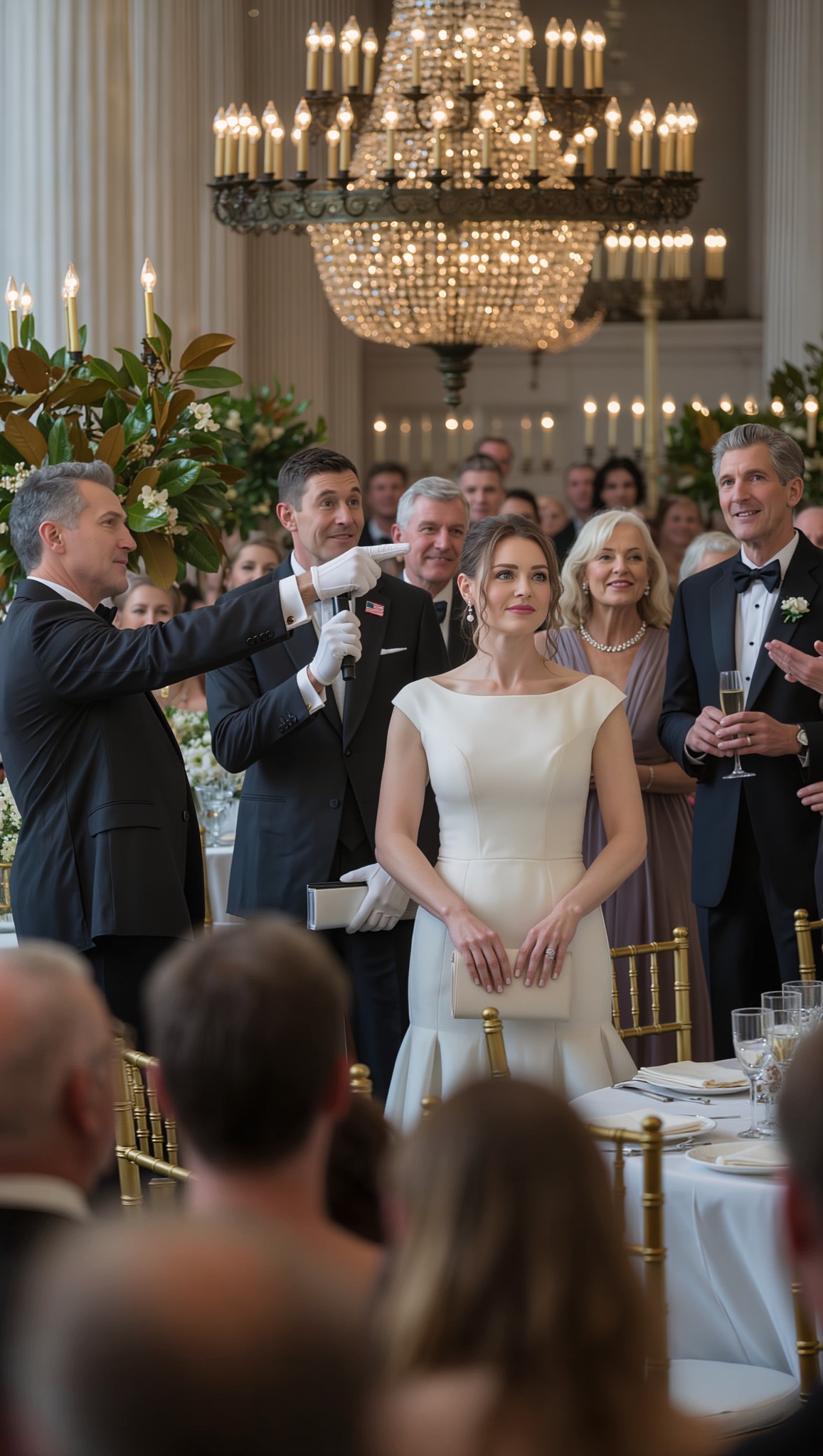
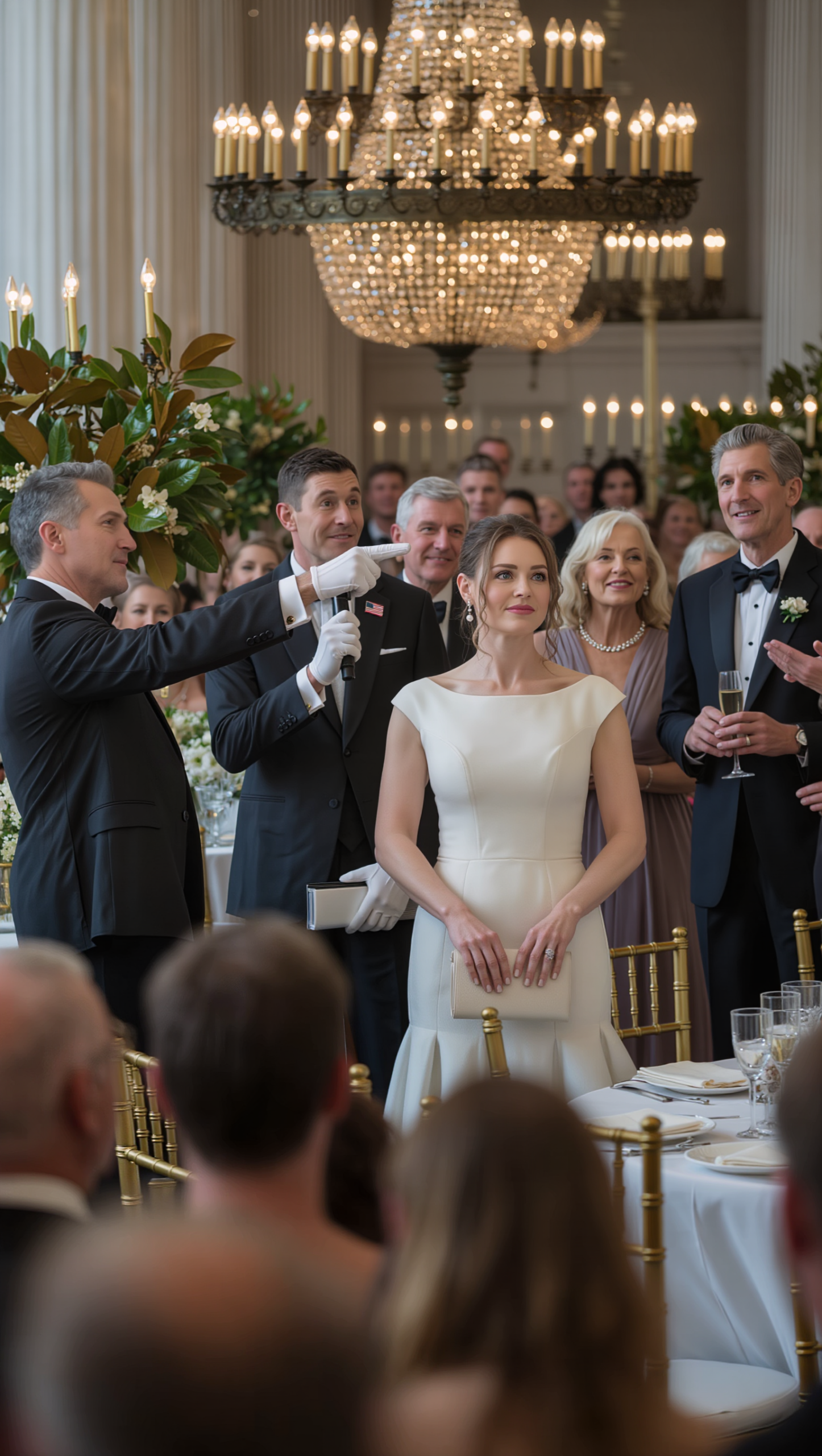
At my sister’s wedding, I saw my parents again after eighteen years—nearly twenty—since they abandoned me. “Be grateful Madison still pities you,” they sneered, like pity was the only seat I’d earned in their world. Then the groom grabbed the mic, smiled, and said, “Admiral, front row.”
Their faces went pale.
The last time I asked my father what I’d done wrong, he didn’t even look up from his coffee. He just said, “Existing isn’t the same as being useful, Melissa.” It wasn’t shouted. It didn’t need to be. That sentence stayed in me longer than any bruise ever could. I stopped asking after that. Stopped defending myself. Stopped hoping he’d see the hours I’d spent trying to earn a place in a family that mistook silence for strength.
Years passed, and I learned to live quietly, to take the weight without letting it show. But quiet has an expiration date. There comes a moment when you realize the only way to survive is to stop waiting for someone else to call what you’ve done enough. So when that invitation arrived—when that invitation, the one with my sister’s name and her handwriting tucked neatly inside—I just folded it once, slow and steady, and thought: they have no idea what kind of silence is coming back to their table.
The kitchen clock ticked with military precision, slicing through the damp Charleston night. The smell of coffee hung heavy in the air, bitter and disciplined, just like him. I stood in the doorway holding a letter that should have meant everything, a letter that should have changed the way he looked at me. He didn’t look up, not once. The newspaper rustled the way it always did before something final was said. The old lamp cast its yellow light across the wood floor, catching the edges of his uniform hanging on the chair, brass buttons polished, creases so sharp they could cut.
I waited, my throat dry, the letter trembling slightly in my hand.
He said it like an order, flat and cold. “The Navy doesn’t need women who crave applause.”
The words hit harder than if he’d shouted. He didn’t need volume. He had authority. Every syllable carried the weight of a man who had spent his life commanding storms and men alike. I wanted to tell him it wasn’t about attention, that I wanted to serve for the same reason he did—to earn something real, something that couldn’t be taken. But when I opened my mouth, no sound came out.
My mother stood near the counter, her hands gripping a tin of cookies she’d baked earlier. She didn’t move, didn’t speak, just watched the scene unfold with eyes that had learned the cost of interference. Her silence was familiar—soft, practiced, and devastating.
I tried once more, quieter this time, like a plea disguised as a statement. “I just wanted to earn what you had.”
He folded the newspaper slowly, deliberately, as if sealing a verdict. “Then earn it somewhere else.”
The clock ticked again. The refrigerator hummed. My heartbeat filled the spaces between them.
That was the moment I understood. Love in this house sounded like command.
I stood there a while longer, hoping he might change his mind, that maybe he’d see the letter and realize it wasn’t rebellion. It was reflection. But the silence stretched, and the longer it lasted, the clearer it became that silence was the only language we spoke fluently.
When I finally moved, my footsteps echoed too loudly in the narrow hallway. I walked past the living room, past the framed photos of ships, medals, and ceremonies, all arranged perfectly on the wall. There was a family photo among them, one from when I was still allowed to stand beside him. My reflection trembled against the glass as I passed.
In my room, the letter lay folded in my hand, useless now. I packed what I could fit into a small duffel bag: a pair of jeans, two shirts, a jacket that still smelled faintly of the sea. My eyes stopped at the cookie tin on my desk, half full and cooling—my mother’s quiet offering, sweetness made and withheld. I took it. It felt like proof that she still cared, even if fear had stolen her voice.
When I stepped back into the kitchen, my father hadn’t moved. His posture remained straight, his jaw tight, his focus unwavering. He didn’t glance up, not even when I set the letter on the table where he could see it.
My mother whispered then, so faint I almost missed it. “Be careful out there.”
It wasn’t permission. It was surrender.
I nodded, though she couldn’t meet my eyes. The air felt too thin, too heavy to breathe. I opened the door, the hinge creaking like it wanted to warn me, and the night air hit my face—wet, sharp, alive. Behind me, the door clicked shut. That small metallic sound ended something: youth, belonging, maybe the illusion that family could be repaired with effort alone.
I walked down the porch steps without looking back. The streets were empty, the sky thick with mist. I didn’t know where I was going yet, only that I couldn’t stay. Every step away from that house felt like tearing fabric—quiet, inevitable, permanent.
At the corner, under a flickering streetlight, I stopped and turned toward the house one last time. The kitchen window still glowed faintly yellow. Through the glass, I could see him rigid, motionless, the outline of a man who believed control was the same as strength. In that moment, I realized something sharp and cold.
Respect wasn’t something he owned.
No matter how many medals hung on his wall, he could deny me, dismiss me, strip me of every name he thought mattered. But he couldn’t define what I became outside his reach.
I didn’t cry. I’d learned long ago that tears had no rank in that house. I just breathed once, deep and steady, the way I’d seen him do before stepping into a storm. The porch light flickered behind me, a heartbeat fading in reverse. I kept walking until it disappeared, until even the echo of that house dissolved into the sound of my own footsteps.
I didn’t know it then, but the silence I carried out of that door would follow me for years. It would shape every choice, every victory, every scar. And somewhere deep inside, buried beneath anger and hurt, a promise began to form—quiet, unspoken, and absolute.
One day I would learn exactly what it meant to command respect.