

The morning light slipped through the blinds, thin and deliberate, painting lines across the desk where I’d left last night’s coffee half finished. The ocean outside was quiet, its rhythm steady, the kind of calm that always came before something I didn’t want to face. I almost missed it at first: the envelope sitting at the edge of the desk, white against the dark wood, perfect in its stillness.
My name was written on it in familiar handwriting. I knew before I even touched it. Madison. The letters looped neatly, practiced, graceful—always her way of making everything look better than it really was. A faint scent of roses drifted up as I tore it open, too soft to be kind, too familiar to ignore.
Inside the card was thick, embossed, expensive. The words were short, precise, like they’d been rehearsed.
It’s been long enough. Maybe it’s time.
No apology. No warmth. Just civility dressed in perfume and white paper. I could almost hear her voice reading it—gentle but hollow, the way people talk when they want to sound forgiving but really just want witnesses.
I set the card down and stared out the window. Newport stretched gray and blue before me, the tide curling in with slow precision. For years, I had convinced myself distance could dull memory, that the salt air and the long deployments had washed Charleston out of my system. But the ache never left. It only learned how to breathe quieter.
I picked up the envelope again, tracing the embossed initials with my thumb. The wax seal on the back had been pressed with something delicate, a rose. She’d thought of every detail, as always. I almost laughed. Even her invitations were performances.
The words “Maybe it’s time” stayed in my head, stubborn and heavy. Time for what—forgiveness, display, or just another tableau where the King family looked whole to the people who didn’t know better?
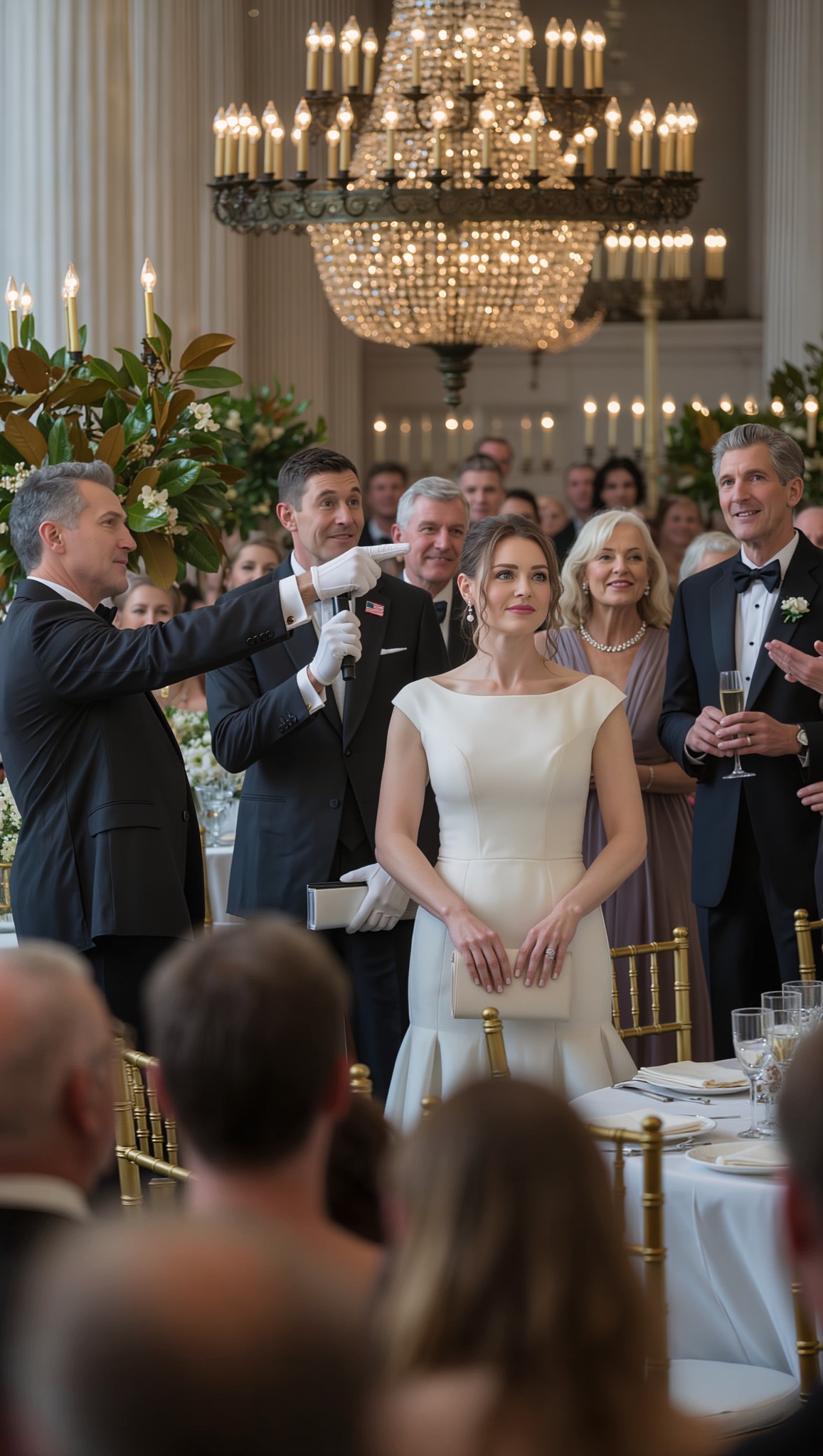
I could already picture the wedding: Charleston society, lace and champagne, my father at the head of the table, his voice still carrying like a command even after all these years. I wouldn’t be invited for love. I’d be summoned for symmetry.
I leaned back in my chair, watching the sunlight inch closer to the envelope. It wasn’t the first time Madison tried to pretend the past had an expiration date. She’d done it at Mother’s funeral, too—standing straight, hands folded, speaking about peace while avoiding my eyes. We’d both played our parts then. Hers was to soothe the crowd. Mine was to disappear quietly after the service.
I reached for my laptop, the habit automatic, the hum of its startup louder than the silence in the room. The inbox blinked to life. A new message at the top from headquarters. The subject line froze me for a moment.
Vice Admiral consideration. Pending review.
For a second, I didn’t breathe. Not from excitement, not even pride—just the irony of it all. The same week I was being asked to return to the house that exiled me, the same world that doubted I could command anything was preparing to pin a second star on my shoulder.
Funny timing.
The thought came out like an exhale, half amusement, half disbelief. Life had a way of circling back right when you stopped asking it to.
I closed the laptop and let the ocean fill the silence again. Outside, gulls cried over the water. The light had shifted now, warmer, sharper. I stood and began to pack—slow and deliberate. A few clothes. My uniform pressed in its bag. The cookie tin still tucked in the bottom drawer of my nightstand, a habit I’d never broken. It wasn’t sentiment anymore, just a reminder of what silence could cost.
As I zipped the bag shut, a thought flickered through me like static. Twenty years of distance and rank, and still the weight of one man’s words could tilt the air in the room. He’d said I would never command respect. Maybe he’d been right once, but I had learned something in the years he refused to see me.
Respect wasn’t granted. It was built—brick by quiet brick—until one day you stopped needing anyone else to hand it to you.
The phone buzzed on the counter. A message from the office—confirmation for a briefing I’d be missing, polite congratulations I hadn’t asked for. I ignored it. The drive south would take close to ten hours, long enough for doubt to crawl in, long enough for old ghosts to start talking.
Before leaving, I stood by the window one last time. The sea was blinding in the morning sun. For a moment, I saw Charleston’s river overlaid on it—the Cooper winding and golden, the same view from the porch where everything ended. Some places never really let you go. They just wait until you come back to finish the conversation.
I grabbed my keys, slid on my jacket, and headed down the stairwell. The Navy-issued SUV waited at the curb—black, spotless, impersonal. When the engine turned over, its low hum filled the narrow street. The scent of roses still clung to my hands.
As the highway opened before me, the city thinned into coastline. The world grew quieter, the way it always does when you’re driving toward something you don’t quite forgive yet. Signs flashed by: Providence, Richmond, Fayetteville, Savannah. Each one felt like a countdown. I kept one hand on the wheel, the other tapping lightly against my leg, the same rhythm I used to steady my breathing before a storm.
The farther south I went, the more I felt the years peeling back. Every mile pulled me closer to that porch, that night, that door.
When the sign appeared—Charleston City Limit—I slowed just enough to feel the weight of it. The same air, thick and familiar. The same kind of light that hides nothing. I didn’t know what version of them was waiting for me now: the father who turned his approval into punishment, the sister who’d mastered charm like survival, the ghosts that never learned to fade.
The road curved, stretching into sunlight. For the first time in years, I wasn’t running from that house. I was driving straight toward it. Whatever waited there—apologies, pretense, silence—it didn’t matter. The roses were fading, but their scent lingered. And for the first time since that door closed behind me, I didn’t feel small walking back toward the fire.
I felt ready to breathe in the smoke and decide for myself what would rise from it.
Charleston shimmered under the noon sun, the air thick with heat and memory. The red brick house stood exactly as I remembered—solid, stubborn, the same way he used to stand when I was a child, trying to earn his attention. The wooden porch creaked beneath my boots as I climbed the steps, the same sound that had followed me the night I left.
The brass handle was polished. Of course it was. Everything he owned had to gleam, even the things that no longer mattered.
When the door opened, the smell of old leather and coffee hit me like a familiar reprimand. Dust motes floated through narrow strips of sunlight that cut across the hallway. Inside, time hadn’t moved an inch: the same hardwood floor, the same framed naval charts on the wall, the same order that felt less like comfort and more like surveillance.
He was exactly where I knew he would be—in the armchair by the window, posture immaculate, reading the paper as if discipline alone could ward off age. The light caught on his silver hair, highlighting the edges of precision. He didn’t look up.
“Still pretending that uniform fits,” he said finally, his tone dry, almost casual, as if no years had passed, as if we were still in that kitchen where he’d ordered me out of his house.
“It fits better than your approval ever did,” I said.
Silence spread through the room, heavy and sharp.
He didn’t flinch. He just folded the paper once, clean and deliberate, the sound crisp in the stale air. On the table beside him sat a cup of black coffee gone cold, a pair of leather gloves, and the old pocket watch he used to time everything—conversations, tempers, even affection. Every object in the room felt like it had been placed there to remind me of the rank I never truly held in this house.
He lifted the cup, took a sip, and set it back without looking at me.
The clock on the mantle ticked too loudly.
I scanned the room, letting my eyes drift to the wall behind him. There it was: the family photograph, framed, polished, still hanging in perfect alignment, but the corner where I once stood had been cut away. The clean edges of the empty space were a wound that hadn’t closed right. He hadn’t replaced it, hadn’t discarded it either. He’d left it mutilated, preserved like evidence of a decision he didn’t want to revisit.
I took a slow breath. You kept the photo, I thought. You just couldn’t stand the face that proved you were wrong.