

Outside, the bells began again, their sound fuller now, carrying over the river, across the rooftops, through the same city that had once turned its back on me. The doors opened to blinding sunlight. I paused on the steps, the air heavy with heat and salt, the river glinting beyond the rooftops behind me.
The music swelled to its final note—triumphant and hollow.
I didn’t turn around. The bells kept ringing.
Each one a reminder: some victories are quiet, some humiliations are temporary, and some wounds don’t bleed.
They shine.
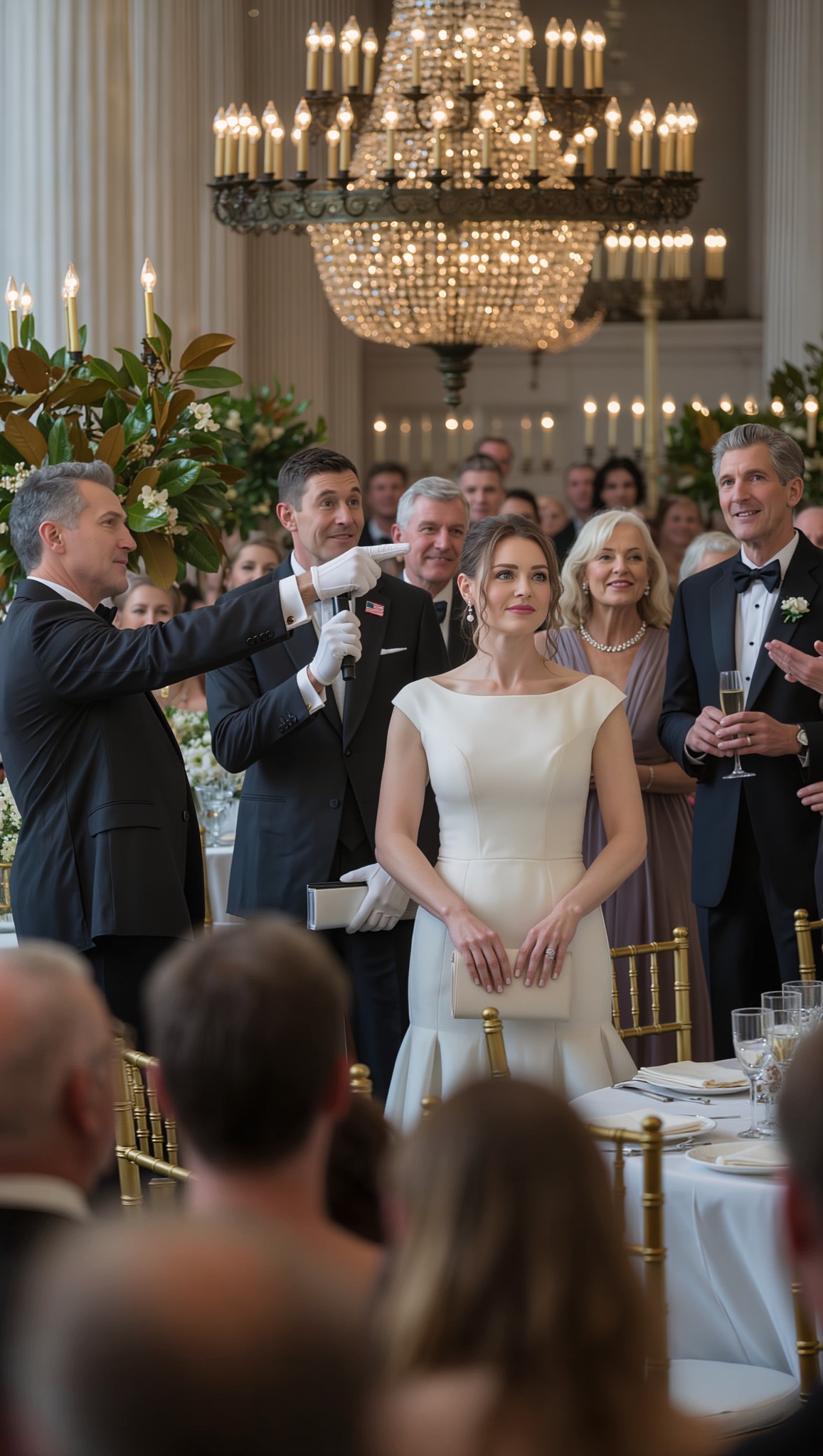
Cooper Hall glowed in the last light of day, its glass walls turning the river into liquid gold. The chandeliers above threw pale reflections across the tables, and the faint notes of a jazz trio drifted through the hum of voices and clinking silver. Laughter floated through the room—soft and polite, the kind that never quite reached anyone’s eyes.
I was seated halfway down the table, the white of my uniform catching the glow of the chandeliers. The satin and lace of wedding guests shimmered under the warm light, a sea of champagne glasses and conversation. Outside, the river shimmered in the orange haze of sunset, calm and indifferent.
My father sat at the head of the table, perfectly framed by the light behind him. He looked comfortable in his element—commanding, confident, adored. To his right, Madison and Blake leaned close together, exchanging tired smiles as toasts rolled on around them. I’d learned to read those smiles. They were the same kind my mother used to wear when duty demanded grace.
The waitstaff cleared plates, replacing them with rows of flutes. The pianist’s melody grew brighter, faster. Someone at the far end of the table told a joke that drew a wave of laughter. My father chuckled too, not because it was funny, but because laughter belonged to him.
It always did.
He stood, glass in hand, and the room fell silent without him having to ask.
“Family,” he began, “is where we learn service. Some of us learn it early. Others confuse it with pride.”
The words fell smooth, polished by years of practice. They sounded like wisdom until you realized they were aimed at you. A few awkward chuckles rose from the guests.
Madison’s smile froze, then broke. She stared down at her hands. Blake shifted beside her, but my father didn’t notice.
I lifted my glass of water, the condensation cold against my hand. The jazz faded to a murmur. I said nothing. My silence pressed into the space his words had left behind. He looked at me briefly, satisfied, then continued his toast as though nothing had happened.
“To family,” he said. “To service.”
Glasses lifted.
I didn’t raise mine.
The water caught the light, a single prism among a hundred glittering wines.
Then the sound of a chair scraping the floor cut through the room.
Blake stood, his expression calm, but his voice carrying clear. He held the microphone the MC had left on the podium, the faint feedback making a few heads turn.
“There’s someone here tonight,” he said, “someone who knows more about service than any of us ever will. Someone who led us through storms most of you couldn’t imagine.”
He turned toward me.
“Admiral Melissa King. Ma’am.”
It was as if the air left the room. The jazz stopped. The chatter froze mid-sentence. A few people blinked, unsure if they’d heard correctly. Then someone whispered near the back, low and disbelieving.
“The Black Widow.”
The name spread like current through the room—quiet but unstoppable. I’d heard it before, whispered in briefing rooms, printed in mission reports that never saw daylight. Hearing it here among champagne and lace felt surreal.
Blake kept his gaze steady. I could see it in his eyes now, the recognition that hadn’t been there before—the memory of a desert night, of radio static and orders barked through chaos, the gratitude that didn’t need explaining.
He raised his glass again. “To real service.”
And then, one by one, people began to stand.
First the men in uniform—older officers, some retired, some still serving—straightening instinctively, their movements crisp. Then others followed, guests unsure but drawn by the weight in the air. Chairs scraped the polished floor, the sound like surf breaking against steel.