

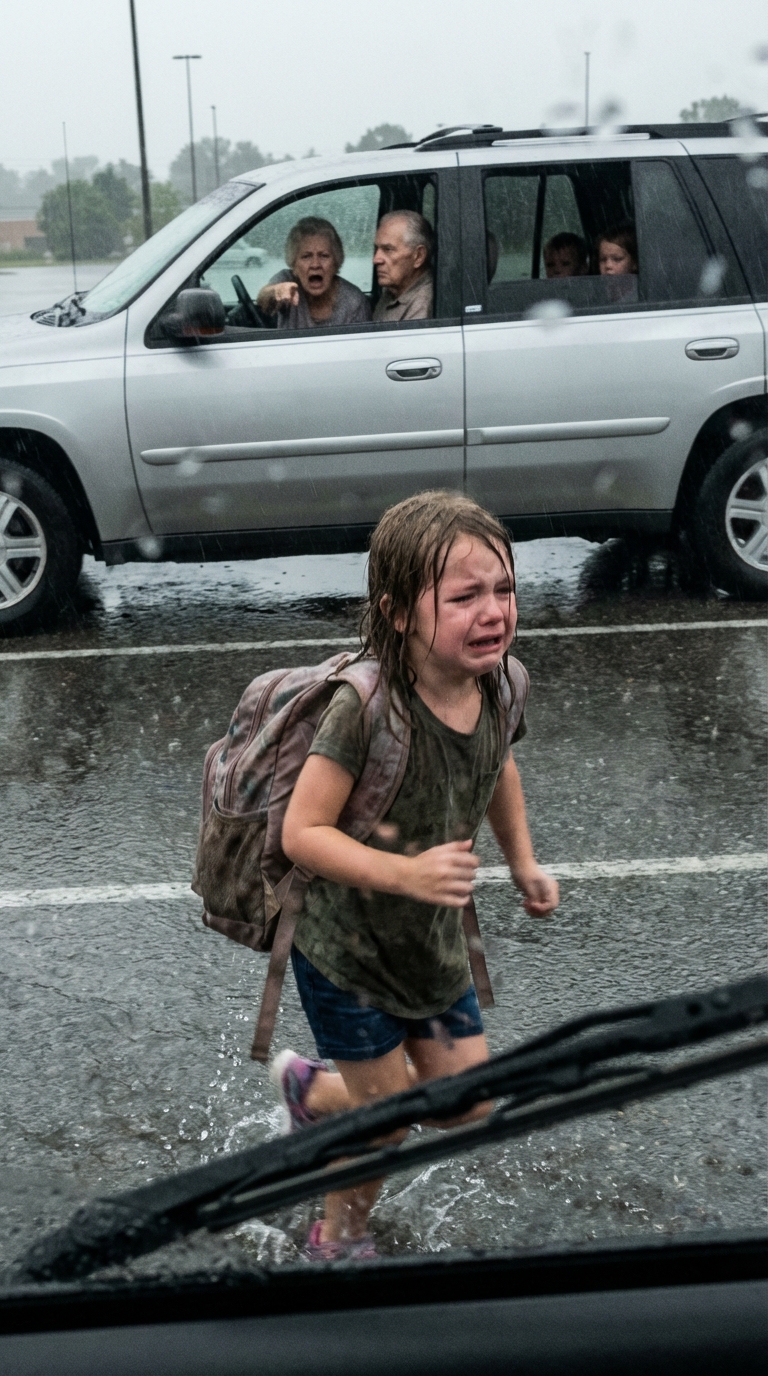
Then came the flying monkeys. Aunts and cousins I hadn’t spoken to in years began messaging me, telling me I was being cruel to the elderly. “Respect your parents,” they typed from their moral high horses. I blocked them all.
But the real blow came two weeks later.
I walked out to my car after work to find it listing to the left. Two tires had been slashed. Keyed into the driver’s side door was a single word: BITCH.
I stood there, the parking garage lights humming overhead, and felt a cold shiver of fear. This wasn’t just financial panic anymore; this was vengeance.
I called David. “They slashed the tires.”
“I’m calling the police,” David said, his voice deadly calm. “And then I’m calling a lawyer.”
We hired Richard Chen, a bulldog of an attorney who specialized in family disputes and harassment. We handed over the texts, the voicemails, the photos of the car, and the spreadsheet.
“This is good,” Richard said, tapping the file. “The vandalism is hard to prove without video, but the pattern of harassment is clear. We send a cease and desist immediately. If they violate it, we go for a restraining order.”
The legal letter seemed to startle them into silence, briefly. But silence in the face of financial ruin is rarely peaceful. It’s the sound of a vacuum before the implosion.
Three months passed.
The fallout was spectacular. Without my funding, the house of cards collapsed. My parents’ home went into foreclosure. They tried to sell, but the market was soft, and the house needed repairs they couldn’t afford. They were forced to move into a grim, two-bedroom apartment in a rougher part of town.
Miranda’s life imploded even faster. Her husband, Quentyn, apparently hadn’t realized how much of their lifestyle was subsidized by “Auntie Moneybags.” When the tuition checks bounced and the kids were expelled from private school, the fighting started. He left her a month later. Miranda was forced to take a job as a receptionist at a dental office—a job she considered “beneath her.”
I watched it all from a distance, feeling a strange, hollow sort of peace.
My life, conversely, was blooming. Without the $7,500 monthly hemorrhage, David and I were suddenly flush with cash. We paid off our own debts. We started a real college fund for Lily. And, six months after the storm, we booked a trip to Disney World.
We were sitting on the balcony of the resort hotel, watching the fireworks burst over Cinderella’s Castle. Lily was asleep in the room behind us, exhausted from a day of pure, unadulterated joy.
“She didn’t ask about them once,” David said quietly, swirling his drink.
“No,” I replied. “She’s happier, Dave. She doesn’t have to compete for affection anymore. She doesn’t have to wonder why Grandma bought Khloe an iPad and got her a coloring book.”
“You saved her,” he said.
“I tried.”
“No, you did. You cut out the rot.”
We sat in silence, the boom of the fireworks echoing like distant cannon fire. I felt lighter than I had in twenty years. But the past has a way of trying to claw its way back into the present.
When we returned home, there was a letter in the mailbox. It had no return address, but the handwriting was unmistakable. It was my mother’s script—looping, elegant, and frantic.
David plucked it from the stack. “Do you want me to burn it?”
I looked at the envelope. “No. I need to know.”
I opened it in the kitchen. It wasn’t a threat. It was a plea.
My Dearest Daughter,