
I am writing this from the apartment. It smells like mildew, and the neighbors argue all night. I miss my garden. I miss my life.
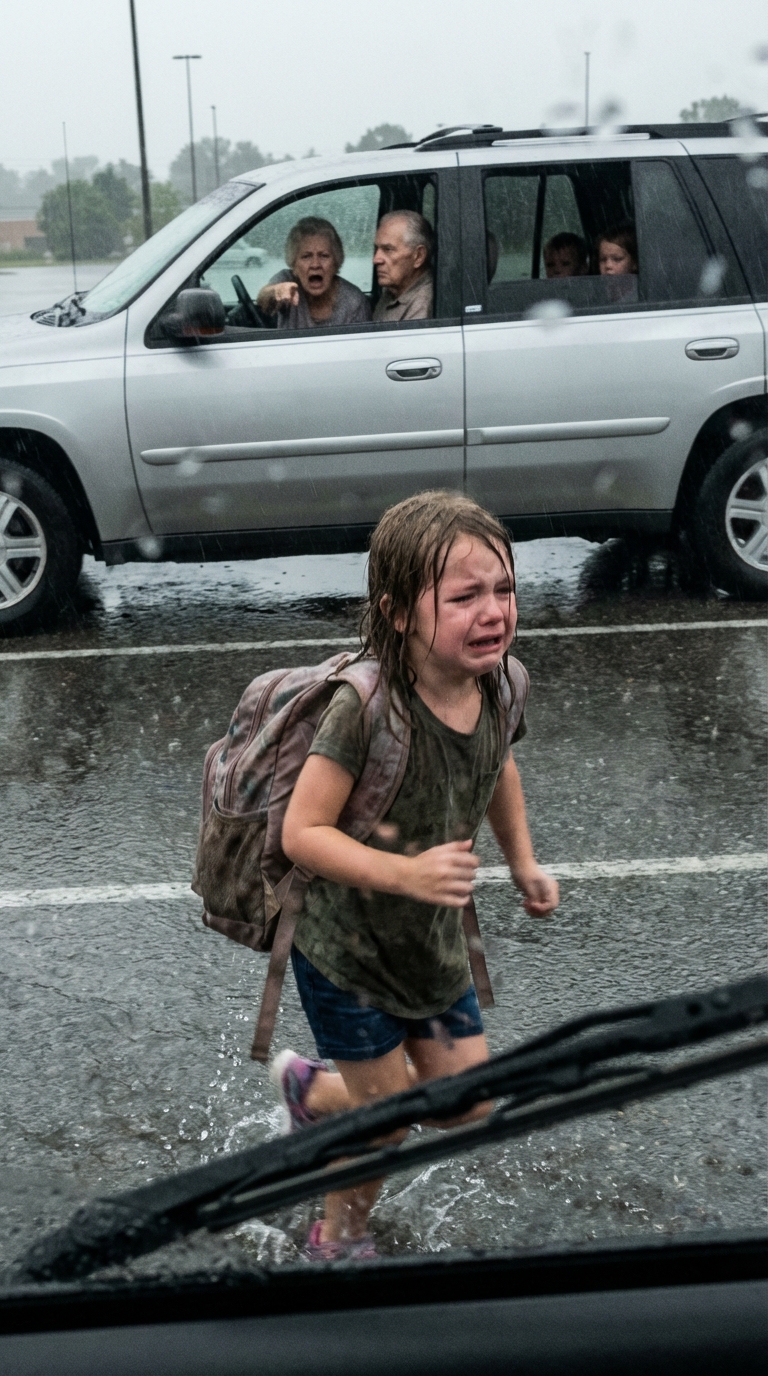
I know we hurt you. I know what we did to Lily was wrong. I replay that moment in the car every day. Miranda was in my ear, saying we were going to be late for her dinner reservation, saying you didn’t respect our time. I was weak. I listened to her. I am so sorry.
Your father is depressed. He sits in the chair all day and stares at the wall. We have lost everything. Please, honey. We are your parents. We made you who you are. Don’t let us end our lives like this, in poverty and shame. We don’t need the country club. We just need help with the rent. Just a little. Please.
Love, Mom.
I read the letter twice.
The old me—the daughter who craved approval, the peacekeeper—felt a pang of guilt. I imagined them in a dark, damp apartment. I imagined my father’s silence. It tugged at the strings they had installed in me since birth.
But then, I remembered the rain.
I remembered Lily’s shivering body. I remembered the words “stray dog.” I remembered the tire slashed in the parking lot.
They weren’t sorry they hurt Lily. They were sorry they lost the house. They were sorry the consequences had finally arrived.
I took a pen and a piece of paper. I wrote a single sentence.
You chose to leave Lily in the rain; I choose to leave you in the past.
I put the note in an envelope, addressed it to their new apartment, and sealed it.
A year later, I ran into my father at the grocery store.
It was inevitable, really. We lived in the same city. I turned into the cereal aisle, and there he was, staring at a box of generic bran flakes. He looked frail. His hair was thinner, his posture slumped.
He looked up and saw me. For a moment, his eyes lit up, a reflex of hope.
“Sweetheart,” he breathed, taking a step forward.
I didn’t move. I didn’t smile. I stood my ground next to the Lucky Charms, shielding my cart.
“How… how is she?” he asked, his voice cracking. “How is Lily?”
“She’s eight now,” I said evenly. “She’s on the honor roll. She plays soccer. And she doesn’t remember you.”
That wasn’t entirely true—she remembered—but she no longer asked. She had healed.
He flinched as if I had slapped him. “That’s cruel.”
“No, Dad,” I said, gripping the handle of my cart. “Cruel is what you did. Cruel is realizing that your love was a subscription service that I stopped paying for. This?” I gestured between us. “This is just justice.”
“We’re family,” he whispered, tears gathering in his eyes.
“Family protects each other,” I replied. “You protected Miranda’s comfort over my daughter’s safety. You made your choice. Live with it.”
I turned my cart around and walked away.
He called my name once, a broken, desperate sound that echoed off the linoleum floor. I felt a tightness in my throat, a phantom limb pain where my parents used to be. But I kept walking.
I walked out of the store, into the bright, blinding sunshine. I loaded my groceries into my car, the one with four intact tires. I drove home to a house that was paid for, to a husband who respected me, and to a daughter who knew, without a shadow of a doubt, that she would never, ever be left behind in the storm again.
I was an orphan by choice, and for the first time in my life, I was free.
Like and share this post if you find it interesting.