
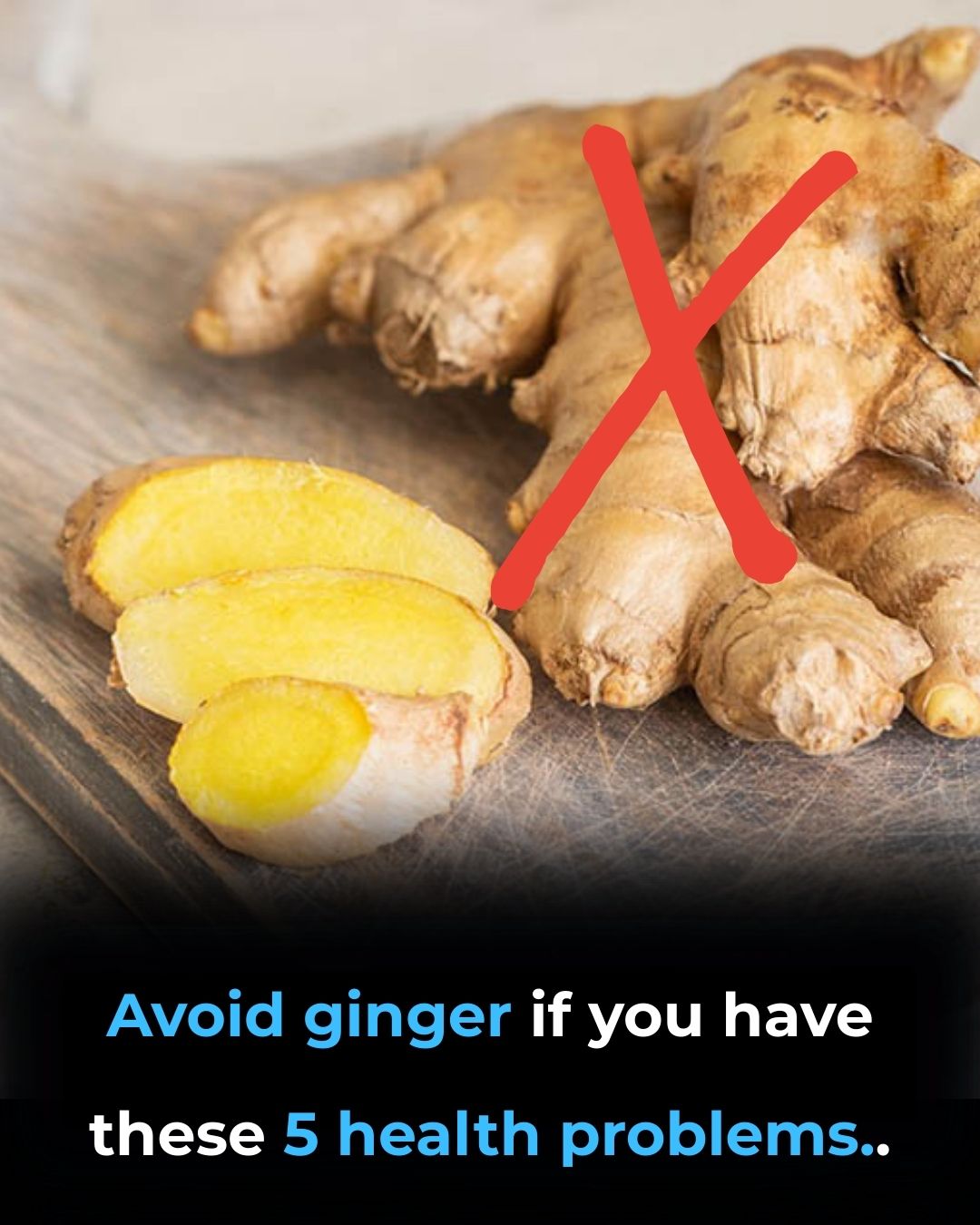
Ginger is often celebrated for its powerful anti-inflammatory and digestive benefits. It’s a popular home remedy for nausea, colds, and muscle pain — and for most people, it’s perfectly safe.
However, not everyone reacts well to ginger. For certain individuals with specific health conditions, regular or high intake of ginger may actually do more harm than good.

Here are five health situations where you should think twice before adding ginger to your diet — plus safer, healthier alternatives.
1. 🩸 People with Bleeding Disorders or Taking Blood Thinners
Why to avoid ginger:
Ginger naturally contains compounds that thin the blood and prevent clotting. While this can help reduce inflammation and improve circulation in healthy individuals, it poses a risk for people with bleeding disorders or those on anticoagulant medications such as warfarin, aspirin, or clopidogrel.
Too much ginger may increase the risk of prolonged bleeding, easy bruising, or nosebleeds — especially if combined with other natural blood thinners like garlic or ginseng.
Better alternatives: