

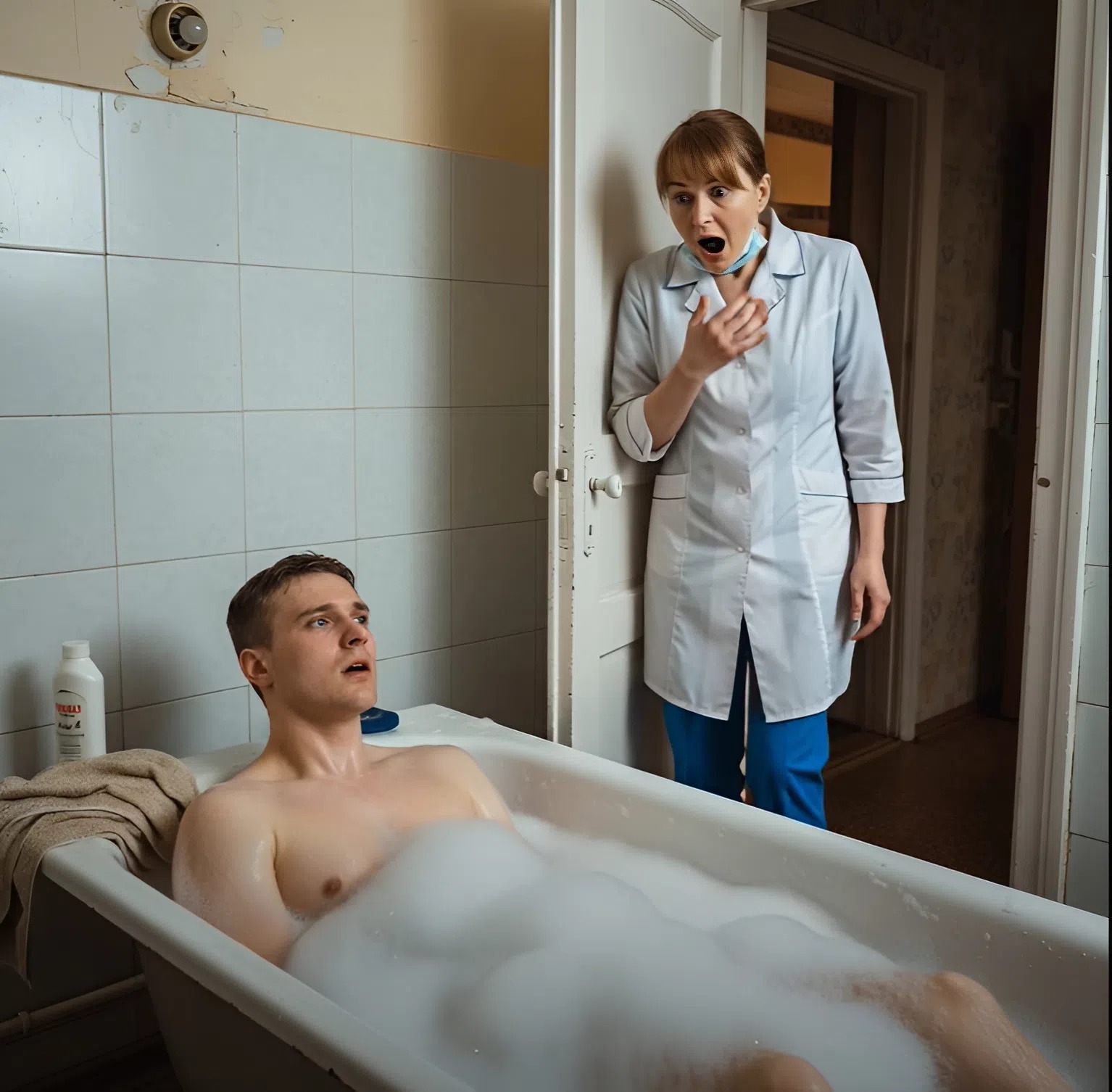
The hot water ran over his motionless body, and she mechanically scrubbed his back with the sponge. Then she stopped. Under her fingers, she felt strange irregularities. At first, she thought they were bedsores or post-operative scars. She leaned closer to look more closely… and her heart sank.
Her entire back was covered in scars. Old, deep, irregular. Some already healed, others reddened and swollen, as if they had appeared very recently. They weren't marks of illness. They were marks of violence.
He held his breath.
"My God..." she whispered almost inaudibly.
The young man moved his eyes slightly. He looked at her. In that gaze there was no pain: there was fear, despair, and a long-suppressed plea for help. He couldn't speak. He couldn't defend himself. But his eyes screamed.
She continued washing him, but her hands trembled. Every movement revealed new bruises, scrapes, strange marks on his wrists and sides. None of it was consistent with medical procedures. It was clear someone was hurting him. And not just once.
When the stretcher bearer left and left them alone for a moment, the nurse leaned towards him.
"Does it hurt?" he whispered.
He blinked slowly once. Then he looked at her again.
He recalled an old training course on communicating with paralyzed patients.
—If someone is hurting you… blink three times.
There was silence. Then a blink. A second. A third.
The nurse felt her legs give way.
At that moment, she understood that something terrible was happening in that hospital. And that the defenseless young man wasn't just a patient: he was a victim.