
The Coldest Choice
During Christmas, I decided to drop my eight-year-old daughter off with her three-year-old sister at my parents’ house. I told them, “You guys head inside. I have to check on your dad in the hospital.”
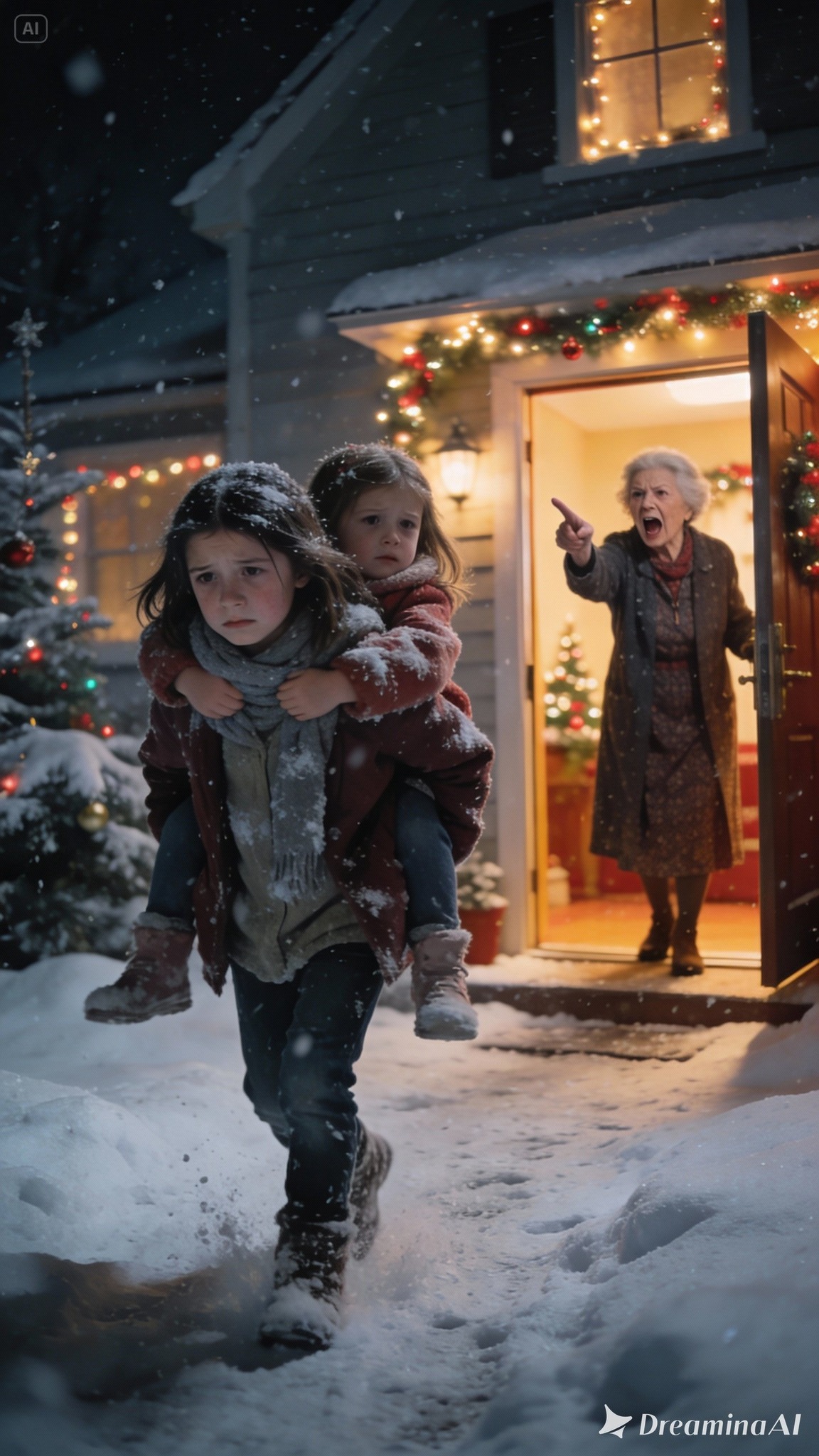
But my parents turned them away. Then they slammed the door in their faces.
My daughter had to walk home with her tiny sister in the freezing cold, carrying her without any idea of the area. My three-year-old collapsed from exhaustion and cold. My eight-year-old tried to carry her, but eventually lost consciousness too…
The hospital hallway smelled sharply of antiseptic and floor wax, the kind of sterile scent that clung to your clothes long after you left, mixing with panic and exhaustion until everything felt unreal. Fluorescent lights buzzed overhead, casting a sickly glow on the pale walls as nurses hurried past with clipboards and murmured updates that blurred together.
Three floors above me, my husband lay in a hospital bed, his body bruised and wrapped in quiet machines after emergency surgery following a car accident that morning. I had been sitting at his side for hours, holding his hand, whispering reassurances I wasn’t entirely sure I believed myself.
Christmas Day had unraveled so quickly that it felt like someone had reached into our lives and yanked the foundation out from underneath us. One moment we were wrapping presents and arguing over whether to leave by noon or one, and the next I was standing in an emergency room with blood on my sleeves, listening to a surgeon explain procedures and risks in a calm, detached voice.
When the doctor finally told me my husband would be okay, that he needed monitoring overnight but would recover, I felt a wave of relief so intense it nearly knocked me to my knees.
That was when I made the decision that would haunt me for the rest of my life.
Our daughters were tired, confused, and scared, their Christmas dresses wrinkled and their excitement long gone. Eight-year-old Maisie tried so hard to be brave, clutching her little sister Ruby’s hand and telling her everything would be fine, while three-year-old Ruby clung to my leg with the stubborn desperation only toddlers possess. I couldn’t bring them into the hospital room, couldn’t let them see their father like that, so I did what I thought was the safest thing.
I drove them to my parents’ house, ten minutes away—the same house I grew up in, the same place that had once felt like a refuge.
“You girls head inside,” I told them as I parked in front of the familiar white siding and trimmed hedges. “Grandma and Grandpa are waiting. I have to go back to check on your dad in the hospital.”
Maisie nodded solemnly, taking Ruby’s hand with a seriousness that didn’t belong on a child so young. I watched them walk up the driveway, their small figures swallowed by the early winter dusk, and I drove away believing, foolishly, that they were safe.
My phone buzzed at 6:47 PM as I sat in the waiting area outside my husband’s room, my head resting against the wall, my eyes burning with exhaustion. Unknown number. For a second, irritation flared, sharp and irrational, and I almost ignored it. Then something in my chest tightened, an instinct I couldn’t explain.
“Mrs. Anderson,” a calm voice said when I answered. “This is Riverside General Hospital. We have your daughters here. They were brought in by ambulance about twenty minutes ago.”
The world narrowed to a single point, everything else dropping away as if gravity had shifted. “What?” I whispered, my voice barely working. “My daughters are with my parents. There must be a mistake.”
“There’s no mistake, ma’am,” the voice replied gently. “Eight-year-old Maisie and three-year-old Ruby. Maisie had your phone number written on a piece of paper in her jacket pocket. They’re being treated for hypothermia and severe exhaustion. You need to come immediately.”
I don’t remember standing up, don’t remember grabbing my coat or telling the nurse where I was going, but suddenly I was running, my shoes slipping on the polished floors as I sprinted through corridors and out into the snow-covered parking lot.
Riverside General was across town, a drive that usually took less than twenty minutes, but that night it felt endless. Snow fell in thick sheets, clinging to the windshield faster than the wipers could clear it, the road slick and dangerous as my hands shook on the steering wheel. Every red light felt like an eternity, every passing second another failure on my part.
The emergency room doors slid open and a nurse spotted me instantly, her expression softening with recognition. She led me down a hallway and into a curtained area where two small beds sat side by side, each surrounded by beeping monitors and tangled tubes.
Maisie lay on one, Ruby on the other, both wrapped tightly in heated blankets that dwarfed their tiny bodies. Ruby’s lips still carried a faint blue tinge that made my heart stutter painfully, and Maisie’s eyes were open, staring blankly at the ceiling as if she were afraid to close them.
“Maisie, baby,” I whispered, dropping to my knees beside her bed and grabbing her hand, which was still icy despite the blankets. “What happened?”
Her voice came out hoarse and small, nothing like the confident child I knew. “Grandma and Grandpa wouldn’t let us in,” she said slowly, as if each word took effort. “We walked and walked. Ruby got so tired. I tried to carry her, but I couldn’t anymore. Then everything went dark.”
A doctor stepped aside with me, a man in his fifties with tired eyes and a mouth drawn into a grim line. “Your older daughter carried your younger one for nearly two miles,” he said quietly. “In below-freezing temperatures. A man named Gerald Fitzpatrick found them collapsed on Morrison Street and called 911 immediately. He likely saved their lives. Another hour out there…” He didn’t finish the sentence, and he didn’t need to.