

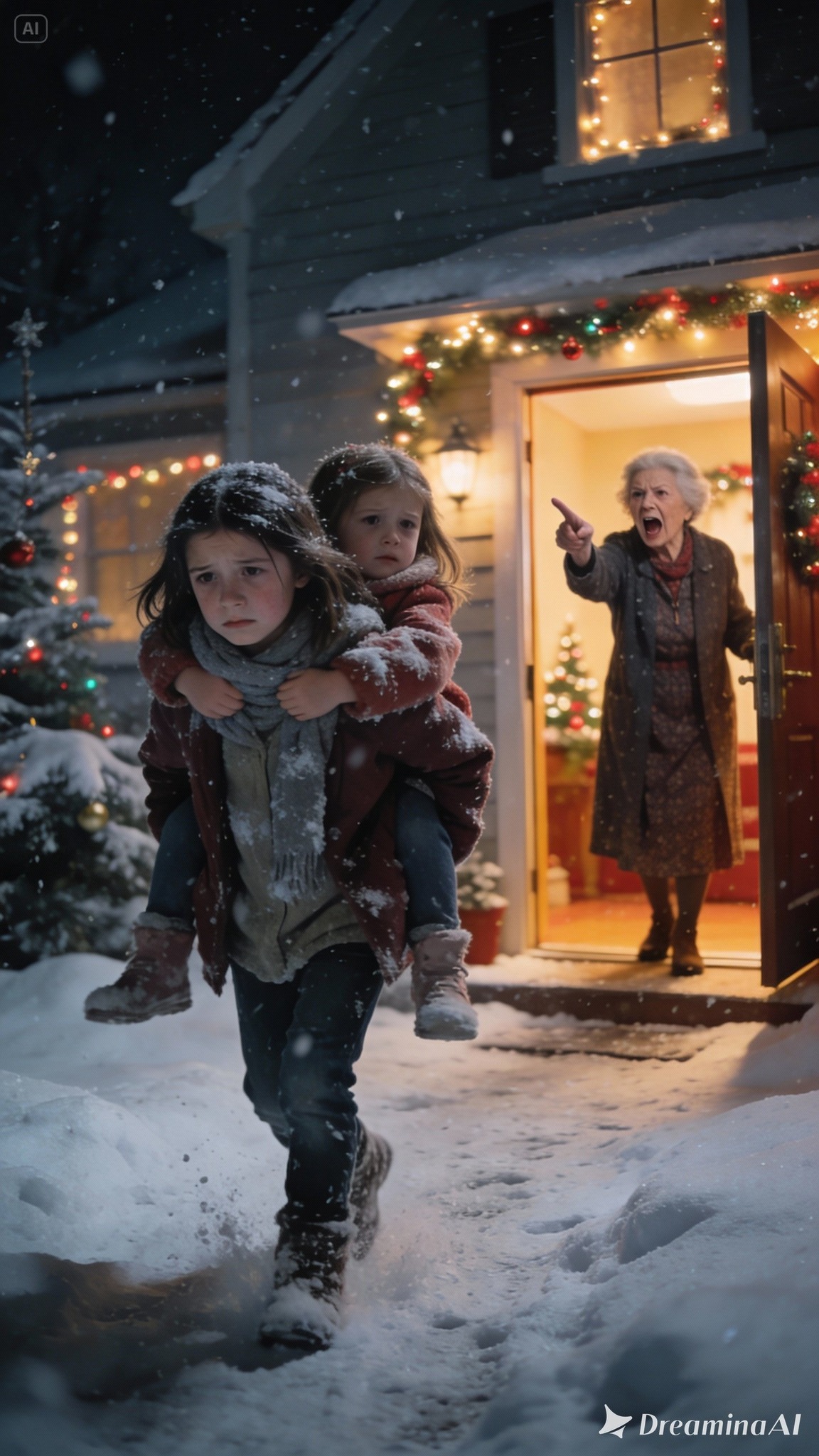
The local newspaper picked up the story on day four. They ran a piece about children found nearly frozen, about negligent relatives, about community outrage. They didn’t use names, but included enough details that connections were easy to make. The comment section exploded.
My father showed up at the hospital on day five. Security stopped him at the entrance. The restraining order had been approved and served. He stood outside in the cold, shouting about “family” and “forgiveness” and “misunderstandings.” A security guard told him to leave or face arrest for violating the order.
By the end of the first week, my parents had lost over half their clients. The remaining ones started asking questions, requesting documentation, expressing concerns. The business they’d spent thirty years building crumbled like sand.
I documented everything. Created a spreadsheet tracking which clients left, when they terminated contracts, what reasons they gave. Not for satisfaction, but for the restraining order hearing and the criminal case. Evidence mattered. Emotions didn’t sway judges, but facts did.
My Aunt Paula, my mother’s sister, showed up at my house on day six. She knocked loudly, persistently, until I finally opened the door. Her face was flushed with anger.
“You need to stop this witch hunt immediately,” she hissed. “Your mother is having a breakdown. Your father can barely function. What you’re doing is cruel and vindictive.”
“What I’m doing, Paula? They left my children outside in a blizzard. Maisie carried Ruby for two miles in below-freezing temperatures. They almost died.”
“It was a misunderstanding! They thought you were coming right back.”
“A misunderstanding would be confusion about timing. They told my daughters to ‘get lost’ and ‘go bother someone else.’ Those were their exact words to an eight-year-old and a three-year-old.”
Paula’s expression shifted, uncertainty creeping in. “Your mother said they just told the girls to wait outside for a minute, that they were going to let them in, but then got distracted.”
“That’s a lie. Maisie described everything. The door opened. My mother looked at them and said, ‘Get lost. We don’t need you here.’ My father added, ‘Go bother someone else.’ Then they closed the door and ignored repeated knocking. That’s not distraction. That’s deliberate cruelty.”
“Maybe Maisie misunderstood. She’s only eight.”
“The doctors found both girls unconscious on the street. Ruby’s body temperature was dangerously low. Another hour and we’d be planning funerals instead of recovery. There’s no misunderstanding that explains that away.”
Paula stood there opening and closing her mouth, searching for arguments that wouldn’t come. Finally, she straightened her shoulders. “You’re destroying your own family. When you calm down and realize what you’ve done, it’ll be too late to fix it.”
“I’m protecting my family,” I said, my voice steady. “The family that matters. My husband, my daughters. People who actually love each other and don’t abandon children in the snow.”
She left without another word. I watched her car disappear down the street, then went back inside to check on the girls.
The therapy sessions started that week. Dr. Patricia Hammond specialized in childhood trauma. Her office had soft lighting, comfortable chairs, and walls painted in calming blues and greens. She spent the first session just talking to Maisie about school, friends, favorite activities—building trust before diving into the difficult parts.
I sat in the waiting room during these sessions, reading magazines without absorbing a single word. Just thinking about what Maisie was processing in there, the fear and confusion she’d experienced, made my chest tight.
After the third session, Dr. Hammond asked to speak with me privately. “Maisie is displaying classic symptoms of post-traumatic stress. The nightmares, the hypervigilance, the anxiety about being left places. She keeps asking me if her grandparents will come back and hurt her again.”
“They won’t. The restraining order ensures that.”
“She needs to believe it. Right now, she’s terrified they’ll show up at school, at the park, anywhere. She doesn’t feel safe.”
“What can I do?”
“Keep consistent routines. Reassure her frequently. Don’t minimize her fears or tell her she’s overreacting. Her trauma is real and valid. And most importantly, continue these sessions. We’ll work through this together, but it takes time.”
Time. Something my parents had stolen from my daughter. Instead of enjoying her childhood, Maisie now spent hours in therapy, learning to feel safe again.
The police investigation concluded in three weeks. Detective Sarah Morrison handled the case personally. She came to our house twice, interviewed Maisie with a child psychologist present, reviewed the medical records, and spoke with Mr. Fitzpatrick.
“This is one of the clearer cases I’ve seen,” she told me during her second visit. “Usually with family situations, there’s ambiguity. He-said-she-said. But your daughter’s account matches the physical evidence perfectly. The distance she walked, the timeline, the weather conditions. And Mr. Fitzpatrick’s testimony is powerful. He’s a credible witness with no stake in the outcome.”
“Will they actually face charges?”
“The prosecutor is definitely moving forward. Child endangerment—likely misdemeanor level given that there was no direct physical harm inflicted, but the circumstances are aggravating. Leaving children outside in dangerous weather conditions shows a reckless disregard for their safety.”
My parents were formally charged on a Thursday morning. I received a call from the prosecutor’s office informing me of the charges and asking if I’d be willing to testify. I agreed immediately.
Their arraignment happened the following week. I didn’t attend, but their lawyer contacted me afterward, suggesting a meeting to discuss resolution.
Attorney Richard Chen, whom I’d hired to handle the restraining order, advised me to refuse any contact. “They want you to drop the charges or convince the prosecutor to reduce them. Don’t give them that opportunity. Let the system work.”
“What if they offer an apology? Would that change anything for you?”
I thought about Maisie’s nightmares, Ruby’s confused questions about why “Grandma was mean,” the therapy bills, the fear that still lingered in my daughter’s eyes. “No. Nothing they say changes what they did.”
“Then stick to that. Don’t meet with them. Don’t accept their calls. Don’t engage. You filed the police report because a crime occurred. Let the justice system handle it from here.”