
Mr. Fitzpatrick became a regular presence in our lives. The man who found my daughters and saved them. We invited him to dinner, included him in birthday celebrations, treated him like the hero he was.
He was a retired firefighter, lived alone after his wife passed, spent his days volunteering. He’d been out putting salt on his neighbor’s icy walkway when he spotted the girls.
“I almost didn’t see them,” he told me once. “The snow was so heavy, but something made me look twice. Divine intervention, maybe.”
His presence in our lives felt like a gift. Someone who genuinely cared about the girls, who checked in regularly, who showed up when he said he would. Everything my parents should have been but never were.
Gerald, as he insisted we call him, had a way with the girls that melted my heart. He never talked down to them, never dismissed their feelings, never made promises he couldn’t keep. When Maisie had nightmares, he came over with hot chocolate and told her stories about his firefighting days, about facing scary situations and learning to be brave.
“Being brave doesn’t mean you’re not scared,” he explained to her one evening. “It means you’re scared, but you do what needs to be done anyway. Like when you carried Ruby in the snow. You were terrified, but you kept going. That’s real bravery.”
Maisie looked at him with wide eyes. “I was so scared. I didn’t know where we were. Everything looked the same.”
“But you didn’t give up. You protected your sister. You kept moving even when you were exhausted. That takes incredible courage.”
She hugged him tight, burying her face in his shoulder. David and I exchanged glances across the room. This man, this stranger who happened to be in the right place at the right time, had become more family to us in weeks than my parents had been in decades.
Gerald attended Maisie’s therapy sessions sometimes at Dr. Hammond’s request. She thought having him there might help Maisie process the trauma, see that good people existed who would help rather than hurt. He sat patiently while Maisie talked through her fears, occasionally offering gentle reassurance.
“The world has scary people in it,” he told her during one session I was allowed to observe. “People who make bad choices, who hurt others. But there are way more good people. People who help, people who care. For every person who does something wrong, there are dozens who do something right. You just happened to meet some wrong people first. But now you know better.”
Ruby adored him completely. Called him “Mr. Gerald” in her sweet toddler voice, drew him pictures of flowers and rainbows, insisted he sit next to her during dinner. She didn’t fully understand what he’d done, just knew he was someone safe and kind.
David bonded with him too. They’d sit on the back porch some evenings, drinking beer and talking about sports, work, life. Gerald had no children of his own; his wife had passed from cancer five years earlier. He’d been lonely, he admitted once, before we came into his life.
“You gave me purpose again,” he told us at dinner one night in April. “Being part of your family, watching the girls grow… it means everything to me. I was just existing before. Now I’m living again.”
We made it official in May. Drew up paperwork making him the girls’ godfather, giving him legal authority to make decisions if anything happened to David and me. He cried when we told him, big tears rolling down his weathered face.
“I never thought I’d have a family again. Thank you for this. For trusting me with something so precious.”
“You saved them,” I said simply. “You earned that trust in the most profound way possible.”
Summer came. The nightmares faded for Maisie, though she remained wary of new people and unfamiliar situations. Ruby barely remembered the incident, her young mind protecting her from the trauma.
David recovered well from his surgery. Came home after five days, still sore but healing. We established a new normal, one where my parents didn’t exist in our lives.
The holidays approached. We made plans with friends, with David’s family, with Mr. Gerald, who’d become like a grandfather to the girls. Christmas would be joyful this year. Warm, safe, everything it should be.
My parents existed somewhere out there, living with the consequences of their choices. I didn’t think about them much anymore. They’d become irrelevant, ghosts of a past I’d moved beyond.
The doorbell rang one evening in early December. A delivery, a large box addressed to the girls from an unknown sender. I opened it carefully, wary of anything unexpected. Inside were wrapped presents, a card. The handwriting was my mother’s. Shaky and uncertain.
To our beloved granddaughters, We’re so sorry. Please forgive us. Love, Grandma and Grandpa.
I threw everything in the trash without unwrapping a single gift. Didn’t tell the girls. They didn’t need reminders of people who hurt them.
My phone rang an hour later. My mother crying.
“Did you get the presents? Please let us see them. Please give us a chance.”
“No.”
“We’ve lost everything. Our business, our home, our reputation. Haven’t we been punished enough?”
“You lost those things because of what you did. Actions have consequences. You taught me that growing up. I’m just applying the lesson.”
“We made one mistake, one bad decision in a moment of stress. Does that deserve a lifetime of punishment?”
“You left my children to die. That’s not a mistake. That’s a choice. You chose cruelty, and I chose to protect my family from people capable of such cruelty.”
“Please, we’re begging you.”
“Goodbye.”
I blocked the number, changed our home security codes, told the girls’ school that my parents were never to pick them up or have any contact. Added their names to the prohibited list at the hospital where David had his follow-up appointments. Every possible door closed, every bridge burned, every connection severed.
Christmas morning arrived bright and cold. The girls woke up excited, ran downstairs to find presents under the tree. David made pancakes. Mr. Gerald joined us for breakfast, bringing homemade cookies and terrible jokes that made the girls giggle.
We opened gifts, sang carols, spent the day in warmth and love and safety. Nobody mentioned last Christmas. Nobody talked about the cold or the fear or the hospital. We’d moved forward, built something new on the ashes of what was broken.
Later that evening, after the girls went to bed, I stood on our front porch watching snowfall. David joined me, handed me hot chocolate.
“Peaceful night, isn’t it?”
“It is.”
“Think they’ll ever stop trying to contact you? Eventually? When they realize it’s truly over?”
“You think you’ll ever change your mind? Let them back in?”
I sipped the chocolate, considered the question.
“No. Some things can’t be forgiven. Some damage can’t be repaired. They showed me exactly who they are, and I believe them.”
“Fair enough.”
We stood in comfortable silence, watching our quiet street, our decorated house, the warm light spilling from our windows. Inside, our daughters slept safely. They’d grow up knowing they were protected, that their mother would move mountains to keep them safe, that cruelty wouldn’t be tolerated regardless of who delivered it.
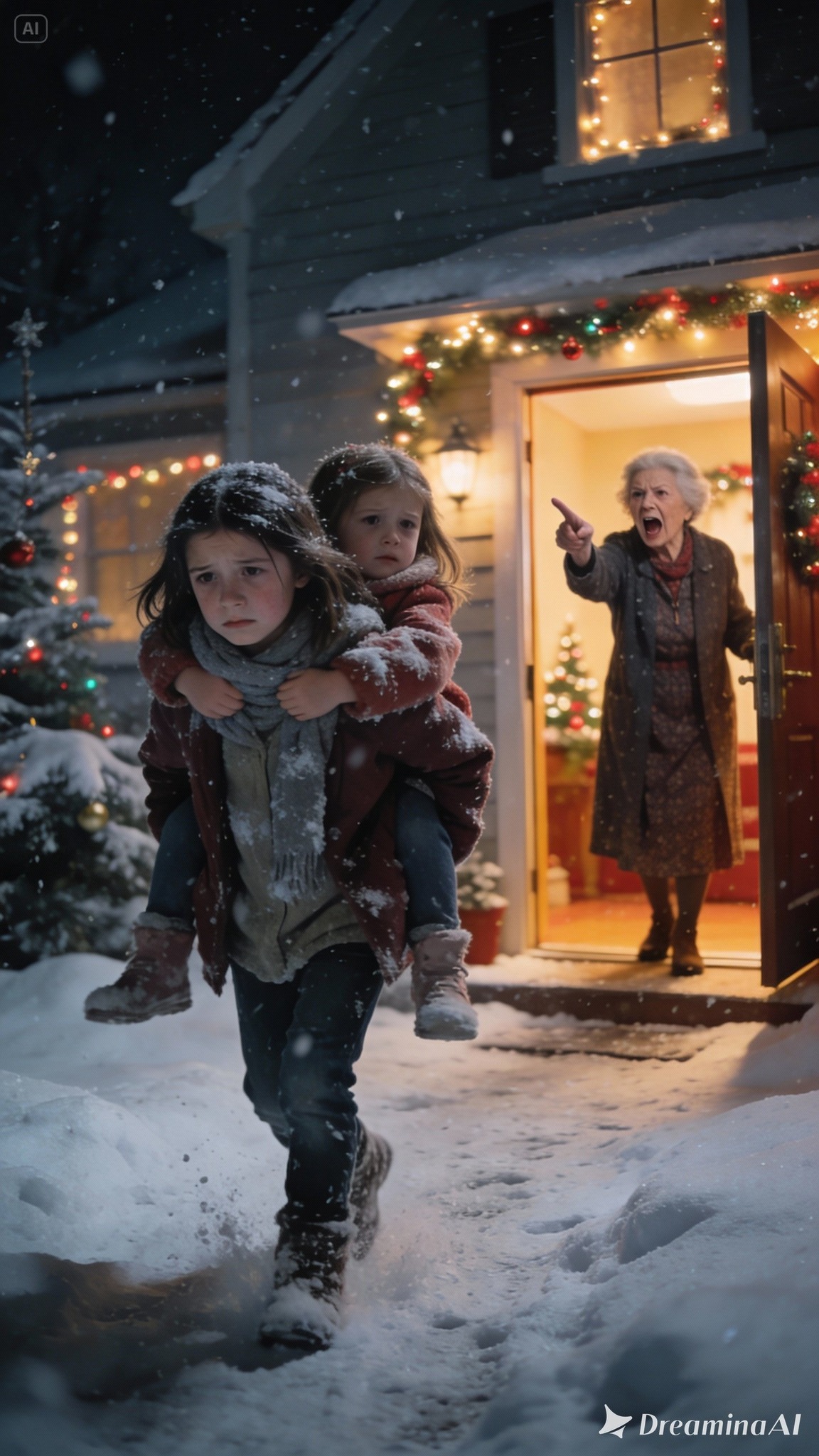
My parents made their choice that Christmas day. They chose to turn away two small children, to slam a door in the faces of their own grandchildren, to value whatever motivated that cruelty over basic human decency.
I made my choice too.
I chose my daughters. I chose consequences. I chose to dismantle the lives of people who nearly ended the lives of my children.
People might judge that choice, call it revenge, excessive, unforgiving. But those people didn’t carry their three-year-old into an emergency room. Didn’t watch their eight-year-old sob about being abandoned in the freezing cold. Didn’t promise their children that they’d always be safe and then work relentlessly to make that promise true.
I sleep well at night. My daughters are healthy and happy. My husband is recovered and strong. We built a life filled with people who actually care about us, who show up when needed, who would never dream of hurting children.
My parents built nothing, lost everything. They face each day knowing they destroyed their own lives through their own actions. That feels like justice to me. Perfect, complete, undeniable justice.
The snow continued falling, blanketing our street in white. Tomorrow would bring another day of work, school, normal life. The girls would play. David would make dinner. Mr. Gerald would probably stop by with more terrible jokes. We’d continue building our happy, safe existence.
And my parents would continue living with what they’d done, every single day for the rest of their lives, carrying the weight of nearly killing two children and losing absolutely everything because of it.
Some people deserve redemption. Some deserve forgiveness. Some deserve second chances.
My parents deserved exactly what they got. Nothing more, nothing less. And I felt absolutely no guilt about giving it to them.
Like and share this post if you find it interesting!