

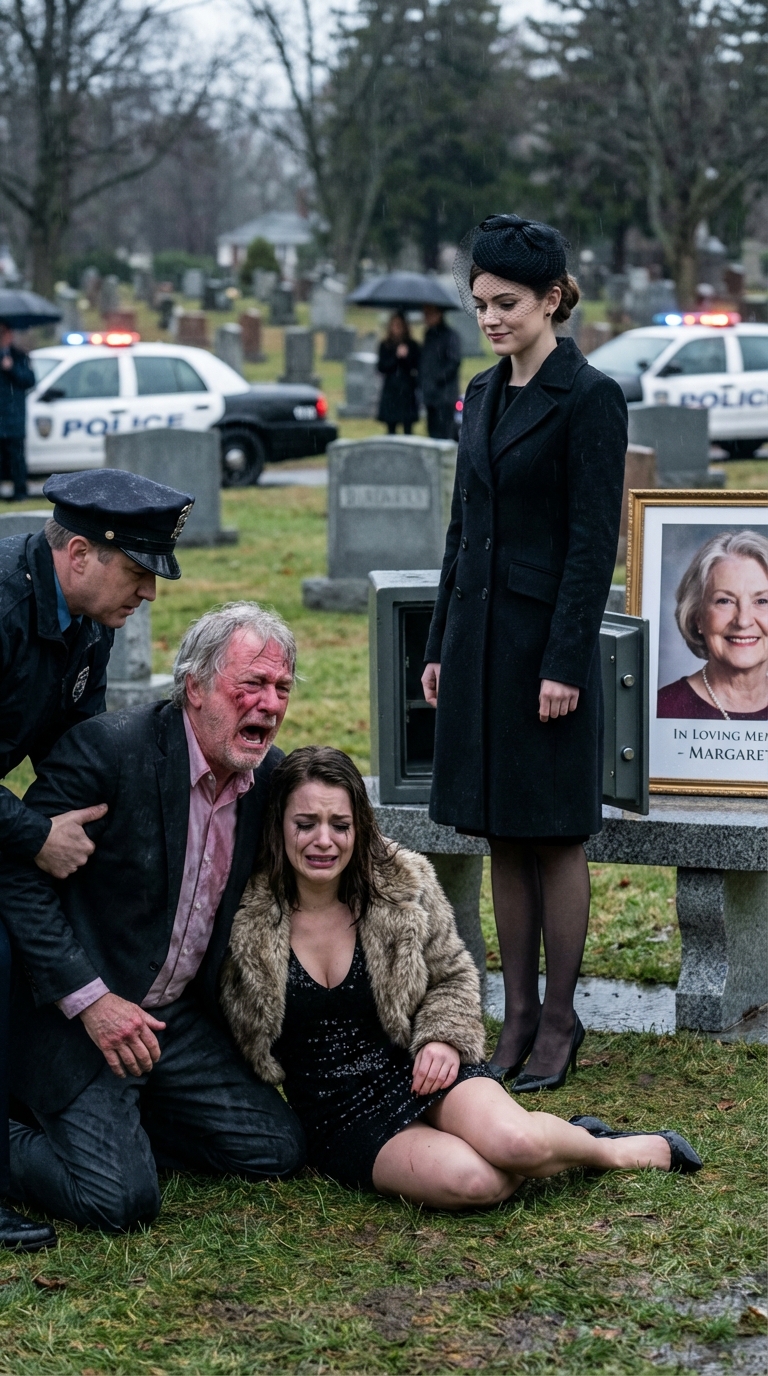
The Rose Garden’s Verdict
If you have ever been told that silence is a form of submission, that gentle women fade into the beige wallpaper of history, or that kindness is a currency that buys you nothing but disrespect, I need you to sit with this story. I need you to understand that the loudest person in the room is rarely the one holding the detonator.
My mother proved the world wrong in the most devastating, poetic, and legally explosive way imaginable. She didn’t fight fire with fire; she fought it with water—a slow, rising tide that drowned her enemies before they even realized their feet were wet.
My name is Lena Hartwell, I am thirty-four years old, and three days ago, I stood in the velvet hush of the Fairmont Memorial Chapel. The air was thick with the scent of lilies and expensive hypocrisy. I was surrounded by mourners drowning in black fabric and whispered sympathy, all of them staring at the gleaming ivory casket that held my mother, Margaret Hartwell. To them, she was a tragedy. To my father, she was an erased footnote, a burden he had finally escaped.
He wasn’t there to watch her being lowered into the earth. He wasn’t there to hold my hand or weep for the woman he had been married to for thirty-five years.
No. Gregory Hartwell was in Cancun.
He was sipping tequila on a white sand beach, celebrating his newfound “freedom” with his mistress. He thought the war was over. He thought he had won simply by outliving her.
And then, right as the priest began the final commendation, my phone buzzed against my thigh.
I looked down, my vision blurred by tears. It was a text message.
From my mother’s number.
Section C. Plot 19. Come alone. Now.
My blood ran cold. The phone felt heavy, like a stone in my hand. Before I tell you what we dug out of that graveyard, you need to understand the weeks leading to that moment—the deceit, the staggering arrogance, the betrayal, and the quiet, terrifying brilliance of a woman my father assumed would die without making a sound.
Chapter 1: The Architecture of Silence
The hospital room smelled of bleach, stale coffee, and surrender. It is a specific scent, the olfactory profile of waiting for the inevitable. Machines hummed and blinked in a rhythmic, indifferent cadence, trying to keep pace with time my mother didn’t have.
I sat by her bedside, holding her hand. Her skin was like parchment paper, translucent and fragile, barely covering the blue veins beneath. But her grip? Her grip was iron.
My father, Gregory, was leaning against the far wall, the harsh fluorescent light reflecting off his Rolex. He was scrolling through his phone, a look of profound boredom etched onto his handsome, aging face. He checked his watch every three minutes, as if death were a meeting running overtime.
“Gregory,” my mother whispered. Her voice was a dry rattle, like autumn leaves skittering on pavement.
He didn’t even lift his head.
“I have to take this,” he announced to the room at large, though no phone had rung. “Critical business matter. The merger in Tokyo.”
He left the room with relief in his stride, the heavy door clicking shut behind him. He didn’t look back. He never looked back.