

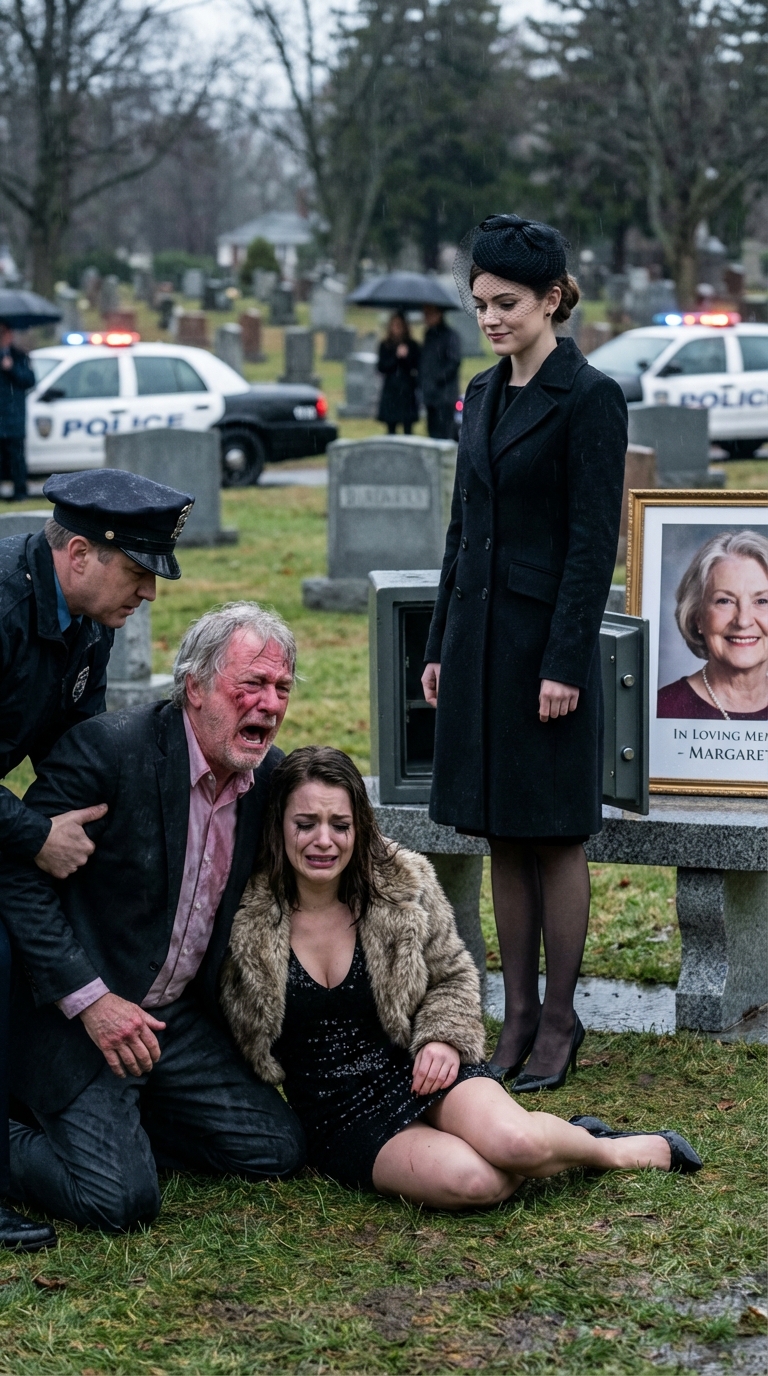
I knew, just as my mother knew, that there was no merger in Tokyo. The “business matter” had a name. Celeste Monroe. She was a thirty-six-year-old “strategic consultant” who had been strategically entwined in my father’s life—and his finances—for six years. The neighbors knew. The country club knew. The entire city of Savannah probably knew. But the Hartwell family did not talk about disgrace. We swallowed it, polished it, and pretended it was dignity.
When the door clicked shut, the atmosphere in the room shifted. My mother pulled me closer, her eyes suddenly clear, burning with a lucid intensity that frightened me.
“You think you are soft, Lena,” she whispered, her breath hitching. “You think softness means losing. You think because you don’t scream, you aren’t heard.”
“Mom, please, rest,” I soothed, wiping a bead of sweat from her forehead.
“Listen to me,” she commanded, her voice gaining a surprising edge. “Cruelty is loud. Justice is quiet. Your father… he mistakes silence for emptiness. He thinks because I didn’t fight him at the dinner table, I wasn’t fighting him at all.”
She reached under her pillow and pulled out a small, heavy key. It looked old, like something that belonged to a diary from a different century.
“Tonight,” she said, pressing the cold metal into my palm. “A woman named Miriam Vale will come to the house. You let her in. You sign what she tells you to sign. And you do not tell your brother.”
“Evan?” I asked, confused. “Why not Evan?”
My brother, Evan, was the logical one. The peacekeeper. He worshipped our father, always defending Gregory’s “vision” and “burden.”
“Because Evan chose his side,” she said, a tear finally escaping the corner of her eye. “The roses, Lena. When they bloom, the truth blooms too.”
I thought it was the morphine talking. I thought she was drifting into poetic nonsense in her final hours.
That night, my mother died. I was holding her hand when the monitor flatlined, turning its rhythmic beep into a singular, unending tone of loss.
My father was at a rooftop bar in Beverly Hills, laughing in a photograph that Celeste posted on Instagram at the exact moment my mother’s heart stopped. The caption read: New beginnings.
I stood in the silent hospital room, the key burning a hole in my pocket. I didn’t know it then, but my mother hadn’t just left me a key. She had handed me a grenade, and pulled the pin.
As I walked out of the hospital, into the humid night air, I saw a black sedan idling at the curb. The window rolled down, and a woman with sharp eyes and silver hair looked out. “You must be Lena,” she said. “We have work to do.”
Chapter 2: The Vultures in the Garden
The morning of the funeral, the Hartwell estate felt less like a home and more like a hotel lobby under new management. It was busy, polished, and utterly heartless.
Celeste Monroe was in my mother’s kitchen.
She hadn’t even waited for the body to be buried. She stood by the granite island, rearranging the catering platters as if she had lived there for a decade. She was wearing a black dress that was cut too low for mourning and high enough for a cocktail party. But what made my stomach churn wasn’t the dress.
It was the necklace.
Around her neck sat the Hartwell Sapphire—a deep, midnight-blue stone that had belonged to my grandmother. My mother wore it every Christmas.
“Lena, darling,” Celeste cooed when I walked in, her voice dripping with artificial sweetener. “You look exhausted. You really should rest. Your father is absolutely shattered, you know. He couldn’t handle the logistics of today. I told him, ‘Gregory, let me handle it. That’s what strong women do.’”
“Strong?” I echoed, my voice trembling. “Is that what this is?”
“We have to be practical,” she said, touching the sapphire with a possessive stroke. “Life goes on. The caterers were late, so I fired them. I brought in my own team. Oh, and the landscapers are coming tomorrow.”
“Tomorrow?” I asked. “To do what?”
“To clear the garden,” she said casually, popping a grape into her mouth. “Gregory and I agree. Those rose bushes are ancient. They’re full of thorns and beetles. We’re putting in a zen rock garden. More modern. Cleaner.”
My heart hammered against my ribs. The roses. When they bloom, truth blooms too.
My brother, Evan, walked in then, adjusting his tie. He looked pale, but his eyes were hard.
“Don’t start drama, Lena,” he warned, stepping between me and Celeste. “Dad is under a lot of stress. He’s trying to hold it together.”
“He’s in Cancun, Evan!” I snapped. “He’s flying back this morning, hungover, for his wife’s funeral. That isn’t stress. That’s narcissism.”
“It’s grief,” Evan countered, his jaw tight. “Everyone grieves differently. Just… let Celeste help. Dad needs this house to feel… new. To move on.”
I looked at my brother, really looked at him. He was wearing a watch I had never seen before—a Patek Philippe. It was worth more than my car. A gift from Dad? A bribe?
I walked out the back door, needing air. I went straight to the rose garden. It was a labyrinth of thorny vines and explosion of color—reds, pinks, and whites. My mother had spent thirty years tending this soil. It was her sanctuary.
I knelt by the oldest bush, a massive ‘Grandiflora’ that twisted like a sculpture. And there, tucked behind the trellis, hidden from casual view but visible if you knew where to look, was a small, wax-sealed envelope.
I tore it open. My mother’s handwriting, shaky but distinct:
Don’t speak. Don’t fight yet. Watch. Wait. Then strike. Trust Miriam.