

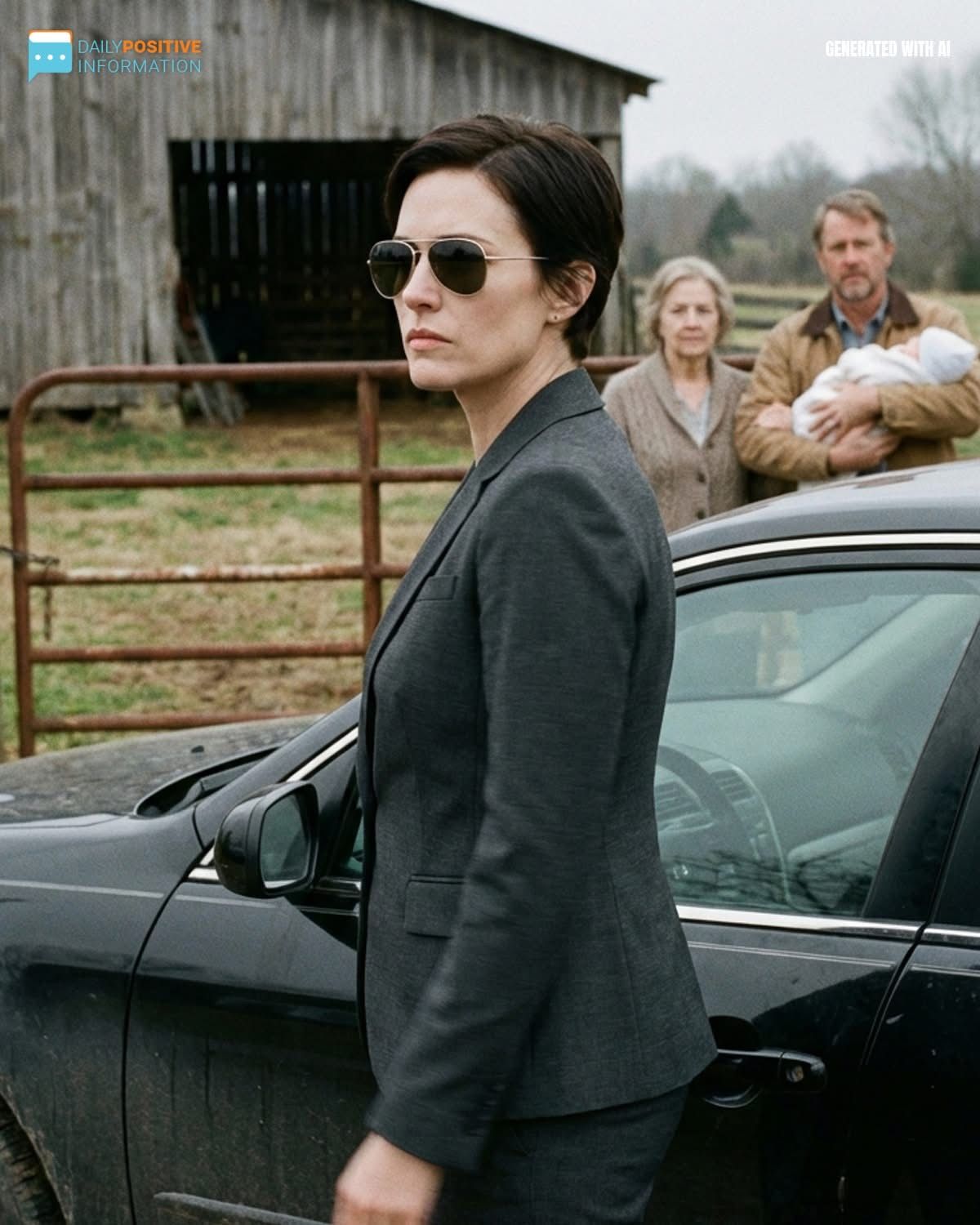
“I want him to meet his niece,” I added. “Maybe having him around will give my daughter and me something to connect over again. A reason to rebuild.”
“Are you sure?” my mother asked.
“No,” I said honestly. “I’m not sure about anything anymore. But I’m tired of being alone. I’m tired of pretending I don’t need family. And I’m tired of letting the past control my future.”
My brother, who’d been listening from inside the house, came out onto the porch.
“I’d like that,” he said shyly. “If it’s really okay.”
I looked at this boy—this living reminder of betrayal and abandonment and all the worst moments of my life—and saw something else too.
A second chance. Not to undo the past, but to do better going forward.
“It’s really okay,” I told him.
Six Months Later: What Changed and What Didn’t
My brother moved to Philadelphia in early spring. He enrolled in a good public high school and stayed in my guest room, which I’d never used for anything except storage.
It was awkward at first. He’d been raised by people who’d rejected me, in the house I’d been thrown out of, living the childhood I should have had. Every time I looked at him, I felt that old wound throb.
But slowly, day by day, something shifted.
He was kind. Genuinely kind in a way I’d forgotten people could be. He helped with dishes without being asked. He did his homework at the kitchen table and asked me for help with his business class assignments. He reminded me what it felt like to care about someone other than myself.
And something unexpected happened.
My daughter started coming home more often. At first, I thought it was just to meet her uncle—this bizarre addition to our strange family story. But she kept coming back. She’d stay for dinner. She’d hang out on weekends.
One night, the three of us were watching a movie together, and my daughter leaned over and whispered, “You seem different, Mom. Softer.”
“Is that a good thing?” I asked.
“Yeah,” she said, and smiled at me for the first time in years. “It’s a really good thing.”
Having my brother around forced me to slow down. To be present. To remember that success isn’t measured only in bank accounts and business achievements.
My parents and I talk on the phone now. Not every day. Not even every week. But we talk. It’s still complicated. There are still painful silences and subjects we avoid. But we’re trying.
I bought them a new roof for the house. Fixed the gate. Hired someone to clean up the yard. Not because I forgive everything—I’m not sure I ever fully will—but because they’re getting old, and holding onto resentment was exhausting.
What I Learned About Forgiveness and Second Chances
Here’s what I’ve learned in the months since that November day when I knocked on my parents’ door wanting to show off my success:
Forgiveness isn’t about them. It’s not about deciding they deserve it or earned it or proved they’ve changed enough.
Forgiveness is about deciding you’re tired of carrying the weight. It’s about choosing your own peace over their punishment.
I spent twenty years building an empire to prove to my parents that they were wrong about me. And I succeeded. I proved it beyond any shadow of doubt.
But in the process, I almost lost my daughter. I definitely lost myself for a while. I turned into someone hard and driven and so focused on winning that I forgot what I was even fighting for.
Finding my brother—this unexpected piece of my story—reminded me that life is more complicated than the narratives we build. That people are more than the worst things they’ve done. That families are messy and broken and sometimes the people who hurt us the most are also the people who gave us everything.
I’m not saying everyone should forgive their parents or reconcile with family who hurt them. That’s not my message here at all.
Some bridges should stay burned. Some relationships are too toxic to salvage. And nobody owes forgiveness to people who abused them.
But for me, in my specific situation, I realized I was using my anger as armor. And that armor was keeping out the bad stuff, yes, but it was also keeping out everything good.
My brother didn’t ask to be born into this mess. My daughter didn’t ask to grow up with a mother so focused on success that she missed her childhood. My parents made terrible choices, but they also spent eighteen years raising a child who wasn’t theirs to try to make up for it.
None of it is simple. None of it is fair. All of it is complicated and painful and real.
The Family We’re Building Now
Last month, we all got together for Thanksgiving. All of us. My parents drove to Philadelphia. My daughter came home from Cornell. My brother helped me cook—he’s actually pretty good in the kitchen.
We sat around my dining room table in my beautiful house that I bought with money I earned through sheer determination, and we were a family. Not a perfect family. Not an uncomplicated family. But a family nonetheless.
My father said grace, his voice shaking with emotion. My mother cried—of course she did. My daughter held my brother’s hand and mine at the same time. And I felt something I hadn’t felt since I was fifteen years old.
I felt like I belonged somewhere.
The little girl who was thrown out in the rain had spent twenty years building walls to make sure she never needed anyone again. But walls only keep you safe if you’re willing to live inside them forever.
I’m tired of walls.
I’m ready for windows. For doors. For letting people in, even if it’s scary, even if they might hurt me, even if nothing is guaranteed.
Because the alternative—being successful but alone, being right but isolated, being safe but empty—that’s not living. That’s just surviving.
And I didn’t fight this hard, for this long, to end up alone in a fortress of my own making.
My brother graduates this spring. He’s been accepted to three different colleges, and I’ve told him I’ll pay for whichever one he chooses. Not because I owe him anything, but because I want to.
My daughter and I are rebuilding our relationship slowly. We talk more. Really talk, not just surface conversation. She’s teaching me how to be present, how to put down my phone, how to prioritize people over profit.
And my parents… we’re figuring it out. Some days are harder than others. Some conversations still sting. But we’re trying, and that’s something.
The Truth About Coming Home
The day I drove my Mercedes back to my hometown, I thought I was going there to show my parents what they’d lost. I thought I was going to parade my success in front of them and watch them regret their choices.
But that’s not what happened.
Instead, I found a brother I didn’t know existed. I found a path back to my daughter. I found a way to put down the anger I’d been carrying for two decades.
I found out that the people who hurt us the most are sometimes also the people who can teach us the most—about grace, about resilience, about what really matters.
My parents were wrong to throw me out. Nothing justifies that. Nothing ever will.
But I was also wrong to think that success alone would heal me. To think that money and business achievements would fill the hole their rejection left inside me.
The truth is, we all failed each other in different ways. And we’re all trying to do better now.
That’s not a fairytale ending. It’s not neat or clean or satisfying in the way stories are supposed to be.
But it’s real. And it’s mine. And for the first time in twenty years, that feels like enough.
What do you think about this story of forgiveness and second chances? Have you ever had to decide whether to forgive family who hurt you deeply? Share your thoughts on our Facebook page and join the conversation. And if this story touched your heart or made you think about your own family relationships differently, please share it with your friends and family. Sometimes the people who hurt us the most are also the ones we need to find our way back to—and sometimes they’re not. Your story matters too.