

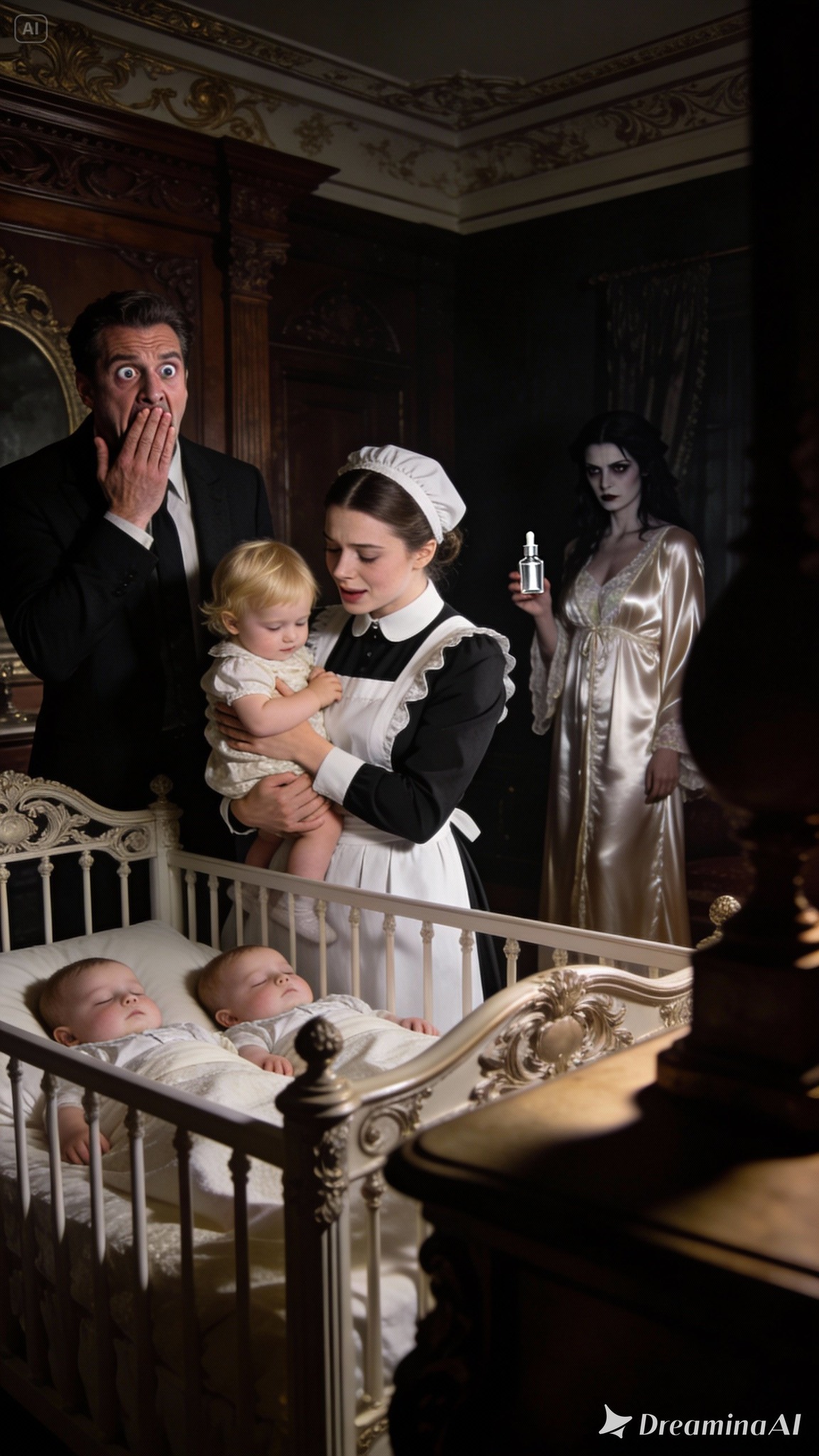
The Watcher in the Glass House: A Billionaire’s Redemption
I placed twenty-six hidden cameras throughout my home, convinced I would catch my nanny neglecting her duties. I was searching for a villain. I was desperate to find a reason to fire the stranger sleeping in my children’s room. My heart had long since frozen—hardened by the cold steel of a billion-dollar empire and fractured by the sudden, devastating death of my wife.
I believed I was shielding my children from a negligent employee. I had no idea I was about to witness an angel quietly battling the devil in my own family.
My name is Alistair Thorne. At forty-two, I was a man who seemed to have everything—a skyline-altering legacy, a $50-million glass mansion in Seattle, and a bank account that could buy small countries. But in reality, I had nothing.
Everything that mattered had gone silent on a Tuesday night.
My wife, Seraphina, a world-famous cellist whose music could make stones weep, died four days after delivering our twin sons, Leo and Noah. The doctors mumbled about “postpartum complications,” using long Latin words to cover up the fact that they didn’t know why her heart had simply stopped beating.
I was left alone in a house made of windows, holding two newborns and a grief so heavy it felt like breathing underwater.
Noah was strong, calm, and robust. But Leo… Leo was different. His cries were sharp, rhythmic, and desperate—like a biological alarm that never shut off. His tiny body would tense, his limbs rigid, his eyes rolling back in a way that chilled me to the bone.
The pediatric specialist, Dr. Julian Vane, dismissed it with a wave of his hand. “It’s colic, Mr. Thorne. Severe, perhaps, but just colic. He’ll outgrow it.”
My sister-in-law, Beatrice, had another theory.
Beatrice was Seraphina’s older sister, but she possessed none of my wife’s warmth. She was sharp angles and icy ambition. She had moved into the guest wing “to help,” but her help felt more like an occupation.
“It’s the stress, Alistair,” she told me one evening, pouring herself a glass of my most expensive wine. “Babies sense detachment. You’re too emotionally distant. You’re damaging him.”
She paused, looking at me over the rim of the glass. “The boys need a proper maternal environment. A legal guardian who understands them. Perhaps it’s time we discussed the Thorne Trust again.”
She wanted the children. Or rather, she wanted the billions attached to their custody.
I refused. But I was drowning. I needed help.
Then Elena arrived.
Elena was the girl no one noticed. She was twenty-four, a nursing student with tired eyes and frayed cuffs on her jacket. She had applied through an agency I owned, her resume unremarkable but her background check spotless.
She spoke softly, blended into the background, and never asked for more money. She made only one request during her interview: permission to sleep on a cot in the nursery with the twins.
“They are too small to be alone in the dark,” she had said, her voice barely a whisper.
I hired her because she was the opposite of Beatrice. She was quiet. She was unobtrusive.
But Beatrice despised her instantly.
“She’s lazy,” Beatrice murmured one evening over dinner, cutting into her steak with surgical precision. “I walked past the nursery today. I saw her sitting in the dark for hours, just staring at the wall. Doing nothing. And who knows—maybe she’s stealing Seraphina’s jewelry while you’re at the office. You should keep an eye on her, Alistair.”
The seed of suspicion, once planted, grew fast in the soil of my grief. I felt vulnerable. I felt like the world was taking everything from me, piece by piece.