

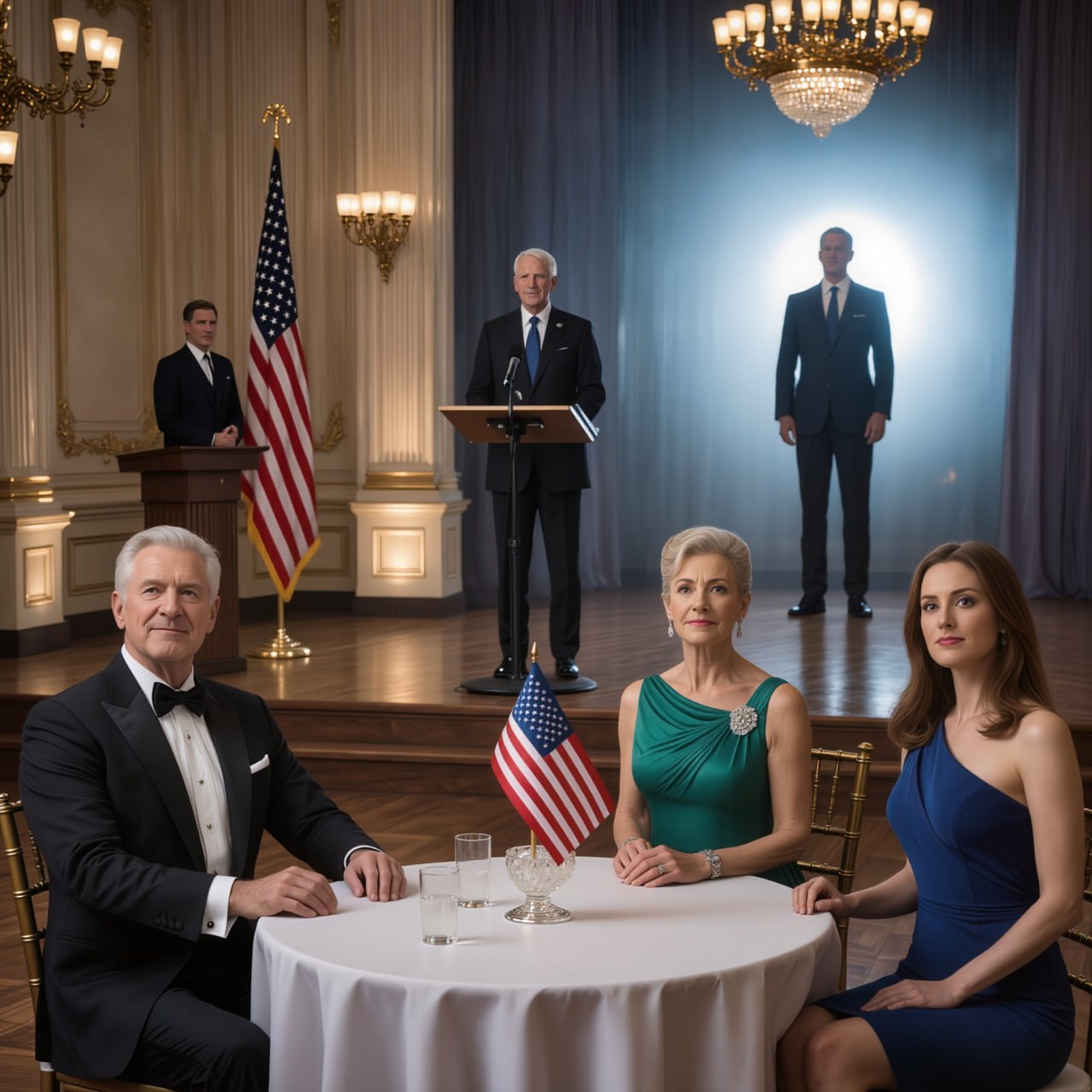
She pulled out a gold envelope.
It looked expensive. Heavy paper. Sealed neatly.
Victoria’s phone steadied, ready.
My mother slid it across the table toward me as if she were presenting a gift.
“Happy birthday, Giana,” she said, voice bright. “From all of us.”
I looked at the envelope.
My hands didn’t tremble yet. That came later, a small vibration in my fingers, the body reacting to something the mind is still processing.
I opened it.
Inside was a letter on Dixon family letterhead. The same letterhead my father used for deals and formal correspondence, as if disowning me were a business transaction.
The words were clinical.
We, the Dixon family, hereby formally disown Giana Marie Dixon, effective immediately. She is no longer recognized as a member of this family, entitled to no support, inheritance, or association with the Dixon name in any professional capacity.
Three signatures at the bottom.
Robert Dixon.
Eleanor Dixon.
Victoria Dixon.
The date: February 28th.
My birthday.
For a moment, the room felt too quiet, like sound had been sucked out. The only noise was soft jazz from somewhere beyond the door, the kind of music meant to make everything feel romantic.
The absurdity hit me first.
My family had turned my birthday into a legal performance.
They had printed their cruelty on formal paper.
They had signed it like an agreement.
And my sister was recording my face.
My fingers tightened slightly around the page, the paper crisp between them. I read it once. Then again. Not because I didn’t understand, but because I wanted to feel the full shape of it, to confirm it wasn’t a dramatic exaggeration.
It was real.
My mother watched me, eyes sharp.
Victoria watched me through her screen.
My father’s expression remained controlled, as if he were waiting for the result of an experiment.
I folded the paper slowly.
I slid it back into the envelope with the same care I would use for an important contract.
Then I placed it gently into my purse.
My mother’s smile sharpened, expecting the moment where I would break.
“Well?” she prompted.
I looked at her.
“Thank you,” I said, and my voice surprised even me with its steadiness. “This makes everything easier.”
Confusion flickered across my father’s face for the first time that night.
“Easier?” he repeated, like he’d misheard.
“You’re giving me exactly what I need,” I said calmly. “Written proof that I owe you nothing.”
My aunt Patricia inhaled sharply, the sound small but loud in the hush. A cousin’s eyes widened. Victoria’s phone wobbled slightly, catching her own surprise.
My mother’s expression tightened.
“Where are you going?” she demanded. “Sit down.”
The command landed the way her commands always did, like she believed my body belonged to her.
I stood anyway.
I placed my napkin beside my plate. My champagne sat untouched.
“My show starts tomorrow,” I said quietly, and the phrase felt strange, not because it was dramatic, but because it was the only way to translate the truth into their language.
Victoria’s phone tracked my movement, desperate to capture a breakdown that wouldn’t happen.
“And you’re not invited,” I added.
I gathered my coat. The fabric felt smooth under my fingers. I slipped my arms into it slowly, deliberately, the way you do when you refuse to be rushed.
My mother’s voice rose. “If you walk out that door, you’ll have nothing.”
I turned my head slightly, meeting her gaze.
“I already have everything I need,” I said.
Then I walked out.
The hallway outside the private room felt cooler, quieter. The restaurant noise faded behind me. Each step felt like an exhale. My heels clicked softly on the floor, steady as a metronome.
I didn’t run.
I didn’t rush.
I moved like someone who had already decided.
Outside, the cold air hit my face like clean water. Chicago winter, sharp and honest. My breath puffed white in front of me. The streetlights made the sidewalk glow faintly.
I walked to my car, hands steady on my keys.
When I sat inside, the silence wrapped around me. The interior smelled faintly of leather and a vanilla air freshener I’d forgotten to replace. The steering wheel was cold under my palms. I stared straight ahead for a moment, letting my body catch up to what had happened.
My phone buzzed.
A message from my mother, arriving fast, as if she needed to regain control immediately.
Ungrateful. After everything we’ve done.
Then my father, a voicemail, his voice clipped and furious.
You’re dead to us.
Victoria, of course, sent nothing directly at first.
She posted.
She shared the video in the family group chat with a caption that made my stomach twist even though I expected it.
The moment Giana finally got what she deserved.
Responses came quickly from relatives who had always been comfortable laughing at my expense when the room told them it was safe.
About time.
Maybe she’ll grow up now.
Pathetic reaction.
I stared at the messages without responding.
The strange part was that I didn’t feel shocked anymore.
I felt… clarified.
A clean, sharp line had been drawn.
They had made it official.
They had put their cruelty in writing.
They had signed it.
They thought they had taken something from me.
What they didn’t realize was that I’d already taken something back.
I started the car and drove.
Not home.
To the Meridian.
The restaurant’s lights were warm against the night. Through the front windows, I could see the glow of the dining room, the movement of staff, the familiar choreography of service.
When I walked inside, the smell hit me immediately: butter, wine, citrus, clean linen, and the faint smoky warmth of the kitchen. It was a smell that meant competence. Routine. A place where the rules were clear and effort mattered.
Jean-Pierre, our manager, looked up and froze when he saw my face.
He didn’t ask questions in front of staff. He simply stepped closer and lowered his voice.
“Giana,” he said gently. “Rough night?”
“My family just disowned me,” I replied, as if I were stating a weather report.
His eyes widened. The practiced calm in his expression slipped.
“My goodness,” he breathed, and his accent thickened when he was startled. “I’m so sorry.”
I surprised myself by smiling.
“Don’t be,” I said.
Jean-Pierre blinked.
“I mean it,” I added, and I felt the truth of it settle in my chest. “It’s the best gift they’ve ever given me.”
He stared at me for a beat, then shook his head slowly like he couldn’t imagine parents doing that to their child.
He poured me a glass of wine without asking, the simple generosity of someone who understood what it meant to offer comfort without conditions.
The glass was cool in my hand. The wine smelled like dark fruit, warm and grounding.
I lifted it slightly.
“To clarity,” I said.
Jean-Pierre’s mouth softened into something like a sad smile.
“To clarity,” he echoed.
That’s when David Brennan appeared, stepping out of his office with that purposeful stride he always had when something important was happening. He stopped when he saw me.
“Giana,” he said, and then his expression shifted as if he registered the tension in my posture. “Are you all right?”
“My family decided to celebrate my birthday in a… unique way,” I said carefully.
David’s brows knitted. “What do you mean?”
Before I could answer, my phone buzzed again. Another message from my mother. Another from a cousin. The screen lit up like a swarm.
I ignored it.