

He nodded, satisfied. “Your team is ready. And Giana,” he added, pausing at the door, “you don’t owe anyone access to you just because they share your last name.”
That affirmation mattered more than he probably realized.
My first assignment was ambitious and deliberate.
“March fifteenth,” Marcus said, handing me the folder. “Our Excellence in Hospitality Awards Gala. Five hundred guests. Media. Investors. Industry leaders.”
I scanned the details, then froze when I reached one line.
Committee Chair: Eleanor Dixon.
Marcus watched my face closely.
“I thought you should know,” he said gently. “We’re announcing your appointment that night. I’d like you to give the keynote.”
I let out a slow breath.
Of course it was that gala.
My mother’s crown jewel. The event she’d ruled for years. The room where she felt untouchable.
“I can do it,” I said.
Marcus’s eyes glinted. “I know you can.”
What followed was two weeks of controlled momentum.
I worked long hours, not out of fear, but out of alignment. Everything clicked. My ideas were heard. My experience respected. I designed new guest-experience frameworks rooted in cultural intelligence, empathy, and frontline empowerment.
Meanwhile, my family’s attempts to regain control grew increasingly desperate.
They tried intermediaries. Old friends. Distant relatives. Even one of my mother’s foundation donors reached out, awkwardly asking if there was “some misunderstanding.”
“There isn’t,” I replied calmly. “There’s just a boundary.”
The night of the gala arrived wrapped in spectacle.
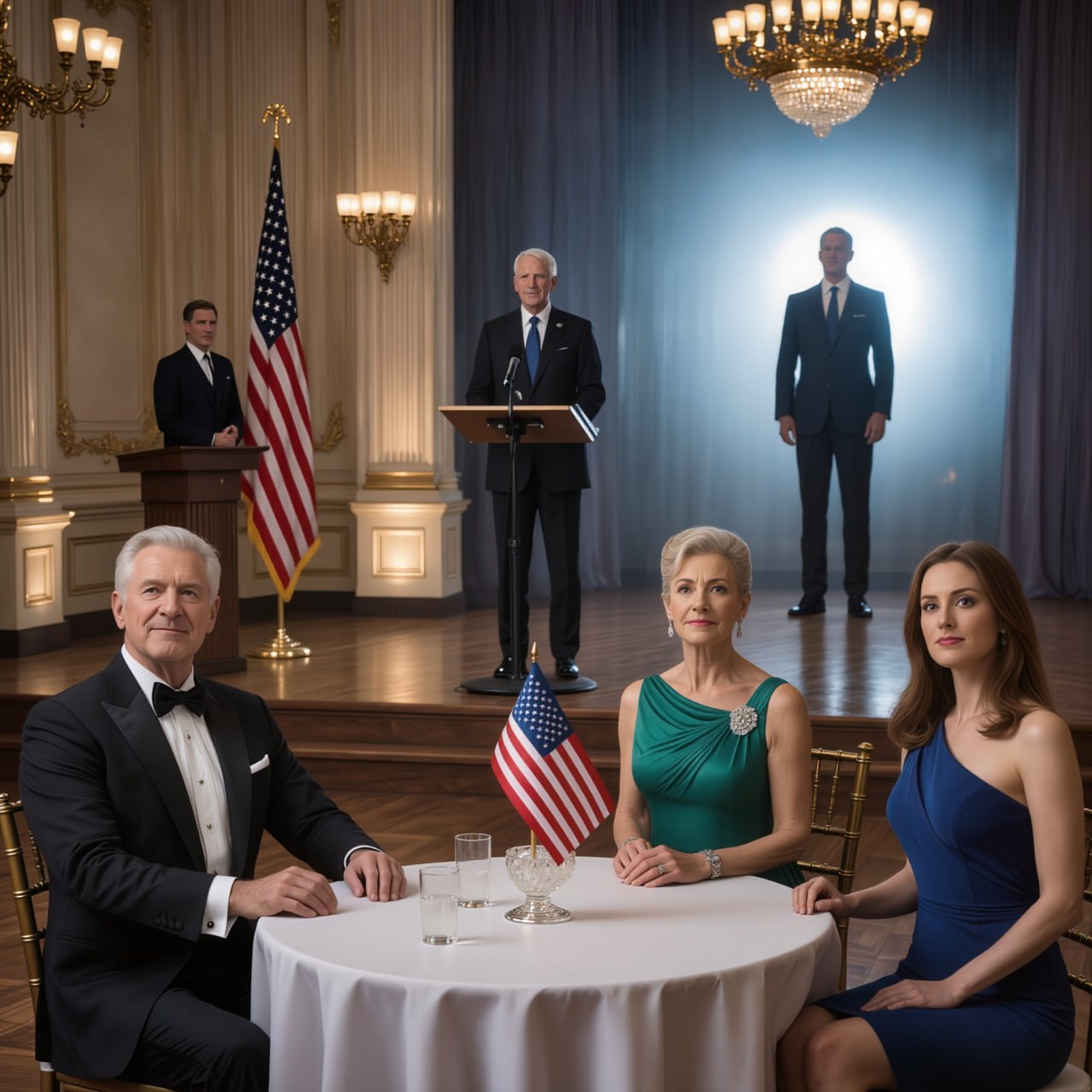
The Grand Plaza ballroom glittered under cascading chandeliers. Five hundred of the most powerful figures in hospitality, finance, and media filled the space with polished conversation and clinking glasses.
Backstage, I watched the room through a monitor.
I saw my mother arrive in her favorite designer gown, posture immaculate, smile fixed. My father beside her in a custom tuxedo. Victoria trailing behind, phone already in hand.
They took their seats at a front table, exactly where my mother believed she belonged.
I heard her voice carry through the mic feed as she greeted acquaintances.
“So proud of Victoria,” she said. “She’s everything we hoped for in a daughter.”
I didn’t feel anger.
I felt distance.
Marcus stepped onto the stage to open the evening. His voice filled the room, commanding attention effortlessly.
“Tonight,” he said, “we celebrate excellence. But more importantly, we celebrate transformation.”
He told the story of the Yamamoto incident without naming me at first. The crisis. The cultural misstep. The resolution.
Then he said the words that shifted the air.
“The person responsible was not an executive. Not a board member. She was a frontline professional who understood something many of us forget. That respect is not transactional.”
I watched my mother stiffen.
Marcus continued, “That professional is now leading one of the most critical divisions of this company.”
He turned slightly.
“Please welcome our new Director of Guest Experience, Giana Dixon.”
The spotlight hit me as I stepped onto the stage.
Applause rolled through the room, swelling, then breaking into gasps as recognition dawned.
I found my family’s table instinctively.
My mother’s glass slipped from her fingers and shattered. My father looked as though the floor had vanished beneath him. Victoria’s phone fell onto the table, still recording, forgotten.
I met their gaze once.
Then I looked away.
Marcus pinned my executive badge in place, his hand steady.
“Director Dixon,” he announced, “has already driven a fifteen percent increase in guest satisfaction metrics and secured a fifty-million-dollar international expansion partnership.”
The screens behind us displayed my name. My title. My official portrait.
When I spoke, my voice was calm.
“Thank you,” I began. “Tonight, I want to talk about service. Real service. Not as subservience, but as expertise.”
The room leaned in.
“For years, I worked in roles people dismissed. Roles they believed were temporary or lesser. But those roles taught me something vital. That the people closest to the work often see the most.”
I paused, deliberately.
“Talent does not announce itself with titles. It reveals itself in action.”
Applause broke out before I could continue.
When I left the stage, my family surged toward me.
My mother grabbed my arm. “How could you not tell us?” she hissed.
I gently removed her hand.
“You disowned me,” I said evenly. “At seven forty-three p.m., February twenty-eighth. On camera.”
My father tried to speak. “We didn’t mean—”
I opened my portfolio and pulled out the letter.
“Your signatures are very clear.”
Victoria’s face twisted. “You’re enjoying this,” she accused.
“No,” I replied softly. “I survived it.”
Security appeared at Marcus’s signal.
“These individuals are not on my approved contact list,” I said calmly.
The phrase sounded strange and powerful at the same time.
As they were escorted out, my mother’s voice cracked. “Gianna, please.”
I didn’t turn around.
The fallout was swift and public.
The gala incident made headlines. Donors withdrew from my mother’s foundation. Boards distanced themselves. My father’s company stock dipped amid concerns about leadership judgment.
Victoria’s firm reassigned her quietly.
Meanwhile, my inbox filled with congratulations, interview requests, partnership proposals.
Six months later, my life looked nothing like it once had.