

“This is more than most people pay in rent.”
I froze. No one had ever asked me that before.
“Because if I don’t… I’m a bad daughter,” I said.
The words came out before I could stop them.
Marcus set his coffee cup down. He looked at me with those steady brown eyes—no judgment, just concern.
“What if we track it?” he said slowly. “Every dollar you’ve sent them since you started working. Just so you know exactly where you stand.”
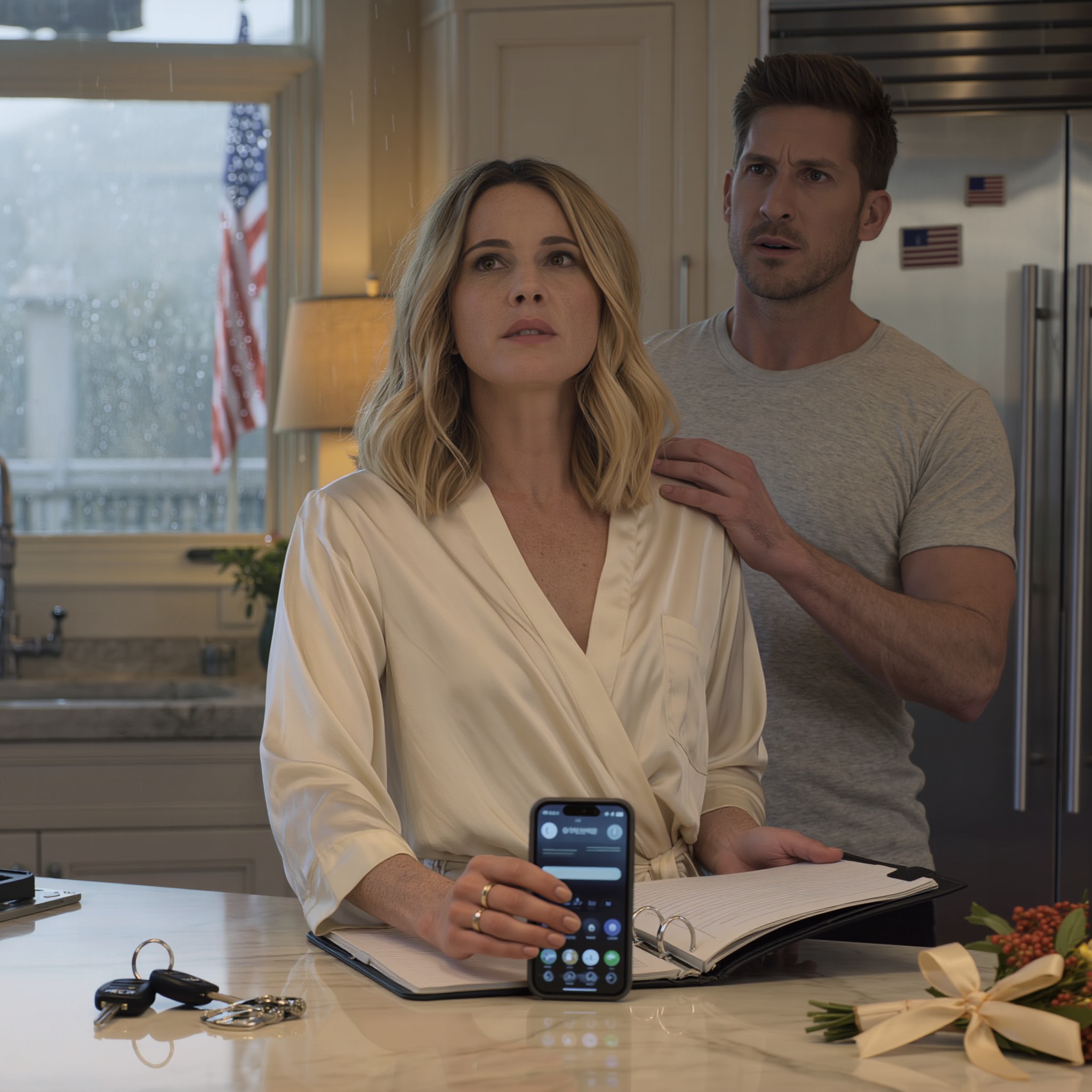
That night, we built a running record together—dates, amounts, reasons typed into a notes column: emergency car repair, Clarissa’s textbooks, medical bills, mortgage help again.
The total climbed higher than I expected. Much higher.
“You’re not a bad daughter, Athena,” Marcus said softly, his hand covering mine. “Love isn’t supposed to be a loan you can never pay off.”
That tracker would become one of the most important pieces of proof in my life.
I’d wanted to own a bakery since I was sixteen. It started with my grandmother—my mother’s mother—though you wouldn’t know it from how differently they treated me.
Grandma Ruth lived in a tiny cottage with a kitchen that smelled like cinnamon and butter. She taught me to make her famous cinnamon rolls from scratch, kneading dough until my arms burned, watching the glaze drip just right.
“You have a gift, Athena,” she’d say, flour dusting her silver hair. “These hands were made to create something sweet in a world that’s often bitter.”
She died when I was nineteen. Left me nothing but her recipes and a locket I still wear every day.
But the dream stayed.
By twenty-nine, I started taking custom cake orders on weekends—wedding cakes, birthday cakes, elaborate creations that took hours to decorate. I squirreled away every dollar I could, dreaming of a small storefront with my name on the door.
When I finally told my mother about my plans, she laughed.
“A bakery? Athena? Be realistic. Do you know how many small businesses fail in the first year?”
She shook her head like I’d suggested opening a casino on the moon.
“You have a stable job. Why would you throw that away?”
Clarissa chimed in from the couch, not even looking up from her phone.
“Are you seriously going to sell cupcakes for a living? That’s so quaint.”
Dad said nothing. He never said anything.
That Christmas, they gifted Clarissa a set of premium golf clubs “for networking,” Mom explained, while I got a gift card to Target.
The message was clear: my dreams weren’t worth investing in. I was only valuable for what I could give them.
But I kept saving anyway. Some dreams are too precious to let other people kill.
The first time I met Robert and Helen Cole, I didn’t know families could be like that.
Marcus drove me to their house on a Sunday afternoon—a modest colonial in Lake Oswego with rose bushes lining the walkway. Nothing extravagant, but warm, lived-in.
Helen opened the door before we even knocked.
“You must be Athena.”
She pulled me into a hug like we’d known each other for years.
“Marcus has told us so much about you. Come in, come in. I just took the pot roast out of the oven.”
The dining table was set with actual cloth napkins. Candles flickered in the center. Robert stood to shake my hand, his grip firm but gentle.
“So, Athena,” he said, passing me the bread basket, “Marcus tells me you’re a talented chef. What’s your specialty?”
No one had ever asked me that. My own parents had never once asked about my work, my passions, what made me come alive.
“Pastry,” I managed. “I want to open a bakery someday.”
Helen’s face lit up.
“Oh, that’s wonderful. Robert, isn’t that wonderful?”
“It is,” Robert agreed. “You know, I work in commercial real estate. When you’re ready to look at spaces, let me know. I might be able to help with the rental terms.”
I stared at him. This man I’d just met offering to help me reach a dream my own parents had mocked.
On the drive home, I cried.
“What’s wrong?” Marcus asked, alarmed.
“Nothing’s wrong,” I whispered. “I just… I didn’t know it could feel like this.”
“Feel like what?”
“Like being wanted without having to pay for it.”
That night, I understood for the first time what I’d been missing—and what I refused to let my future children miss.
Then Clarissa got engaged, and everything escalated.
She met Brad at a rooftop bar downtown—a stockbroker with slicked-back hair and a Rolex he mentioned in every conversation. Within six months, they were engaged. Within seven, my mother was on the phone demanding my “share” of the wedding fund.
“$15,000, Athena. That’s your share.”
I nearly dropped the phone.
“My share? Mom, I’m trying to save for my own future.”
“Your future?” She laughed, that sharp sound I knew too well. “Clarissa is getting married now. This is her special day. You can save money next year.”
“I’ve been saving for years. I’m trying to open a bakery.”
“Yes, I know. You can open a bakery anytime. Your sister only gets married once.”
I wanted to say no. Every fiber of my being screamed to say no.
Then Mom started crying—not gentle tears of real emotion, but the loud, gasping sobs she deployed like weapons.
“How can you be so selfish? Do you want me to die of embarrassment in front of Brad’s family? They’re wealthy, Athena. We have to make a good impression.”
In the end, I sent $10,000.
It wiped out my entire bakery fund.
Clarissa’s wedding was at the Multnomah Athletic Club—Vera Wang gown, ice sculpture, live jazz band. I stood in the wedding party wearing a pink bridesmaid dress Mom picked out “because it won’t draw attention away from the bride.”
No one thanked me for my contribution. Not once.
At the reception, I overheard my mother telling Brad’s parents, “We’re so proud of both our girls… but Clarissa has always been the special one.”
I smiled and kept pouring champagne.
Two years later, when it was my turn to walk down the aisle, I learned exactly how special I was to them.