

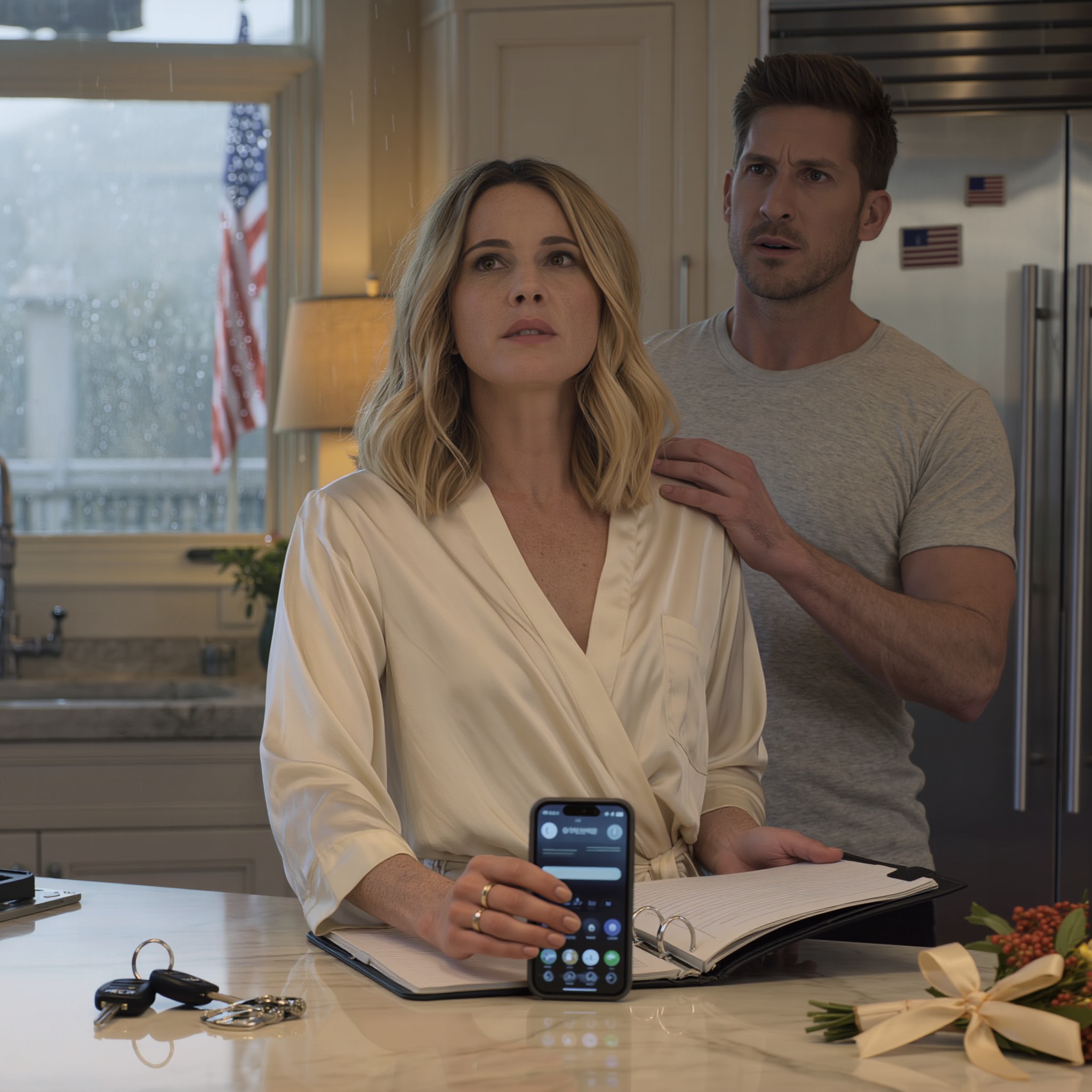
Eighty thousand dollars gone in three months.
“Brad’s cousin ran the whole thing,” Susan explained. “Turned out to be a Ponzi scheme. The cousin disappeared to Mexico. Brad and Clarissa are getting divorced.”
I sank onto the bench outside my bakery, phone pressed to my ear.
“And my parents?” I asked, already knowing.
“They used the money you’d been sending as a safety net for years,” Susan said. “Without it, they don’t have enough to cover the mortgage. They’re three months behind. The bank sent a notice.”
I should have felt vindicated. I should have felt that warm rush of satisfaction that comes when people who hurt you face consequences.
Instead, I felt tired.
“They’re going to lose the house,” I said.
“Maybe,” Susan replied. “Unless they find someone to bail them out.”
A text buzzed on my phone.
Clarissa.
For the first time in months.
“Hey sis, can we talk? I know we haven’t been close, but family is family, right? We should catch up. Maybe grab coffee.”
I stared at the message. After eight months of silence, after skipping my wedding, after years of treating me like the family servant—family is family.
I typed back: “I’m busy with the bakery. What do you need?”
Her reply came instantly.
“Nothing specific. Just wanted to reconnect. BTW Mom mentioned you’re doing really well with the business. That’s so great. We should celebrate. Maybe you could help us figure out some financial stuff too.”
There it was.
The ask dressed up in casual clothes.
I didn’t reply, but I started preparing for what I knew was coming.
That weekend, I spread eight years across my kitchen table—printouts organized by year, plus the tracker Marcus and I had built with every transfer, every “emergency,” every dollar that had flowed from my account to my parents.
Dates highlighted. Running totals in bold.
$247,500.
“What are you doing?” Marcus asked, setting two cups of coffee down.
“Making sure I know exactly what happened,” I said, shuffling through the pages. “If they come asking—when they come asking—I want facts in front of me, not emotions.”
“You think they’ll show up?”
“I know they will,” I said. “They’ve exhausted everyone else. I’m the last option.”
He sat down beside me, studying the documents.
“And what will you say?”
“I don’t know yet,” I admitted. “But I won’t let them twist this. I won’t let them make me the villain in a story where I gave everything and got nothing back.”
On the corner of the table sat another piece of paper—the ultrasound image from my twelve-week appointment. Our baby, the size of a lime, heartbeat strong and steady.
I picked it up and held it beside the printouts.
“This is what I’m protecting now,” I said softly. “This baby will never have to buy their grandmother’s love. They’ll never be compared to a cousin or told their dreams aren’t worth investing in. They’ll know from day one that they’re enough, exactly as they are.”
Marcus covered my hand with his.
“Whatever happens,” he said, “we face it together.”
I nodded, gathering everything into a neat folder.
The confrontation was coming. I could feel it building like a storm on the horizon.
But this time, I wouldn’t be defenseless.
This time, the truth would speak for me.
The one-year anniversary celebration of Sweet Dawn Bakery fell on a Saturday in late October. I’d planned it for months—a proper grand opening, the kind I couldn’t afford when I first started.
We decorated the shop with autumn leaves and golden lights. The display cases overflowed with seasonal treats: pumpkin spice cinnamon rolls, maple pecan tarts, apple cider donuts.
A reporter from Portland Monthly had confirmed she’d stop by for a feature on local women-owned businesses.
By noon, the bakery was buzzing. Regulars filled the café tables. Robert and Helen arrived with flowers and champagne. Marcus moved through the crowd, shaking hands, making everyone feel welcome.
I was behind the counter boxing up a custom cake when the bell above the door chimed.
I looked up.
My mother walked in first, wearing a dress I’d never seen—probably purchased before their financial troubles. Behind her came my father, hands in his pockets, eyes scanning the room nervously.
And behind them both—Clarissa.
Thinner than I remembered, makeup not quite concealing the dark circles under her eyes.
No one was smiling.
The chatter in the bakery quieted. Something in the air shifted—the instinctive awareness when conflict enters a space.
Mom spotted me behind the counter. She straightened her shoulders and walked directly toward me, weaving between customers like they weren’t even there.