

Then I reached for the salt shaker.
That was it. Just my arm moving across the table.
Sienna dropped her fork. It clattered loudly against the ceramic plate. She squeezed her eyes shut and started hyperventilating.
“I can’t,” she gasped. “I can’t eat. She’s looking at me with that judgmental look. It’s making my stomach turn. I’m going to throw up.”
My dad slammed his hand on the table. He looked at me, his face red with frustration.
He told me to stop staring at my sister.
I told him I wasn’t staring. I was just getting the salt.
He didn’t care.
He told me to take my plate to the kitchen. He said I was ruining digestion for everyone.
I stood up, humiliation burning my cheeks.
As I walked past Sienna, I saw it—just for a second.
She wasn’t crying.
She wasn’t hyperventilating.
The corner of her mouth twitched upward.
A smirk.
She was enjoying this. She was testing her power, seeing just how far she could push our parents to reject me.
I ate my dinner standing up over the kitchen sink like a servant. I could hear them talking in the dining room.
The tension was gone. They were laughing without me there.
They were a happy family.
That realization hurt more than the yelling.
But the final nail in the coffin wasn’t the dinner.
It was the theft.
I had been working on a project for months. It was a scheduling app for freelancers called Task Flow. It was my baby. I had written the backend code, designed the interface, and even had a few beta testers from my college class. It was rough, but it was functional.
I had left my laptop open in the living room one afternoon while I went to the bathroom. I was gone for maybe five minutes.
When I came back, Sienna was sitting on the couch reading a magazine. My laptop was closed. I didn’t think much of it.
A week later, Sienna made an announcement.
She told our parents she had an epiphany. She was going to start a business. She was going to be a tech entrepreneur.
My parents were thrilled. They asked her what the idea was.
And then I sat there and listened as my sister described my app. Feature for feature. Word for word from my pitch deck.
She even used the name Task Stream, which was so close to Task Flow it was laughable.
I exploded.
I stood up and shouted that she was lying. I told them she stole that idea from my computer. I told them she didn’t know the first thing about coding.
Sienna burst into tears instantly. She wailed that I was jealous. She said I couldn’t stand to see her happy. She said I was trying to sabotage her recovery because I was a bitter, hateful person.
My mother looked at me with pure disgust.
She told me I should be ashamed of myself. She said that instead of supporting my sister’s dreams, I was trying to tear her down.
My father told me to apologize.
I looked at them—my father, my mother, my sister—and I realized I was alone.
There was no logic here.
There was no truth.
There was only Sienna’s narrative, and I was the villain.
I refused to apologize. I walked out of the room, but I knew the clock was ticking. Sienna had the idea, but she couldn’t build it. She needed me gone before she was exposed as a fraud.
The end came three days later.
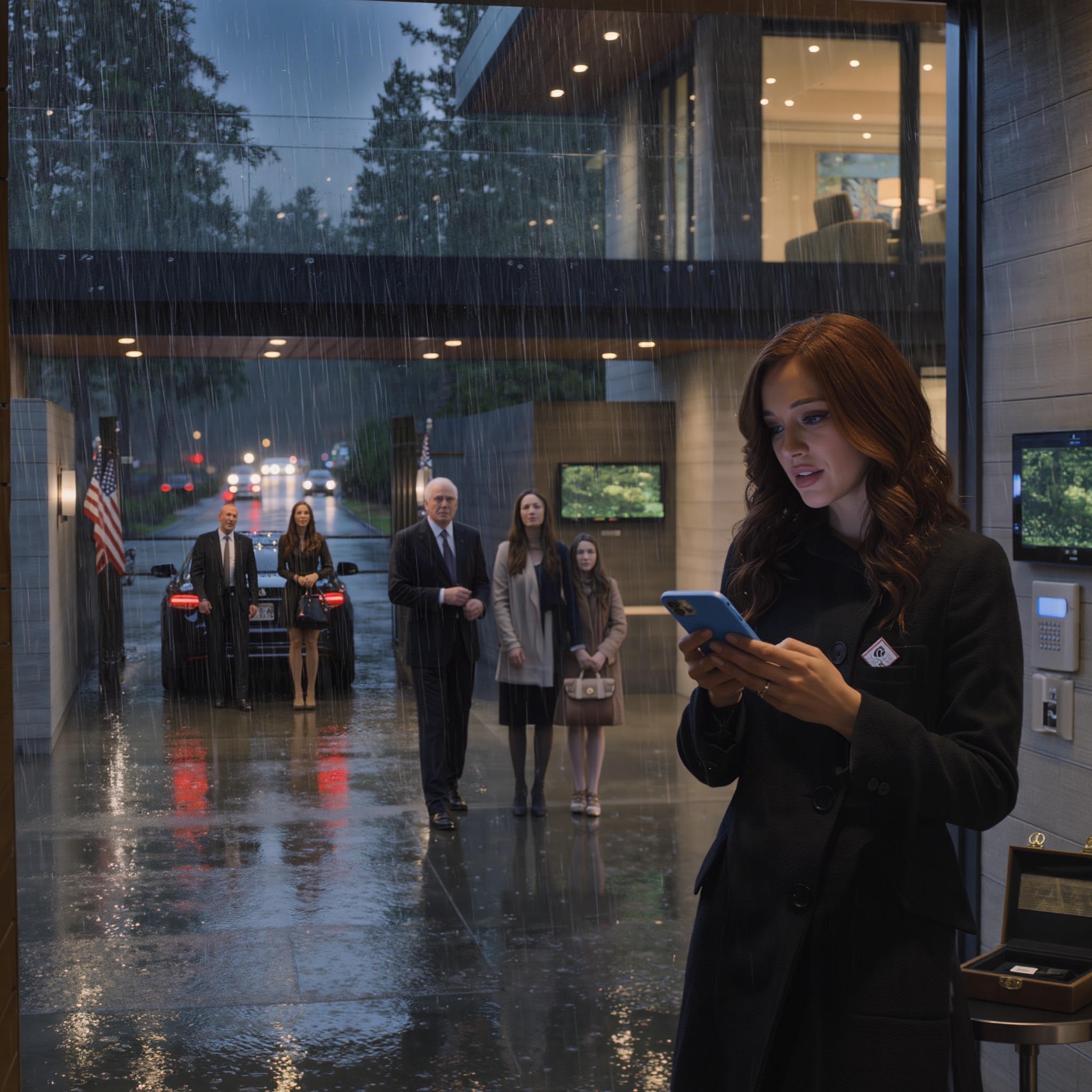
It was a Tuesday. It was raining hard. A relentless downpour hammered against the roof.
I came home from my shift at the diner, exhausted, smelling like grease and coffee. I just wanted to shower and sleep.
When I walked in, the living room was dark.
My parents were sitting on the couch. Sienna was sitting between them, wrapped in a blanket, trembling.
It looked like an intervention.
But I knew I was the addict they were trying to cut off.
My father didn’t even look at me. He stared at the floor.
My mother was the one who spoke. Her voice was trembling, but resolved. She told me that this wasn’t working. She said the tension in the house was too much. She said Sienna had suffered a severe panic attack earlier that day because of my negative energy.
Sienna chimed in, her voice weak and raspy. She said she didn’t feel safe in her own home. She said she felt like I was emotionally abusing her by being so hostile.