
I called it Project Phoenix.
It was the new version of my app. I didn’t just rebuild Task Flow—I completely reimagined it. I studied what was missing in the market. I taught myself AI integration, which was just starting to become huge. I built an algorithm that didn’t just schedule tasks for freelancers, but predicted their workload and automated their invoicing.
It was hard.
There were nights I cried over my keyboard. There were days I wanted to call my mom and beg to come home.
But every time I felt weak, I would look at a screenshot I had saved.
It was a post from Sienna.
She was complaining that being a CEO is so hard when people don’t support your vision. Her startup had stalled. She had blown through whatever money my parents gave her and produced nothing.
Seeing her fail gave me energy.
It was petty, maybe, but it kept me awake at 3:00 a.m. when the code wouldn’t compile.
Uncle Clark was my rock. He never asked when I would move out. He would just leave a fresh pot of coffee on the counter before he went to work. Sometimes he would sit with me while I practiced my pitch. He didn’t understand the tech, but he understood business.
“Look them in the eye,” he would say. “Make them believe you are the smartest person in the room.”
By my senior year, I had a working beta version. I started letting local freelancers use it for free in exchange for feedback.
The response was electric.
People loved it. They said it saved them ten hours a week. Word of mouth started to spread.
I needed funding to scale. I needed servers, legal protection, and a marketing budget.
I put on my one good suit—a thrift-store blazer McKenna had tailored for me—and went to pitch to a venture capital firm in Nashville.
I walked into a boardroom full of men twice my age.
I was twenty-two. I was a woman. I was shaking.
But when I plugged my laptop in and showed them the demo, the shaking stopped.
I knew my product. I knew it was better than anything else out there.
One of the investors, a man with a skeptical face, asked me, “This looks like a lot for a one-person team. Do you have a co-founder?”
I thought of Sienna stealing my work. I thought of my father handing me $200.
“No,” I said, looking him dead in the eye. “I built this brick by brick. I don’t need a co-founder. I need a check.”
He smiled.
He wrote the check.
That check changed everything. It wasn’t millions—not yet—but it was enough to quit the diner. It was enough to hire two developers. We worked out of a tiny rented office above a bakery. It smelled like yeast and ambition.
We launched the app publicly six months later.
It exploded.
We hit 10,000 users in the first week, then 50,000, then 100,000.
Tech blogs started writing about us. They called me the wunderkind of Chattanooga.
I kept my head down. I didn’t do interviews. I didn’t put my face on magazines yet. I was terrified that if I made too much noise, my family would find me before I was ready.
Year four was the turning point.
A major software giant approached us with a licensing deal. They wanted to integrate my AI engine into their enterprise software.
The deal was worth millions.
I finalized it with Uncle Clark sitting next to me. When the money hit my account, we stared at the screen. It was a number with so many zeros it looked fake.
“You did it, kid,” Clark whispered. “You really did it.”
We went out for steak that night—the expensive kind.
I bought Clark a new truck, a Ford he’d been eyeing for twenty years but could never afford.
He cried.
It was the first time I had ever seen him cry.
“You didn’t have to do this,” he said, patting the dashboard.
“Yes, I did,” I told him. “You gave me a home when I was homeless. This is just a truck.”
I brought McKenna on board as my VP of operations. She quit her boring HR job and moved to Tennessee.
Having her and Clark with me, I realized something important.
I had a family.
It just wasn’t the one I was born into.
It was the one I chose.
Then, six months ago, I decided it was time to make a move.
I was tired of hiding. I was tired of being small. I wanted to live somewhere beautiful, somewhere that didn’t remind me of the South.
I chose Portland.
I found an estate on the hills.
Twelve million dollars.
It was excessive. It was grand. It was a fortress.
I bought it in cash.
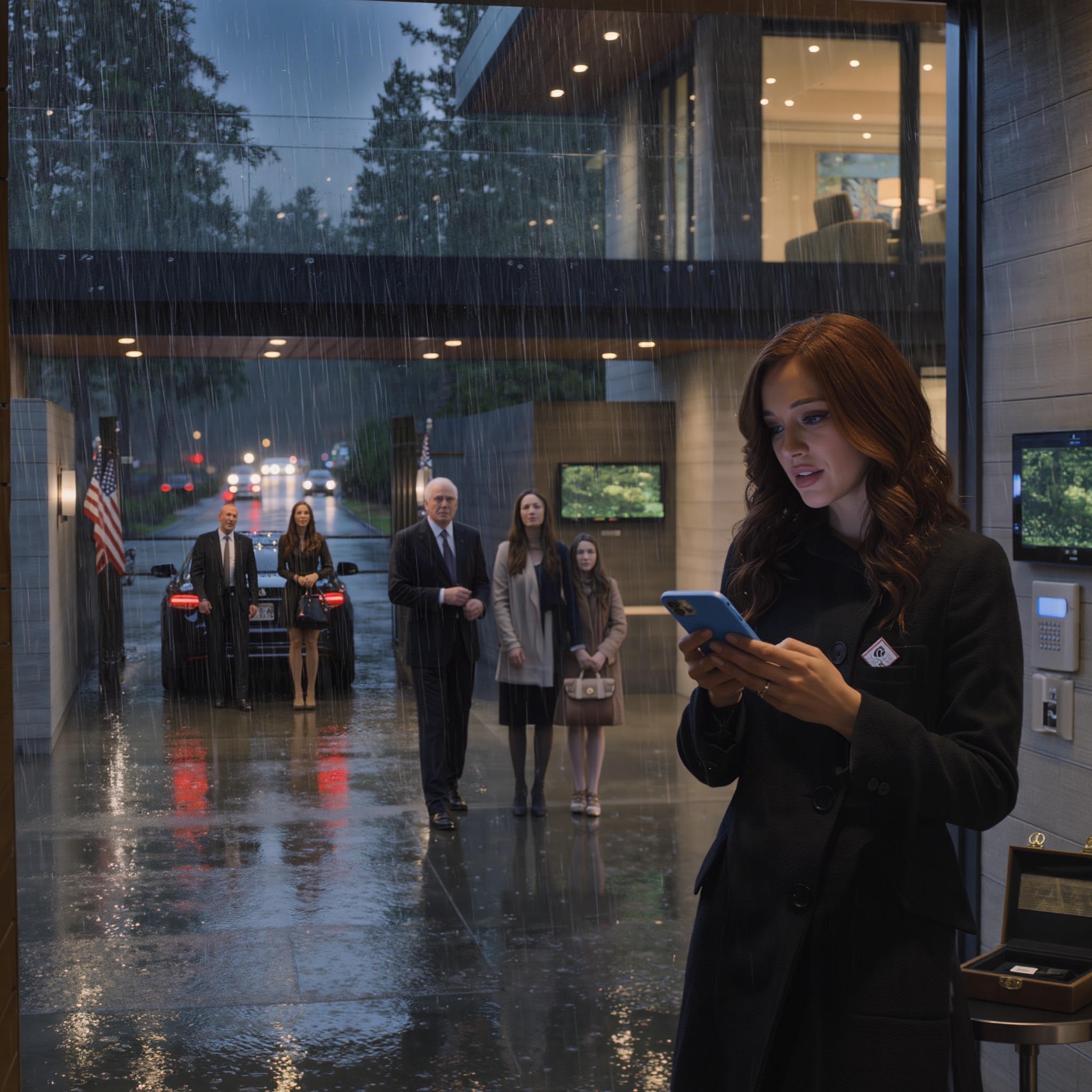
I moved in, bringing Clark and McKenna with me. Clark took the guest house by the pool. McKenna got the entire east wing.
We were living the dream.
But secrets don’t stay buried forever, especially when you start appearing on 30 Under 30 lists.
Aunt Lydia called me last week.
Lydia is my mother’s sister, but she loves drama more than she loves loyalty. She is the family spy.
“Valyria,” she whispered into the phone. “They know.”
“Who knows what?” I asked, sipping wine by my pool.
“Your parents. Sienna. They saw the article in Forbes. They know about the company. They know about the house. And honey, they are furious.”
“Furious?” I laughed. “Why?”
“Because they think you owe them,” Lydia said. “Sienna is telling everyone that you stole her idea and used family money to build it. They are planning to come to you. They want their cut.”
I felt a cold shiver, but it wasn’t fear anymore.
It was anticipation.
“Let them come,” I told Lydia. “Send me everything they are saying—screenshots, texts, everything.”
“Why?” she asked.
“Because,” I said, “I’m going to need receipts.”
And that brings us back to today.
Standing on the balcony. The email from my father.