
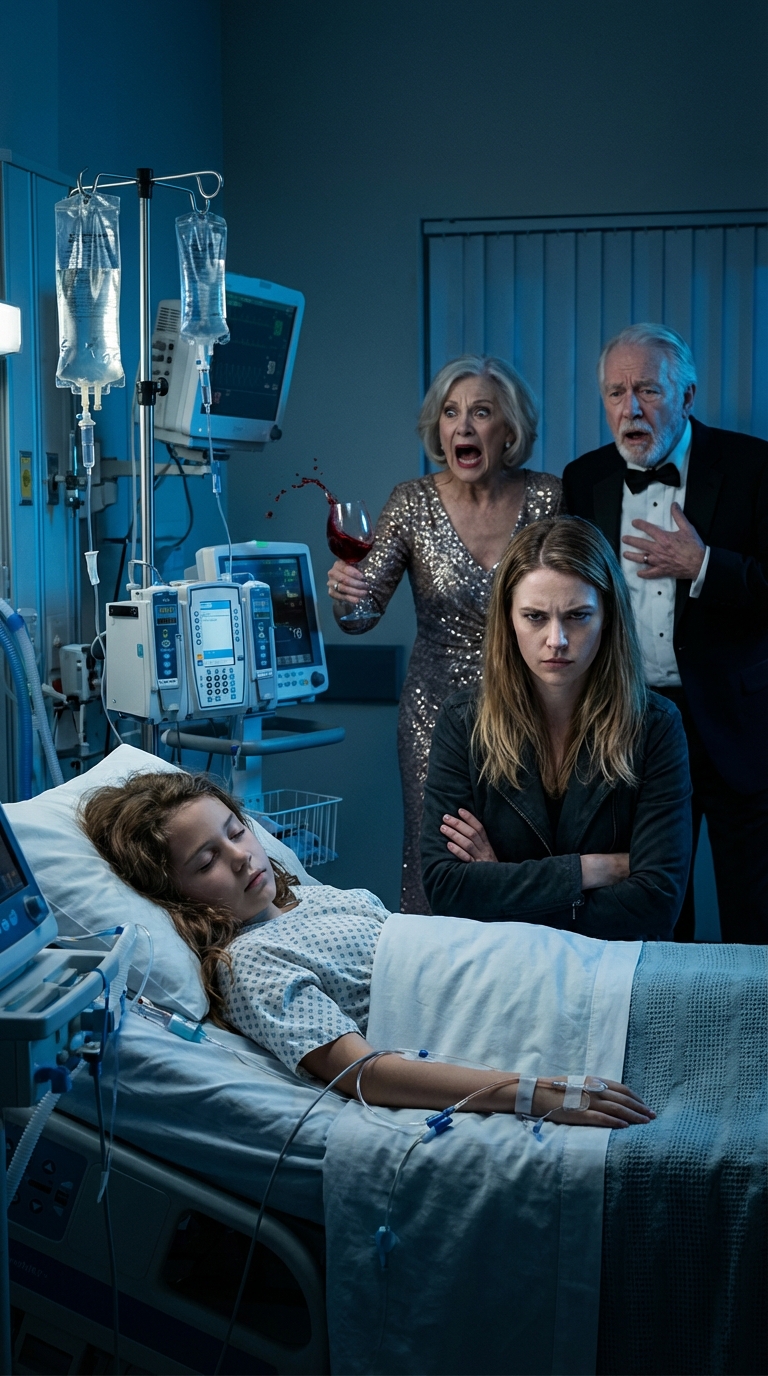
“Is Nana coming today?” she asked.
I froze. I was pouring water from a plastic pitcher, and my hand jerked, spilling a few drops on the tray table. How do you tell a child that she isn’t worth the risk of a common cold? How do you explain that her value is conditional?
“She’s… busy, sweetheart,” I said carefully, hating myself for the lie. “But she asked about you. She loves you very much.”
Mia nodded slowly. Kids want to believe adults mean well. It’s a survival instinct. They need to believe the giants who rule their world are benevolent.
“Okay,” she whispered.
Later that afternoon, I tried again. Desperation makes you do foolish things. I called my father this time.
“She keeps asking, Dad,” I said, keeping my voice low so Mia wouldn’t hear. “She just wants to see you. You don’t even have to come into the room. Just stand by the glass. Wave to her. Let her know you’re there.”
My dad cleared his throat, a sound like gravel grinding together. “Let’s wait until she’s better,” he said, his voice devoid of emotion. “We have that dinner at the Country Club tonight anyway. We’ll see how things look next week.”
Better. As if love required a clean bill of health. As if affection was a reward for wellness, not a comfort for sickness.
That night was the hardest. Mia tossed and turned, whimpering softly in her sleep. At 3:00 AM, she woke up crying. Not a tantrum, just silent, hot tears slipping down her fever-flushed cheeks.
“Mommy,” she whispered.
I was at her side instantly, smoothing her hair. “I’m here. I’m right here.”
“Did I do something bad?” she asked, her voice trembling.
My heart shattered. It didn’t break; it disintegrated. “What? No, baby, no.”
“Is that why Nana and Grandpa don’t want to come?” she sobbed quietly. “Because I got sick? Did I ruin their plans?”
Something inside me snapped. A cable that had been holding up the bridge of my filial duty finally gave way.
“No,” I said fiercely, gripping her small hand. “Never think that. You didn’t do anything wrong. They are just… confused. This is not on you.”
She wiped her eyes with the back of her hand, the IV tube swaying. “Okay,” she said softly, trusting me completely. That trust was a heavy burden.
On the third day, the fever finally broke. Mia was sleeping peacefully for the first time in seventy-two hours. I slumped in the uncomfortable vinyl chair, exhausted, smelling of stale sweat and hospital soap.
My phone buzzed.
I glanced at it. A notification from the “Family Circle” group chat. I almost ignored it. My thumb hovered over the screen.
Almost.
I unlocked the phone.
Photos were loading. Dozens of them. High-resolution, bright, colorful.
There were balloons—gold and silver. A long banquet table covered in expensive catering. A massive custom cake topped with sparklers. And there, in the center of it all, was my sister’s son, Leo, laughing as he blew out the candles.
It was a birthday party. A massive, expensive, indoor gathering.
My parents were there. My mother was holding a glass of wine, laughing with her head thrown back. My father was grilling steaks, his arm around my sister. They were hugging people. They were sharing food. They were in a room with fifty other people.
Three days after refusing to visit a sterile hospital room because they “didn’t want to catch anything,” they had thrown a superspreader event for their favorite grandchild.
My stomach dropped to the floor. I felt nauseous. It wasn’t just hypocrisy; it was a statement. It was a declaration of hierarchy.
Before I could even process the rage that was beginning to boil in my gut, another notification appeared. A private message from my mother.
Mom: Hope Mia is doing better! We had a lovely time celebrating Leo. Since you couldn’t make it (we understand!), I’ve calculated your share of the costs. The venue and catering were a bit more than expected.
Mom: Your share is $1,000. Please Venmo it today so I can balance the books.
I stared at the screen. I read it again. And again. The words swam before my eyes.
$1,000.
For a party I didn’t attend. For a party thrown while my daughter lay hooked up to oxygen machines. For a party hosted by the people who couldn’t be bothered to drive twenty minutes to wave through a window.
I stepped into the hallway. My heart wasn’t pounding; it was hammering against my ribs like a prisoner trying to escape. I called her immediately.
“What is this?” I asked. I didn’t yell. Rage, true rage, is often quiet.
She sounded cheerful, relaxed, perhaps a bit tipsy from the midday wine. “Oh! You got the request. We went with the Gilded Lily venue this year, and you know how expensive their prime rib is. The magician was extra, too.”
“She’s in the hospital, Mom,” I said slowly, articulating every syllable.
“Yes, I know, it’s terrible,” she replied breezily. “But this party was planned months ago. The family all chipped in. It wouldn’t be fair if you didn’t contribute just because you weren’t physically there. You’re still Leo’s aunt.”
Fair.
My dad joined the call from the background. I heard his voice, muffled but distinct. “Tell her to stop overreacting, Linda. It’s just a grand. She makes good money.”
“You’re overreacting,” my mother repeated to me. “This isn’t about Mia. Don’t make everything about her.”
That was the moment. That was the crossover point. The bridge didn’t just collapse; I burned the wreckage.
I looked back through the glass window into my daughter’s room. She was asleep, clutching that stuffed rabbit like it was her anchor to the world. Seven years old and already learning that she was second-tier. Already learning that her pain was an inconvenience to the people who were supposed to cherish her.