

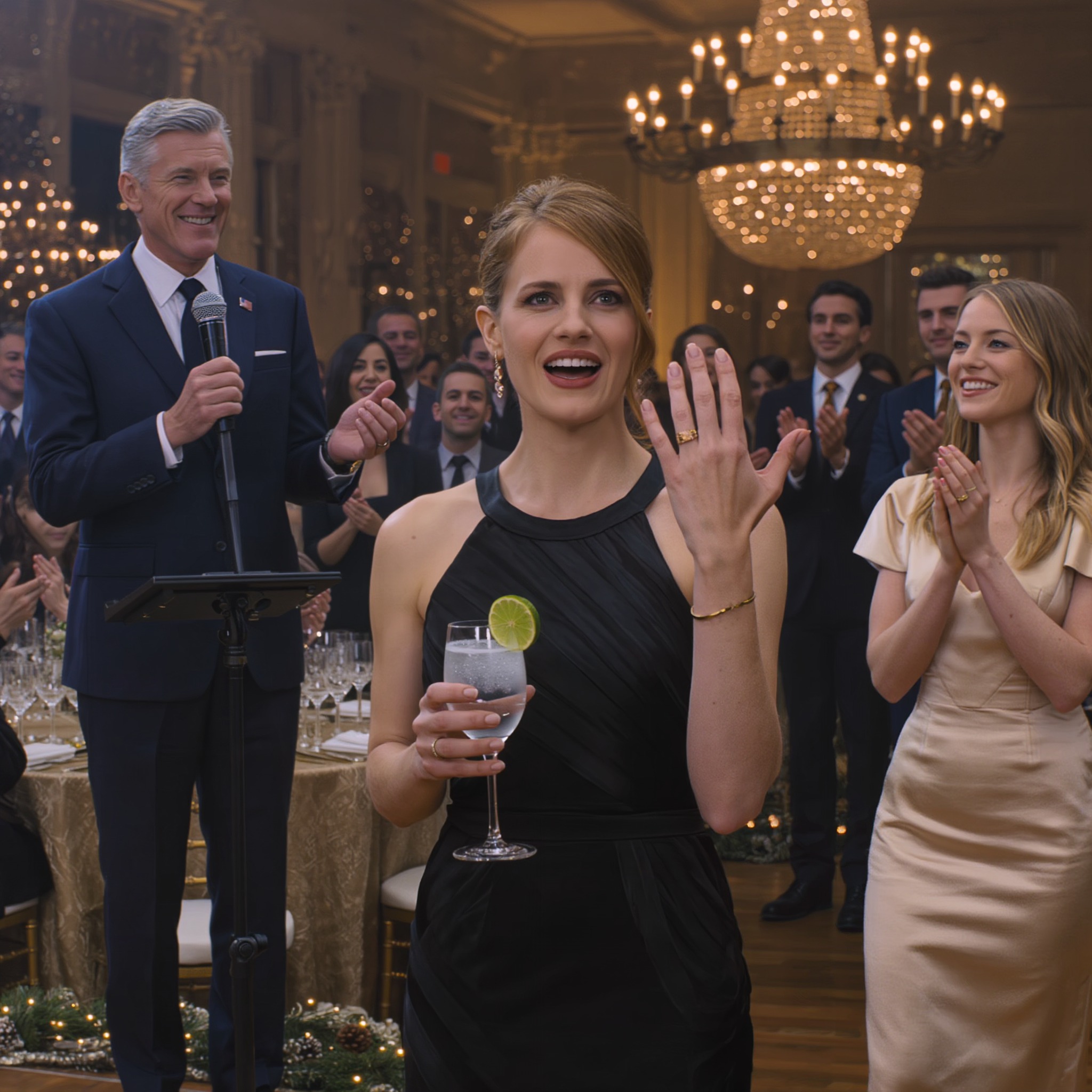
I sent my parents an invitation to the ceremony. My mother texted back: So proud of you, sweetheart. But Tyler has an important soccer game that day. We’ll celebrate when you’re home.
I graduated alone.
A professor I barely knew shook my hand and said, “Wherever you go from here, you’ve earned it.”
I cried in the parking lot for ten minutes. Then I wiped my face, got in my car, and drove to the library to return my overdue books.
That chapter was over, but the hardest part was just beginning.
I applied to twelve medical schools. Three accepted me. I chose Johns Hopkins not because it was the most prestigious—though it was—but because they offered the best financial aid package: loans, grants, work-study. I pieced it together like a patchwork quilt, and somehow it held.
Four years of medical school. Six years of residency. Two years of fellowship. Twelve years of my life building something no one in my family believed I could build.
I specialized in cardiothoracic surgery, one of the most demanding fields in medicine. The hours were brutal. The pressure was relentless. I watched colleagues burn out, drop out, switch to easier specialties. I stayed—not because I had something to prove to my father, but because every time I held a human heart in my hands, every time I watched a flatline turn into a steady rhythm, I knew this was exactly what I was meant to do.
By thirty-two, I was an attending surgeon at Johns Hopkins Hospital: board-certified, published, respected.
And my family had no idea.
My mother knew I worked at “some hospital.” That was the extent of it. She never asked for details, and I never offered them.
I wore my Johns Hopkins medical ring every day, a gold band with the university crest. I bought it myself the day I graduated. It wasn’t flashy. Most people wouldn’t even notice it, but I noticed it every time I scrubbed in for surgery—every time I needed to remember who I was and what I’d survived to get there. That ring was my proof, my quiet rebellion.
Then one evening my mother called, and everything I’d spent twelve years avoiding came rushing back.
It was 9:00 p.m. on a Tuesday when my phone lit up with my mother’s name. She only called late when she didn’t want my father to hear.
“Myra, honey,” she whispered. “I have news. Tyler’s getting engaged.”
I set down my glass of wine and leaned back against my kitchen counter. “That’s great, Mom. Tell him congratulations.”
“There’s going to be a party at the Bethesda Country Club,” she said. “Your father wanted something big. One hundred fifty guests. All his business contacts, golf friends—the works.”
I knew that club. Membership fees started at $50,000 a year. The kind of place where handshakes sealed deals and last names meant everything.
“Sounds fancy,” I said, keeping my voice neutral.
“You can come if you want,” she said, and then she hesitated. “But your father… he doesn’t want anyone introducing you as a doctor or anything like that. He said you should just come as Tyler’s sister. Keep it simple.”
Keep it simple. Don’t outshine the golden child.
“Did he send me an invitation?” I asked.
Silence.
“Mom?”
“It was easier this way,” she said softly. “He didn’t want to make it formal. You know how he is.”
I knew exactly how he was.
“When is it?”
“Saturday the 14th. Seven p.m.”
I pulled up my calendar. No surgeries scheduled. No on-call duty.
Part of me wanted to decline—the smart part, the part that had spent twelve years building a life that didn’t need their approval. But another part, the part that still remembered being eighteen and folding that acceptance letter into my pocket, needed to see this through.
“I’ll be there,” I said.
My mother exhaled with relief. “Just don’t wear anything too attention-grabbing, okay? Tyler is the star that night.”
“Of course,” I said. “Tyler’s always the star.”
I took an Uber to the country club. I didn’t want to deal with valet parking or anyone asking questions about my car, my job, my life. I just wanted to slip in, pay my respects, and slip out.
The Bethesda Country Club looked exactly like I expected—white colonial architecture, crystal chandeliers visible through tall windows, a manicured lawn stretching toward an eighteen-hole golf course. Luxury dripped from every corner.
At the entrance, a security guard in a crisp blazer checked his clipboard.
“Name?”
“Myra Mercer.”
He scanned the list. Scanned it again. Frowned. “I’m not seeing a Myra Mercer.”
Of course not.