

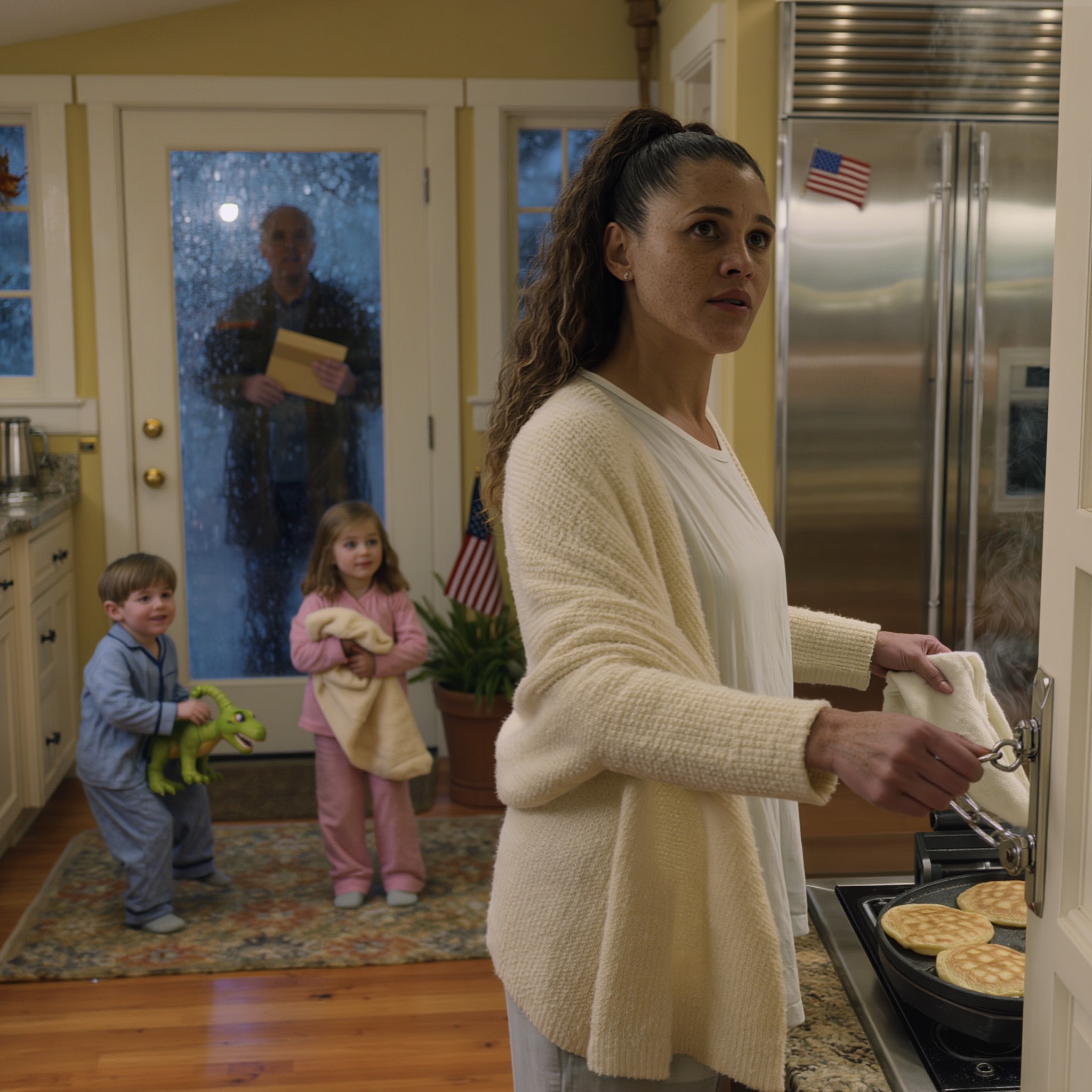
My parents refused to care for my twins while I was in emergency surgery, calling me a “nuisance and a burden” because they had Taylor Swift tickets with my sister. So I called a nanny from my hospital bed, cut all family ties, and ended the financial support I’d been quietly giving them. Two weeks later, I heard a knock…
My name is Myra Whitmore. I’m 34 years old, a cardiology resident, and a single mother of three-year-old twins.
Two months ago, I was lying in an emergency room, bleeding internally after a car accident. My hands were shaking as I dialed my parents’ number. I needed someone—anyone—to watch Lily and Lucas for just a few hours while doctors tried to save my life, and what I got instead was a text message in our family group chat that read, “You’ve always been a nuisance and a burden. We have Taylor Swift tickets with Vanessa tonight. Figure it out yourself.”
So I did.
From my hospital bed, I called a nanny service, paid triple the rate, and made a decision that would change everything. I cut them off completely—the monthly house payments, the health coverage, the car repairs, everything I’d been quietly covering for the past eight years, gone. Two weeks later, there was a knock on my door.
Before I tell you who was standing there and what happened next, please take a moment to like and subscribe, but only if you genuinely enjoy this story. Drop a comment and let me know where you’re watching from and what time it is there. I love connecting with you all.
Now, let me take you back to where it all began.
Growing up in the Carver household, I learned early that love came with a ranking system. My older sister, Vanessa, was the star. She always had been. She was three years older, effortlessly beautiful, and she had this magnetic quality that made our parents light up whenever she walked into a room.
When she announced she wanted to pursue fashion design, Mom cried happy tears. Dad called her our little visionary. When I said I wanted to become a doctor, Dad nodded once and said, “That’s practical,” like that single word was the full measure of my dream.
I told myself it didn’t matter. I buried myself in textbooks, aced every exam, and clawed my way into one of the top medical schools in the country. Four years of undergrad, four years of medical school, three years of residency specializing in cardiology—every step felt like proof, like if I could just become undeniable, they’d finally look at me the way they looked at her.
The day I graduated from medical school should have been one of the proudest moments of my life. My parents arrived two hours late.
“Sorry, sweetheart,” Mom said, not quite meeting my eyes. “Vanessa had an emergency meeting with a potential investor. We had to drop her off first.”
No flowers. No celebration dinner. Just a quick photo in the parking lot before they rushed off because Vanessa needed emotional support after her meeting, as if my graduation was a pit stop on the way to her real life.
Compare that to Vanessa’s first fashion show three years earlier. The whole family flew to New York, stayed in a five-star hotel, sat front row. Dad posted seventeen photos on Facebook with captions like, “So proud of our talented girl.”
I got a parking-lot photo and a lukewarm “Congrats, honey,” and I told myself it made sense. Fashion is competitive. Vanessa needed more support. Medicine is stable. I could handle things on my own.
But what I didn’t know then was that my parents’ favoritism wasn’t just emotional. It was financial, and I was the one footing the bill.
It started eight years ago, right after I finished medical school. Dad called me one evening, his voice tight with embarrassment.
“Myra, we’re in a bit of a bind,” he said. “The house payment is due and things are tight this month. Could you help us out? Just this once.”
Just this once.
I transferred $2,400 that night without hesitation. They were my parents. Of course I would help. But “just this once” became every month—first the house payment, then their health coverage costs, $800 monthly when Dad’s company dropped them, then the emergencies: the car repairs, the roof leak, the new furnace. I never said no. Not once.
When I got pregnant with the twins and their father walked out during my fifth month, I called my parents from the hospital after a scary bleeding episode. I was terrified, alone, desperate for support.
“Oh, honey, we wish we could come,” Mom said. “But Vanessa is so stressed after her show in Milan. She really needs us right now.”
They didn’t come. Not for the birth. Not for the first month when I was barely sleeping, nursing two newborns while studying for my board exams.
But the transfers kept going out. $2,400 for the house payment, $800 for coverage, whatever else they needed. I kept a spreadsheet. I don’t know why. Maybe some part of me needed to see it in black and white, because the numbers were staggering: eight years, $320,000, give or take.
I never asked for gratitude. I never expected a parade. But I also never expected to be called a burden by the people I’d been carrying for almost a decade, and that reckoning was coming. I just didn’t know it yet.
The accident happened on a Tuesday evening. I was driving home after a sixteen-hour shift. My eyes were heavy, but I was alert enough. The light turned green. I pulled into the intersection, and I never saw the truck.
It ran the red light doing fifty.
The impact hit my driver’s side door. Glass exploded. Metal screamed. The world spun, then went black.
I woke up in an ambulance, pain searing through my abdomen. A familiar face hovered above me.
“Myra. Myra. Can you hear me?”
Dr. Marcus Smith—an emergency physician at my hospital. We’d worked together for two years.
“Marcus,” I tried to say, but my voice came out weak and wrong. “What’s happening?”
“You were in an accident,” he said. “We’re taking you in now. Possible internal bleeding. You’re going to need surgery.”
“Surgery?” The word hit me like a second collision. “My kids.”
I grabbed his arm. “Lily and Lucas. They’re with the babysitter. She leaves at eight.”
Marcus checked his watch. “It’s 7:15.”