

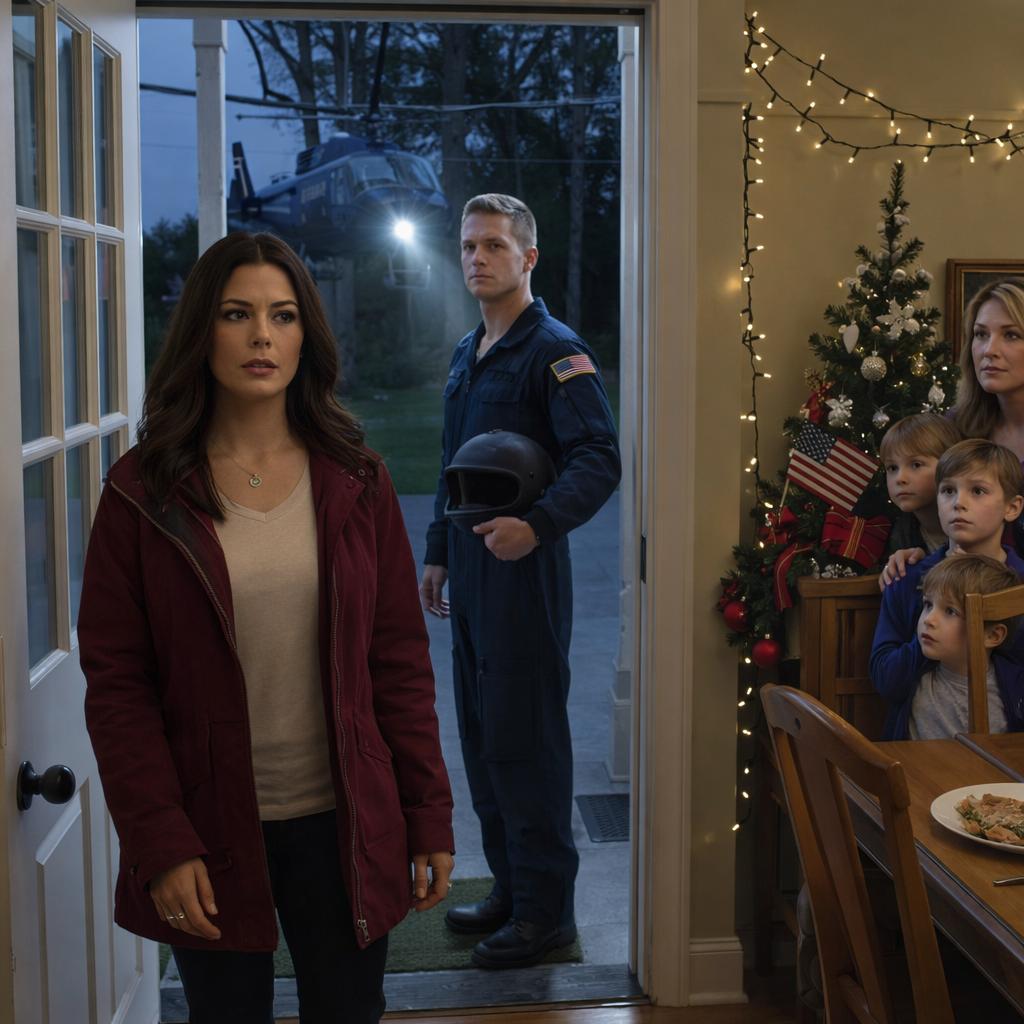
My brother’s dining room had always been too bright.
Even at dusk, even in winter, Michael insisted on lighting that made everything look crisp and exposed, like a showroom. The chandelier over the table threw clean circles onto polished wood. The recessed lights above the kitchen island made the countertops shine. Every surface seemed designed to reflect something back at you.
It was the kind of light that made it hard to hide in.
I reached Portland just as the last of the daylight tightened into a thin gray band over the rooftops. The cold had a brittle edge, the kind that made your lungs sting on the first inhale. Maple leaves gathered in uneven piles along the curb, damp and flattened in places where tires had pressed them down. I parked at the edge of the driveway and sat for a moment with my hands on the steering wheel, letting the quiet wrap around me before I stepped into whatever version of me my family expected to see.
My coat still carried a trace of brine, stubborn as memory. It clung to the fabric from my morning walk along the Maine coast, the air sharp with salt and kelp and winter tide. That scent was a small anchor, a private reminder that I had a life beyond this street, beyond this house, beyond the familiar weight of being the person everyone decided they understood without asking.
When I finally got out of the car, the cold bit at my cheeks. My shoes scuffed gravel. I stood for a second at the foot of the driveway and looked up at Michael’s two-story house, the clean lines, the wide windows, the warm rectangle of light spilling from the front door.
Familiar, and yet not mine.
I climbed the steps and knocked once.
The door opened quickly, like someone had been waiting behind it.
Michael stood there with a smile that looked practiced, the edges wavering as his eyes moved over me. It wasn’t just a glance. It was inventory. Hair. Coat. Boots. The small bag in my hand. The lines around my mouth that hadn’t been there twelve years ago.
“Vic,” he said, voice bright. He leaned in for a hug that landed more like a formality than affection. His arms were firm, quick. “You made it.”
“I said I would,” I replied, and my voice sounded steadier than I felt.
Behind him, Laura appeared with a wooden spoon in her hand. Her hair was pulled back, and she wore one of those neutral sweaters that looked expensive without announcing it. She smiled too, warm in sound, distant in intent.
“Victoria,” she said, as if my full name might remind everyone I belonged. “We’re so glad you’re here.”
Glad. That was a safe word. It didn’t require proof.
I stepped inside and slipped off my coat, hanging it by the door. The air smelled like roasted meat and onions, garlic and butter. There was a faint sweetness too, something caramelizing in the oven, and underneath it all the unmistakable hum of a house full of people who had been together long enough to start talking over one another.
Faces turned toward me from the kitchen and dining room. Aunts and uncles. Cousins. The kids, taller now, with sharper elbows and louder voices. People I had known all my life, and yet when I met their eyes it felt like stepping into a photograph, like the moment had been staged long before I arrived.
“Hey, Vic.”
“Hi, sweetheart.”
“Wow, it’s been forever.”
“How’s Maine?”
The questions came in soft waves, polite and probing at the same time.
Maine. Lonely. Quiet. Remote. A place people said with a sympathetic tilt, as if it were a punishment rather than a choice.
I answered lightly, giving them only what was necessary. The coast is beautiful. Work is steady. I like the quiet. The rehearsed lines slid out easily. I’d been practicing them for years.
Michael guided me toward the dining room. His hand hovered near my back like he was shepherding someone uncertain. The table was already set. Cloth napkins folded with precision. Wine glasses lined up like soldiers. Silverware placed in a way that suggested this wasn’t just dinner, it was presentation.
It pulled up the ghosts of quieter meals, the ones from childhood when our mother still sat at the head of the table and the room seemed to orbit her. Tonight, her chair was empty. The absence was a shape no one wanted to name.
I took the seat Michael indicated, near the end of the table. A familiar placement. Out of the center, but visible enough to be addressed when convenient.
A few seats down, Laura’s sister chatted about renovations. Someone else mentioned a promotion. Another cousin talked about a vacation planned for spring, flights and hotels and tourist photos already imagined. The talk flowed around careers and stability and mortgages, the comfortable markers of a life that moved in straight lines.
I was mentioned only in passing, as if my life existed on the outskirts.
“And Vic’s been up in Maine,” someone said, like a footnote. “Still, huh?”
“Yes,” I replied, smiling. “Still.”
A small laugh rippled around the table, not cruel yet, but edged. The kind of laugh that said, We still don’t know what to do with you.
Dinner was served. Plates clinked. Conversation rose and fell. Children argued softly about who got the last roll. An uncle told a story too loudly. The wine made its rounds, and as the bottle moved, so did something else. The tone shifted. People grew looser. Sharper. Braver.
The basket of garlic bread landed in the middle of the table, warm and fragrant, steam lifting when someone tore a piece apart. The scent hit me with a small ache, because it smelled like our mother’s kitchen, and for a second I saw her hands, flour-dusted, moving with calm purpose.
Laura began talking about our mother near the end, her voice taking on that careful sympathy people use when they’re confident they understood the story.
“It was so hard on Michael,” she said, dabbing her mouth with her napkin. “Watching her decline. And he had so much on his shoulders. The house, the kids, work. I don’t know how he did it.”
My fingers tightened around my napkin.
I let her talk. There was no reasonable way to interrupt and say she only knew half of what happened. The version at this table belonged to them, reconstructed from what they had witnessed, not what I had lived.
I had been there in the final days, through long nights that smelled like antiseptic and stale coffee. Through the short breaths and whispered apologies meant only for me. Through the quiet moments when our mother looked at me with an expression that wasn’t guilt or sadness but fierce relief, as if she’d held something back for years and was finally letting me see it.
But none of that fit at this table. Here, grief was a story about who had shown up visibly, who had been praised, who had been seen as the responsible one. Here, my presence existed only in negative space.
So I sat still and let their words pass like a tide that didn’t know the shore had changed.
A laugh rose somewhere near the center of the table, a cousin making a joke about how Michael had always been the one who “kept things together.” Michael accepted it with a modest shake of his head, but I saw the satisfaction in his eyes. He liked being seen that way. He liked being the pillar.
When my napkin slid off my lap, I leaned down to catch it. That was when my phone vibrated.
Sharp. Insistent. Not the gentle buzz of a casual text.
My body recognized the pattern before my mind fully caught up. My breath stalled. Heat flashed through my chest and then cooled into focus.
I pressed my hand over the phone under the tablecloth, willing it to stop.