

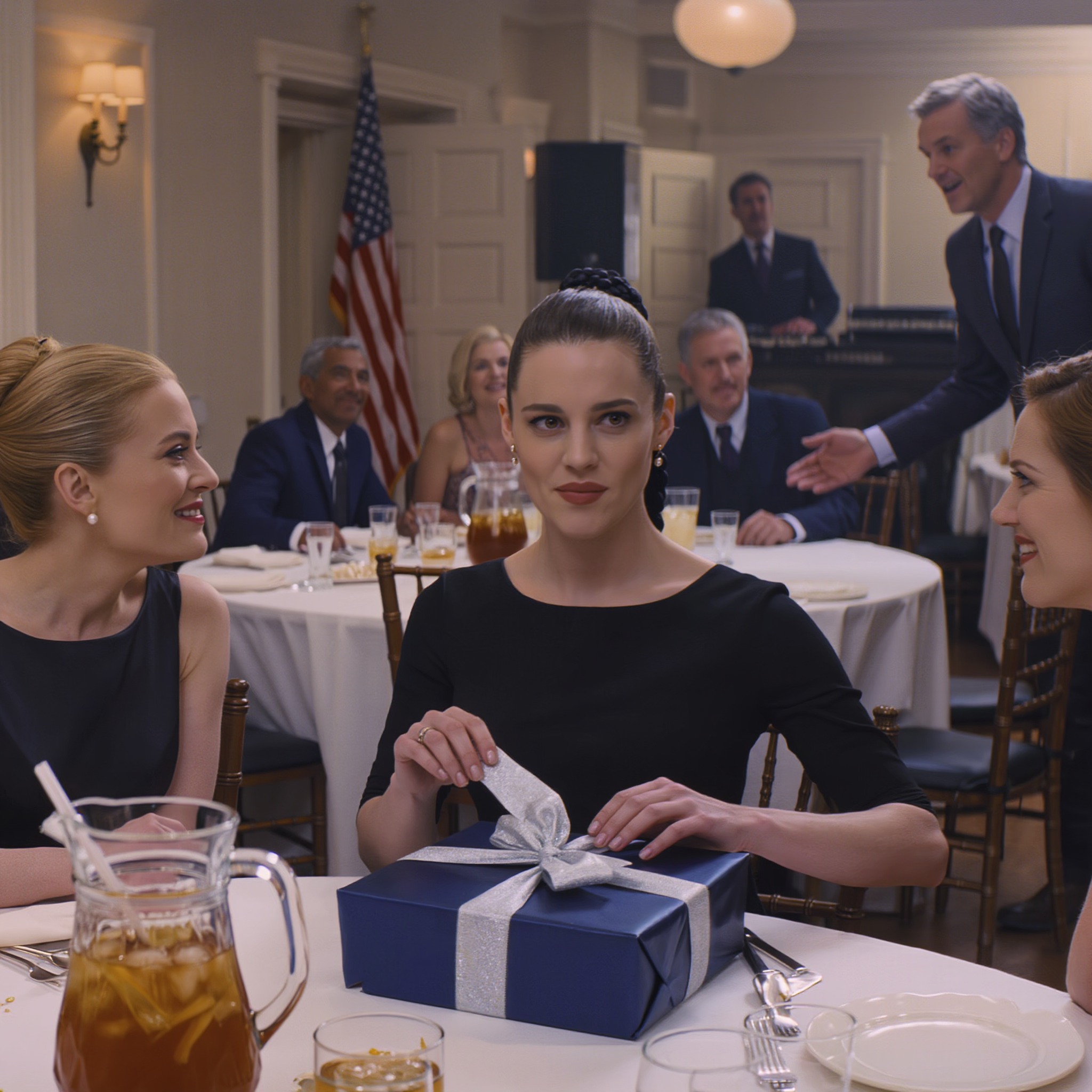
Silence.
“Because from where I’m standing,” I said, “it sounds like you regret getting caught, not what you actually did.”
“That’s not—” She stopped, started again. “When your father died, I was terrified. I grew up with nothing. My mother was abandoned with three kids and no money. I swore that would never be me.”
“So you abandoned me instead,” I said.
“I didn’t see it that way.”
“I know,” I said. “That’s the problem.”
I heard her crying. Real crying this time. The ugly, graceless kind.
“I just wanted to be safe,” she whispered. “I was so scared of ending up with nothing.”
“I understand fear,” I said, gentle but firm. “But being scared doesn’t give you the right to hurt the people who depend on you.”
“What can I do?” she asked. “How do I fix this?”
“I don’t know if you can,” I admitted. “But if you want any kind of relationship with me going forward, it has to be real, equal—no manipulation, no stories about me to your friends. Okay?”
A longer pause.
“And no calling to ask for money or favors,” I added.
“I understand,” she whispered.
“I hope so, Mom,” I said. “I really do.”
I hung up.
It wasn’t forgiveness, but it was a boundary.
Six months later, I gave away the apartment.
Not to my mother—to Aunt Patricia.
She stood in the empty living room, tears streaming down her face, the key clutched in her hand like a lifeline.
“Thea, I can’t possibly—”
“You can,” I said, hugging her tight. “You’re the one who saved me. You kept Dad’s promise when no one else would. This is yours.”
She’d spent 30 years in that tiny Boston apartment, paying off nursing school debt, working double shifts at the hospital. She deserved a place with good light and a doorman and neighbors who brought cookies at Christmas.
The feature in Architectural Digest led to three new high-profile clients. My team expanded from four people to seven.
Marcus and I got engaged on a quiet Tuesday evening. No fanfare, no audience—just the two of us and a ring that had belonged to his grandmother.
I built a family, not the one I was born into, but the one I chose: Patricia. Marcus. My college roommate who’d let me sleep on her floor during the hard years. My first boss who’d believed in me before I believed in myself.
My mother called once a month. Short conversations. Surface-level. She never asked about the apartment again.
Richard’s business stabilized eventually. Derek got a real job, according to the grapevine, something in sales. Whether any of them had actually changed or just learned to hide their true selves better, I couldn’t say.
It didn’t matter anymore.
I’d spent so many years waiting for my mother to love me the way I needed, to choose me, to prove that I was worth something.
What I finally understood was that I’d been asking the wrong question all along. The real question wasn’t whether I was worth loving. It was whether she was capable of it.
Sometimes late at night, I write letters I’ll never send. This one is addressed to a 16-year-old girl standing in a hallway being told she’s not worth an $8,000 investment.
Dear Thea, I know you’re scared right now. I know you’re lying in that little room with the stained ceiling, wondering if everyone is right about you—if you really are as worthless as they make you feel.
You’re not.
The people who were supposed to protect you chose themselves instead. That’s their failure, not yours. Their inability to love doesn’t mean you’re unlovable.
You’re going to survive this. More than survive, you’re going to build something beautiful from the wreckage.
It won’t be easy. There will be nights you cry yourself to sleep and mornings you’re not sure you can keep going.
Keep going anyway.
One day you’ll stand in a room full of people who believe the worst about you, and you’ll tell them the truth without flinching. You’ll walk away with your head high and your heart intact. And you’ll finally understand that their approval was never what you needed.
What you needed was permission to believe in yourself. Dad already gave you that.
The rest is up to you.