

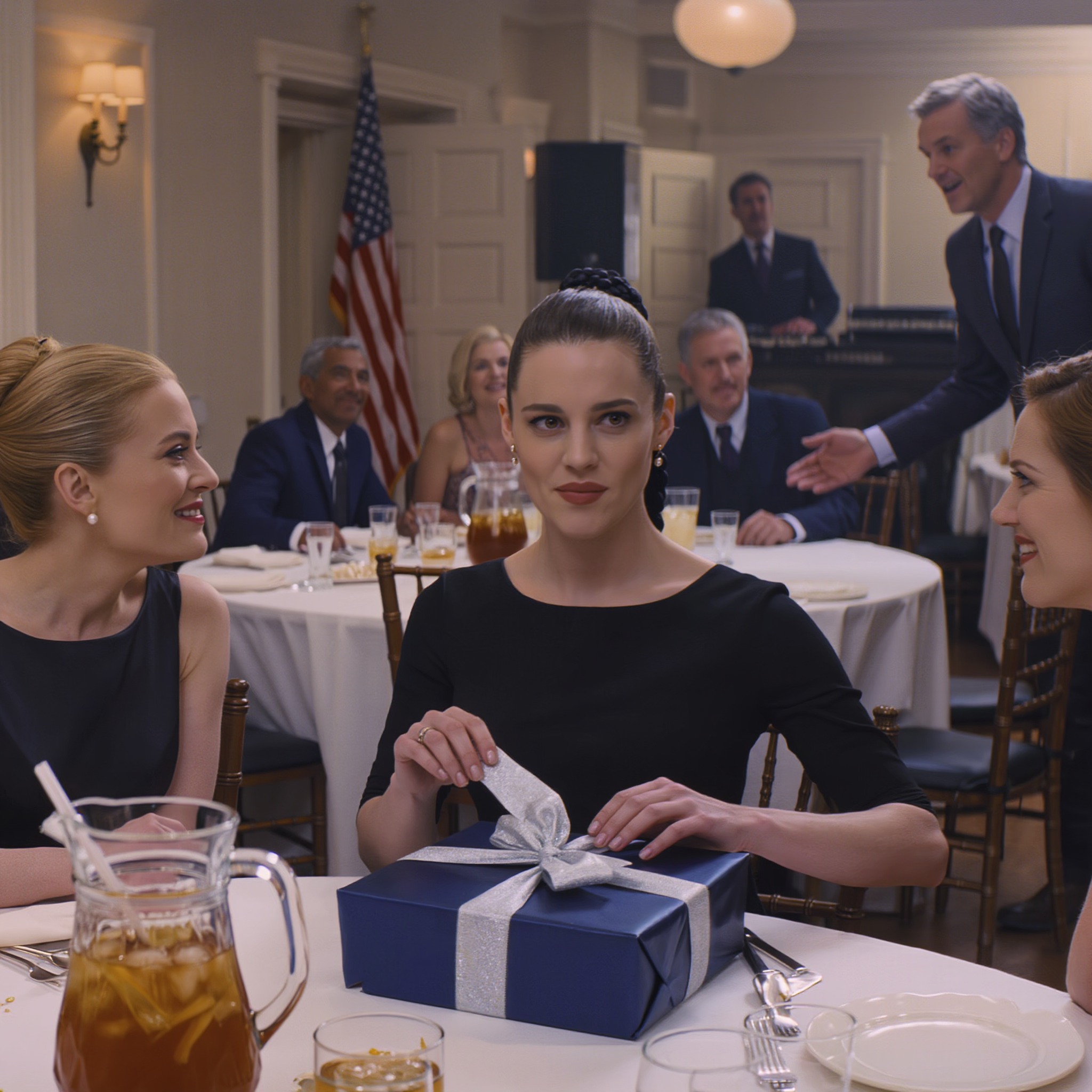
She placed the box on the table between us.
“I think, sweetheart,” she said, “that time is now.”
My hands trembled as I opened the wooden box. Inside, resting on faded velvet, was a savings account passbook. The name printed on the front was mine: Thea Marie Meyers.
“Your father opened this when you were three years old,” Patricia explained. “Every month, no matter how tight things got, he put something in. Twenty dollars, fifty, sometimes more if he got overtime.”
I opened the passbook to the last entry.
$47,000.
The room blurred. I couldn’t breathe.
“He never told your mother,” Patricia continued. “He was afraid she’d find a reason to spend it, so he kept it in your name, separate from their joint accounts, and gave me the paperwork for safekeeping.”
Beneath the passbook was an envelope, yellowed with age. I recognized my father’s handwriting immediately—the same script that had signed my birthday cards, my report cards, every permission slip for every school trip.
I opened it with shaking fingers.
My darling Thea, the letter began. If you’re reading this, it means I’m no longer there to protect you. But I need you to know I never stopped trying.
I read on through tears.
I know your mother has her flaws. I know she doesn’t always put you first. That’s not your fault, sweetheart. It was never your fault. This money is yours. Use it to build the life you deserve. Don’t let anyone tell you that you’re not good enough. I’ve known since the day you were born that you would do extraordinary things.
The letter ended with three words.
I believe in you.
For the first time since the funeral, I let myself cry. Really cry.
Patricia kept the original letter.
“When you need proof,” she said, “I’ll be here.”
I didn’t understand what she meant then, but I would.
I came back to New Jersey with a secret burning in my chest. My mother was waiting when I walked through the door, arms crossed, expression cold.
“Where were you really?” she demanded. “I told you study group. Don’t lie to me. Mrs. Patterson called looking for her daughter—said there was no study session this weekend.”
I set down my bag and looked her in the eye.
“I went to see Aunt Patricia.”
The color drained from her face. For a moment, something flickered there—fear, maybe, or guilt—then it hardened into anger.
“I told you we don’t speak to that side of the family anymore.”
“You told me,” I said. “You didn’t ask me.”
“This is my house. My rules.”
“Actually,” I said quietly, “it’s Richard’s house.”
The silence stretched between us like a wire about to snap.
Richard appeared in the doorway, drawn by our voices.
“What’s going on here?”
“She went to Boston,” my mother said, “to see David’s sister.”
Richard’s lip curled. “The one who couldn’t keep her opinions to herself at the wedding she wasn’t invited to.”
He stepped closer.
“Listen here. You’re living under my roof. You follow my rules. And my rule is we don’t associate with people who disrespect this family.”
“They are my family,” I said. “My father’s family.”
“Your father’s dead,” he said.
The words hit like a slap. My mother said nothing. Did nothing.
Richard smiled. “After graduation, you’re out. No negotiations. No second chances. Start figuring out where you’re going to go.”
I held his gaze. Didn’t flinch.