
Tartar is not the same as surface stains. It forms when plaque—a soft bacterial film—hardens through mineralization. Once plaque becomes tartar, it bonds firmly to tooth enamel and, often, below the gumline. At that stage, no leaf, spice, or toothpaste can dissolve it safely in minutes.
Dentists remove tartar using specialized instruments—manual scalers or ultrasonic tools—because mechanical removal is required. Attempting to scrape or “burn it off” with abrasive or acidic substances at home can damage enamel and irritate gums, creating bigger problems than the original tartar.
Whitening vs. Cleaning: A Critical Distinction
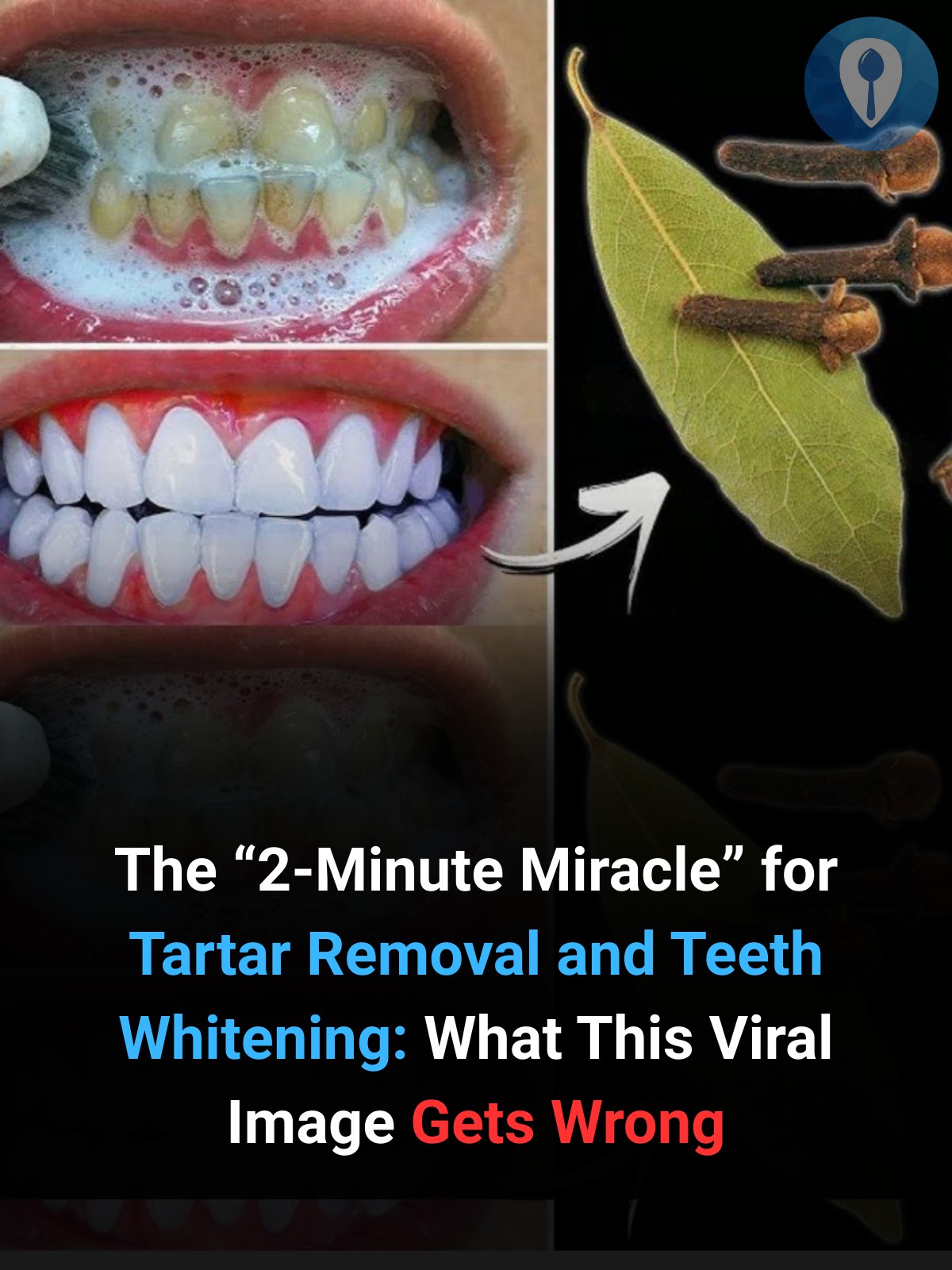
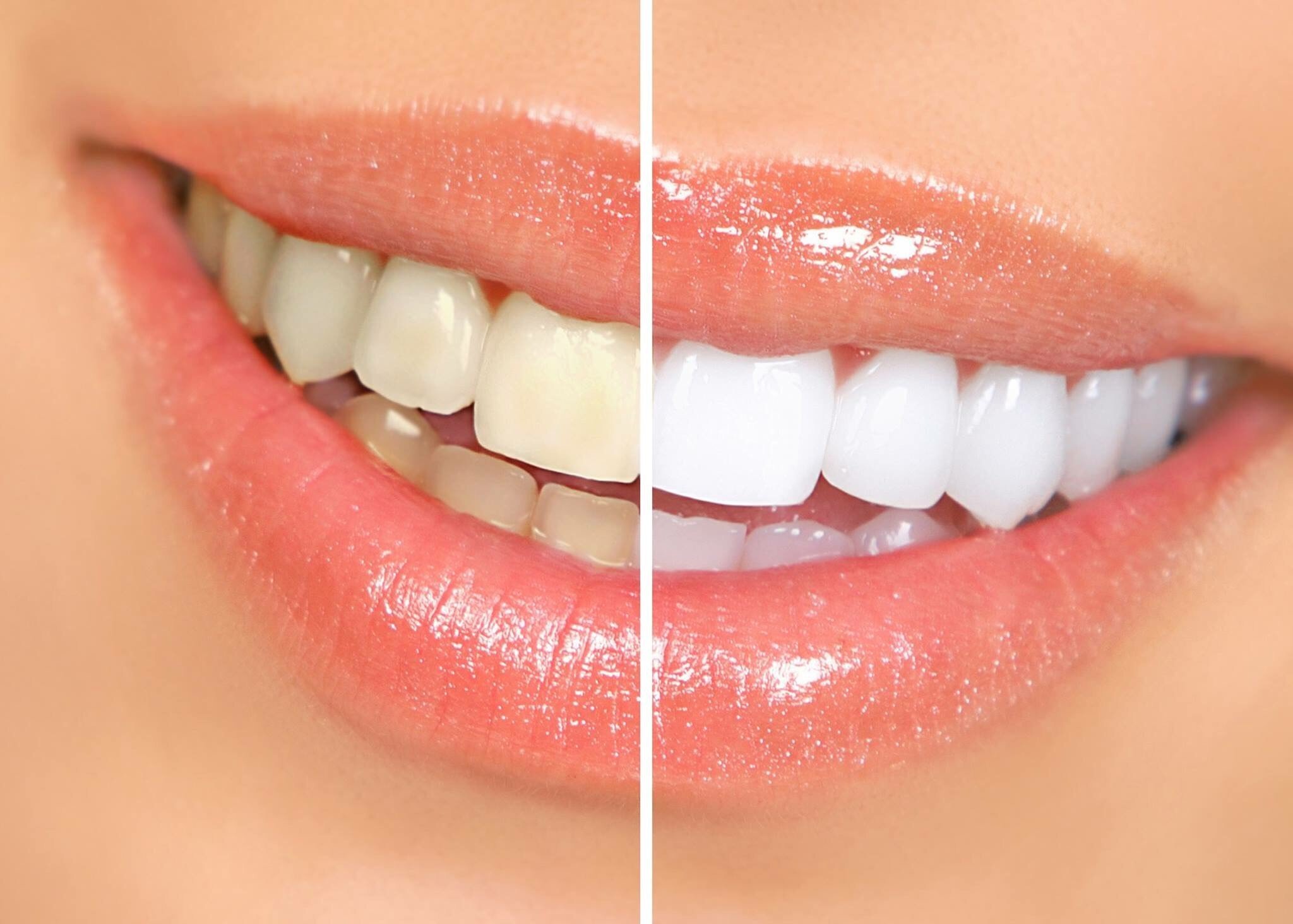
The bright smiles shown in viral images often confuse two very different outcomes:
-
Surface stain reduction: Some substances can temporarily reduce mild staining caused by food or drink.
-
True whitening: This involves chemical agents (like peroxide) that change the color of enamel itself.
Bay leaves and cloves may freshen breath or slightly reduce surface bacteria, but they do not whiten teeth in a clinically meaningful way, and they certainly don’t remove hardened tartar.
The Risk of DIY Dental “Hacks”
The most concerning part of these claims isn’t that they fail—it’s that they can cause harm. Overuse of abrasive powders, acidic rinses, or untested mixtures can:
-
Wear down enamel, making teeth more sensitive and more prone to staining
-
Irritate or inflame gums, increasing the risk of recession
-
Delay professional treatment, allowing gum disease to progress silently
Dentists don’t oppose home care. In fact, they encourage it—when it’s evidence-based.