
Eventually, in a voice so quiet it barely existed, she asked the question I’d been terrified of since the day I brought her to my parents’ house for the first time and watched how quickly the room tilted toward Garrett.
“Do they love Cole more than me?”
The words pulled old memories up from the bottom of my mind like stones being dragged from water.
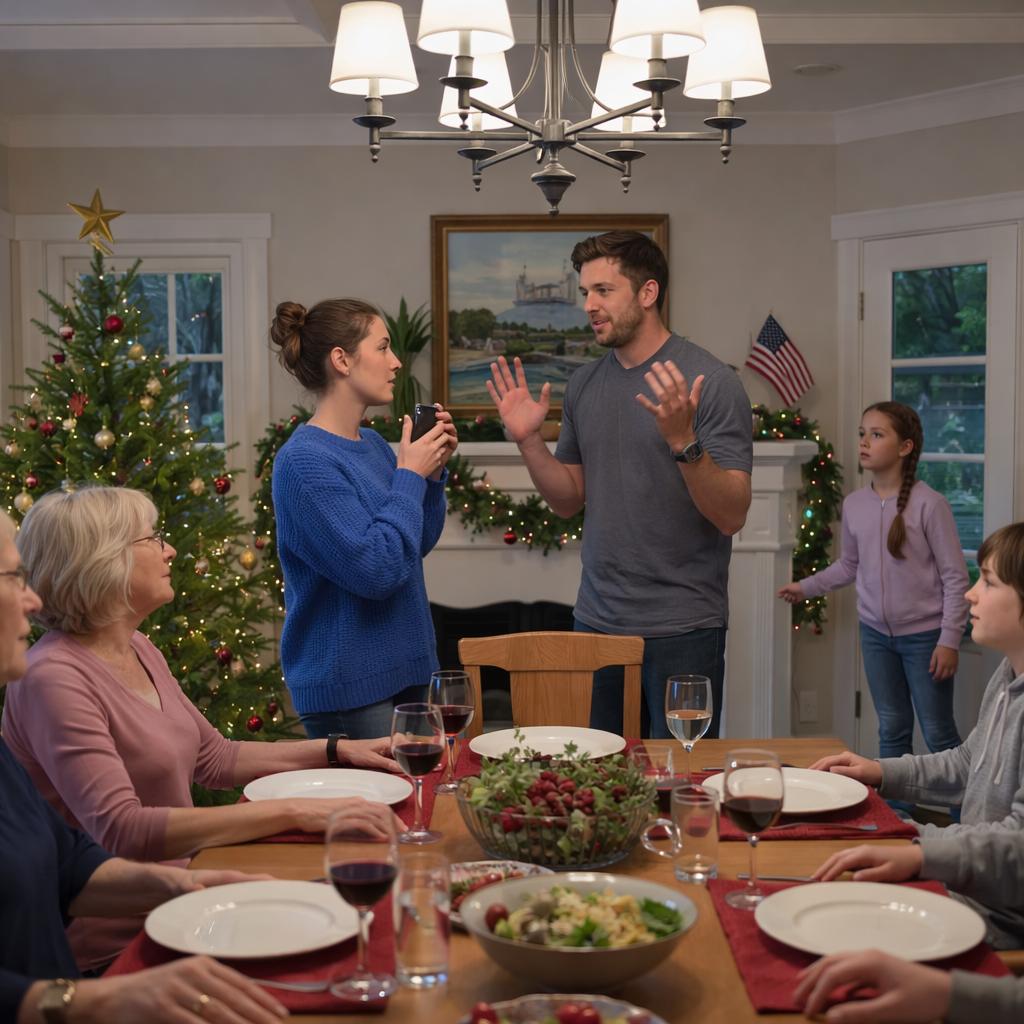
Thanksgiving, last year. Kennedy had set the table without being asked because she wanted to impress Grandma. She’d lined forks neatly, folded napkins into triangles she’d learned online, and lit a small candle in the center like she’d seen in pictures.
Garrett walked in late, tossed his keys on the counter, and said loud enough for everyone to hear, “Why is she doing chores? Let her go play. She’s not… you know.”
Not what.
Not ours?
Mom laughed, soft and indulgent.
“She just likes being useful,” Mom said, and then turned and kissed Cole’s head like he’d invented oxygen.
Or Kennedy’s sixth-grade awards night. She’d stood in the school auditorium, clutching her certificate with careful fingers, trying not to bend the paper. When the ceremony ended, she’d waited in the lobby, scanning the crowd, her eyes hopeful in that stubborn way kids are hopeful before life teaches them better.
Garrett didn’t come.
Bridget didn’t come.
Mom texted: Running late.
Dad didn’t text at all.
It was just me, clapping too loud, smiling too hard, trying to make one person sound like a whole cheering section.
So when Kennedy asked if they loved Cole more, my chest tightened not because I didn’t know the truth, but because she did.
I swallowed around the ache in my throat.
“Some people love loud,” I said gently, choosing my words like they were fragile. “It doesn’t always mean it’s real love. And it never means you’re worth less.”
Kennedy didn’t answer. She just curled closer, her fingers still twisted in my sleeve, holding on.
That night I tucked her into bed and stood in her doorway longer than I should have. Her eyelids fluttered as she fought sleep. She looked younger in the dim light, her face softened by exhaustion.
“Mom?” she whispered.
“I’m here.”
“Are we… are we going to be okay?”
The question cracked something in me. Not because I doubted it, but because she had to ask.
I sat on the edge of her bed and brushed her hair back from her forehead.
“We’re going to be more than okay,” I told her. “We’re going to be safe. We’re going to be loved. We’re going to build our own kind of family.”
She nodded, as if filing it away, and finally drifted off.
When I walked back into the living room, the house was dark except for the thin lines of streetlight cutting through the blinds. I picked up my phone and saw one voicemail from Mom.
I deleted it without listening.
The quiet in the room felt different now. Not heavy.
Sharp.
Clear.
They had just taught my daughter where she ranked in their world.
I was done letting her learn that lesson.
Thursday night, a courier rang my doorbell. He wore a navy blazer and held a thick cream envelope sealed with gold wax. The country club’s logo was embossed in the corner like a stamp of superiority.
My name was printed in raised lettering.
Ms. Holly Griffin.
Nothing else. No “and guest.” No “Kennedy.”
I signed for it, closed the door, and set the envelope on the kitchen island like it might be radioactive.
Kennedy came in a few minutes later, hair damp from a shower, cheeks pink from scrubbing her face. She spotted the envelope immediately.
“That’s the invitation,” she said, trying to keep her tone casual.
“Yes.”
She walked over and ran her thumb over the wax seal. Her hands were careful, gentle. I watched her like I used to watch her when she was little and unwrapping gifts, trying to decode whether the thing inside would bring joy or disappointment.
She slid a finger under the flap and opened it.
The card inside was heavy, expensive. Navy border. Gold foil lettering.
Kennedy read it once.
Twice.
Then she placed it back down, aligning it perfectly with the edge of the counter as if neatness could control the feelings rising in her chest.
“Just you,” she said.
It wasn’t a question. It was a fact stated like a diagnosis.
I stayed quiet. There wasn’t any sentence that could fix what my silence couldn’t.
That night she barely ate. Later she curled on the couch with a blanket pulled up to her chin, phone in her hands, her eyes too bright. I was loading the dishwasher when I heard her inhale sharply, like she’d stepped on a thorn.
I dried my hands and walked over.
“What is it?”
She turned the screen toward me without speaking.
Cole’s Instagram story.
Slide after slide of country club luxury and preening excitement.
Cole under the stone archway in a blazer, smiling like he’d been told this was his destiny.
The clubhouse at golden hour, fairy lights strung across the patio, the whole place glowing like a wedding venue.
A gift table already overflowing with expensive boxes and shiny electronics.
Cole and his friends in matching sunglasses, arms draped around each other like a boy-band pose.
Sierra’s video of Cole on a practice stage, parents clapping.
A balloon shaped like a diploma with “Class of 2030” printed on it as if his future had already been decided.
And then, a final shot that made Kennedy’s thumb stop moving.
Cole grinning beside a life-size cardboard cutout of himself in cap and gown, the kind of joke that only feels funny when everyone agrees you are the main character.
Kennedy lowered the phone slowly.
“I guess I’m not part of it,” she said, so quietly I almost missed it.
I reached for her shoulder. She shifted away just enough, not rejecting me, but guarding herself.
Then she asked, “Mom… what did I ever do to them?”
There are questions that make you want to lie. Not because you enjoy lying, but because the truth is too cruel to hand to a child.
I couldn’t find the lie.
“Nothing,” I said, and my voice broke on the single word.
Kennedy gave a small shrug, eyes fixed on the dark TV screen.
“I’m almost thirteen,” she said. “I know how this works. If you’re not invited, it’s because they don’t want you there.”
She stood, the blanket sliding to the floor.
“I have a history project due tomorrow.”
And she walked to her room and closed the door softly, the click of it sounding final in a way that terrified me.
Later, I checked on her. She’d fallen asleep on top of the covers, phone still in her hand. The screen was dark, drained from playing those stories on loop.
I took the phone gently and set it on her nightstand.
Then I stood there, watching her breathe, and felt something in me snap.
Not loudly. Not with drama.
Just a clean, quiet break.
Saturday morning, I woke Kennedy early.
“Get up,” I said, cheerful enough to fool the air itself. “We’re leaving.”
She blinked at me, confused, hair flattened on one side.
“Where?”
I tossed a swimsuit onto her bed.
“Pack a bag.”
An hour later the car was loaded with towels, sunscreen, goggles, a cooler full of snacks, and the kind of determination you only find in mothers who’ve decided their child will not spend one more day begging for a place at someone else’s table.
We drove two hours north to the giant indoor water park Kennedy had been asking about for months. The moment we stepped inside, warm humid air wrapped around us. Chlorine and popcorn. Echoing screams of delight. Water slapping against plastic. Bright lights shimmering off wet tile.
Kennedy’s face shifted as she took it all in. Her shoulders lowered. Her eyes widened. For the first time all week, I saw her look like a kid again instead of someone braced for disappointment.
We spent the day racing down slides, our feet skidding on wet stairs, our laughter bouncing off the high ceiling. We floated the lazy river for what felt like hours, letting the current carry us while the artificial palm trees swayed slightly in the air-conditioning. We ate terrible nachos and soft-serve ice cream that melted too fast, and we didn’t care.
Kennedy challenged me to the tallest slide, the one that looked like it dropped straight into the earth. I stood at the top and looked down, my stomach tightening.
“You’re scared,” she accused, grinning.
“I’m not scared,” I lied.