

Jess’s eyes filled with tears instantly. She blinked them back furiously, shaking her head. “We’re fine, Pat. Really. Please, don’t make a scene. We just need to get through the line.”
“I am not making a scene,” I said, stepping out of the volunteer station and moving to her side of the line. “I am your sister, and I am asking you when you last had a real meal.”
Tyler tugged on her hand, his voice small and raspy. “Mama, I’m hungry.”
That sound—the raw need in my nephew’s voice—shattered something inside me. It broke through the shock and ignited a cold, hard resolve in the pit of my stomach.
“I know, baby,” Jess whispered, her voice cracking. “We’re almost at the front.”
“No.” I took her arm. My grip was gentle, but there was no room for argument in it. “Come with me. Both of you.”
“Pat, I can’t,” she hissed, panic rising in her chest. “Daniel will be calling soon to check in. If I don’t answer—”
“Jess.” I waited until she looked at me, locking eyes with her. “Come. With. Me.”
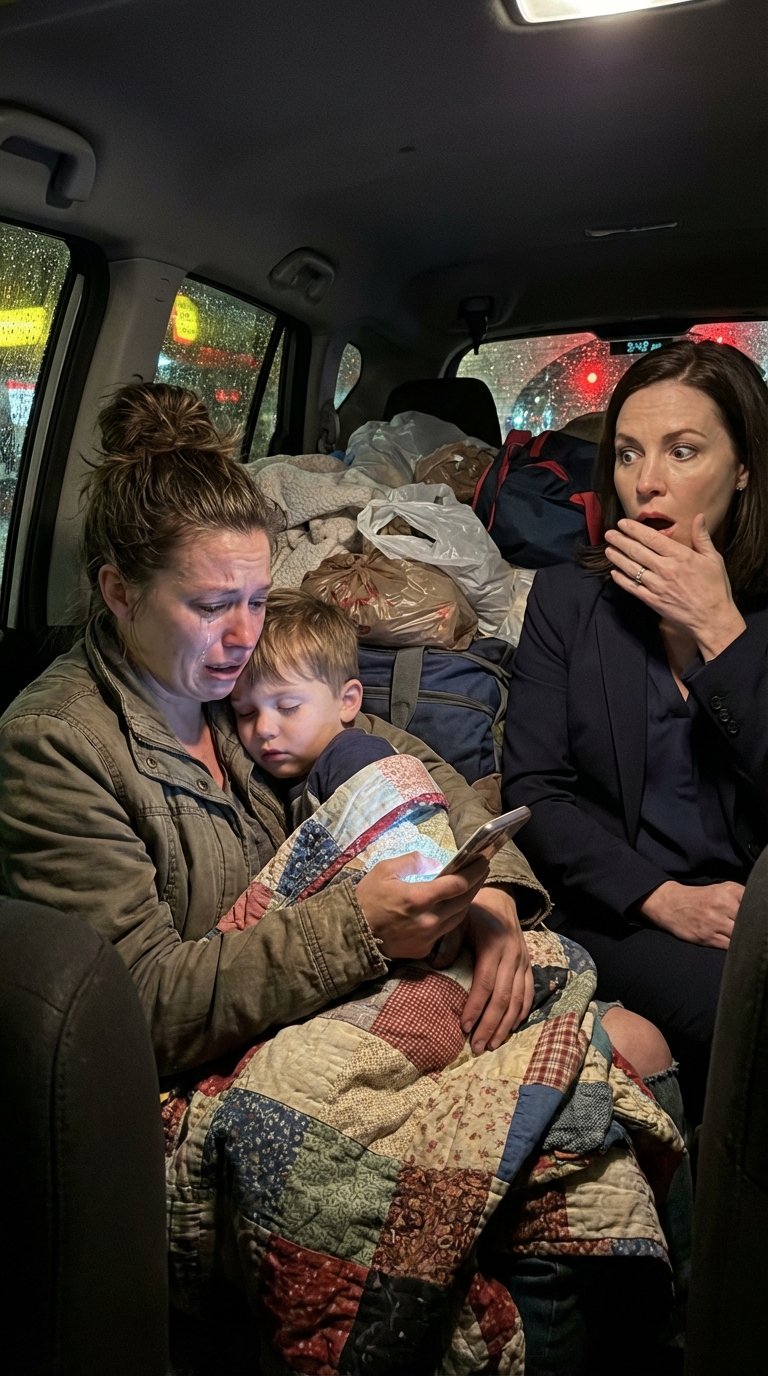
I led them out of the line, ignoring the murmurs of the crowd, and marched them two blocks down to where my SUV was parked. I ushered them inside, cranked the air conditioning to the max, and pulled a box of granola bars from the glove compartment. Tyler tore into the wrapper like a starving animal.
I rolled up the windows, sealing us in a bubble of cool, quiet air. I turned in the driver’s seat to face my sister.
“Tell me,” I commanded, my voice dropping to the low, authoritative register I used to use during interrogations. “Tell me everything. Right now.”
And finally, the dam broke. Jess didn’t just cry; she wept. It wasn’t a delicate weeping; it was the ugly, shaking, gasping sobs of a woman who has been holding the weight of the world on her shoulders for months. I handed her tissues, kept a firm hand on her shoulder, and waited. I knew better than to interrupt.
Ten minutes later, she wiped her face, her eyes red and raw.
“We’re living in our car, Pat,” she whispered. “We have been for three months.”
The air left the car. “What?”
“Daniel sold our house in April,” she said, staring at her hands. “He said we were underwater on the mortgage. He said… he said I had been overspending. That we couldn’t afford it anymore. He showed me the papers, Pat. Foreclosure notices. Debt statements. Thousands of dollars.”
Her voice went hollow. “I believed him. I thought it was my fault. I thought I had ruined everything.”
In the back seat, Tyler had fallen asleep, a half-eaten granola bar still clutched in his sticky hand, his head resting against the cool window.
“Where is the money from the house sale?” I asked, my mind already racing, cataloging details, looking for the pattern.
“Daniel said it all went to pay off the debts I created,” she said, her hands trembling. “But Pat… I don’t understand. I make fifty-eight thousand a year teaching. I put money into my pension every month. I had savings. My credit cards had zero balances. I don’t know how I could have spent that much.”
“Jess,” I said slowly, the cold, familiar feeling of a case coming into focus settling over me. “Do you have access to your bank accounts?”
She shook her head. “Daniel handles all the finances now. He said I was bad with money. He showed me statements where I’d spent thousands on things I don’t even remember buying. Designer handbags, jewelry, trips… I must have blacked out or something because I don’t remember any of it. He said I needed to let him manage everything until I got help for my ‘spending problem.’”
“And you believed him?”
“Why wouldn’t I?” She looked at me with desperate, pleading eyes. “He had bank statements, Pat. My name. My signature. He was so patient about it, so understanding. He said he still loved me even though I’d almost destroyed our family.”
Gaslighting. Classic, textbook financial abuse combined with extreme psychological manipulation. I had seen it a hundred times in fraud cases, usually involving elderly victims or corporate embezzlement. But seeing it inflicted on my own sister—smart, capable Jessica—made my blood run cold.
“Where do you sleep?”
“In the car,” she said. “We park in different places each night so the police don’t bother us. Behind Walmart. Rest stops. Tyler sleeps in the back. I sleep in the front.”
“For three months,” I repeated, barely able to speak.
“Daniel says we can move back in with him and his brother once I prove I can be responsible,” she recited, like a child repeating a lesson. “Once I show I won’t spend money we don’t have. He gives me twenty dollars a week for food and necessities for Tyler.”
Twenty dollars. To feed and clothe a growing boy. While Daniel drove her car and lived… where?
“Where is Daniel living?”